



When choosing a fuel injector cleaner and tester, it is easy to start with the number of injectors it handles and then compare prices. But everyday usability depends on three more important questions: can it drive your injectors, can it perform the tests you need, and is routine cleaning and maintenance convenient?
For repair shops, the right fuel injector cleaning machine should match the vehicles you service and your workload. For DIY users, compatibility with your own vehicle, straightforward operation and a sensible investment matter more.
This guide compares ten AUTOOL models: CT150, CT160, CT200, CT400, CT450, CT500, FN602, FN603, FN606 and FN608. Use the comparison below to narrow your shortlist by injector type, simultaneous test capacity and daily workflow.
Ask Hanna to Check Injector Compatibility →
What Do “4-Cylinder,” “6-Cylinder” and “8-Cylinder” Mean?#
On a fuel injector tester, these descriptions usually refer to the number of injectors the machine can test simultaneously. A four-position bench handles up to four injectors, a six-position bench handles six, and an eight-position bench handles eight.
A larger bench can also handle fewer injectors when unused positions are configured as specified in the manual. More positions reduce batch changes and make it easier to compare an entire set for spray pattern, collected volume and leakage under matched conditions.
More channels do not automatically mean stronger cleaning or broader injector compatibility.
Choose in this order: injector compatibility first, test capacity second, then operating features.
AUTOOL Fuel Injector Cleaning Machine Comparison#
The range includes entry-level standard gasoline injector benches, models for compatible direct-injection applications, and machines with wider drive ranges or more test positions. EFI/MPI refers here to conventional gasoline port-injection applications; GDI and FSI refer to applicable direct-injection systems. Always confirm the injector part number, drive requirements and adapter fit.
| Model | Injectors at Once | Application Focus | Key Difference | Best-Fit User |
|---|---|---|---|---|
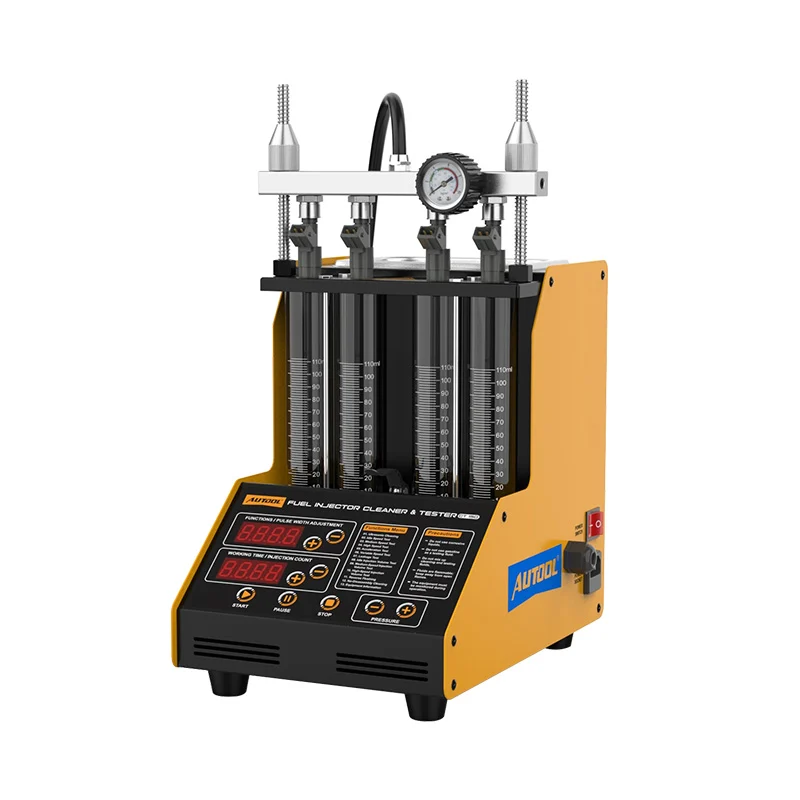
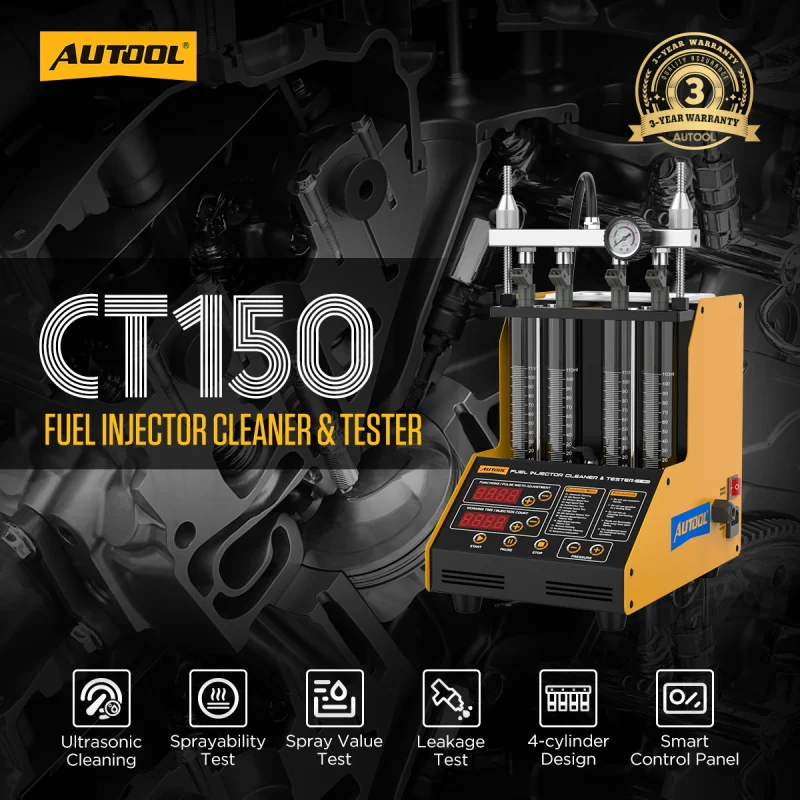
| AUTOOL CT150 | 4 | Standard 12 V EFI/MPI | Basic four-position bench; unheated ultrasonic tank | Entry-level DIY and occasional small-shop work |
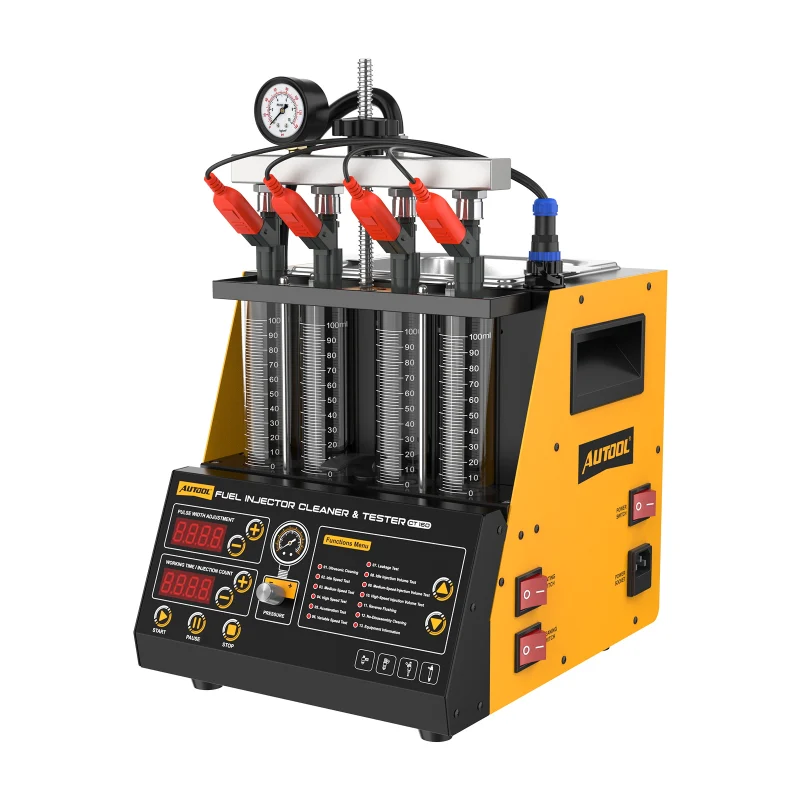
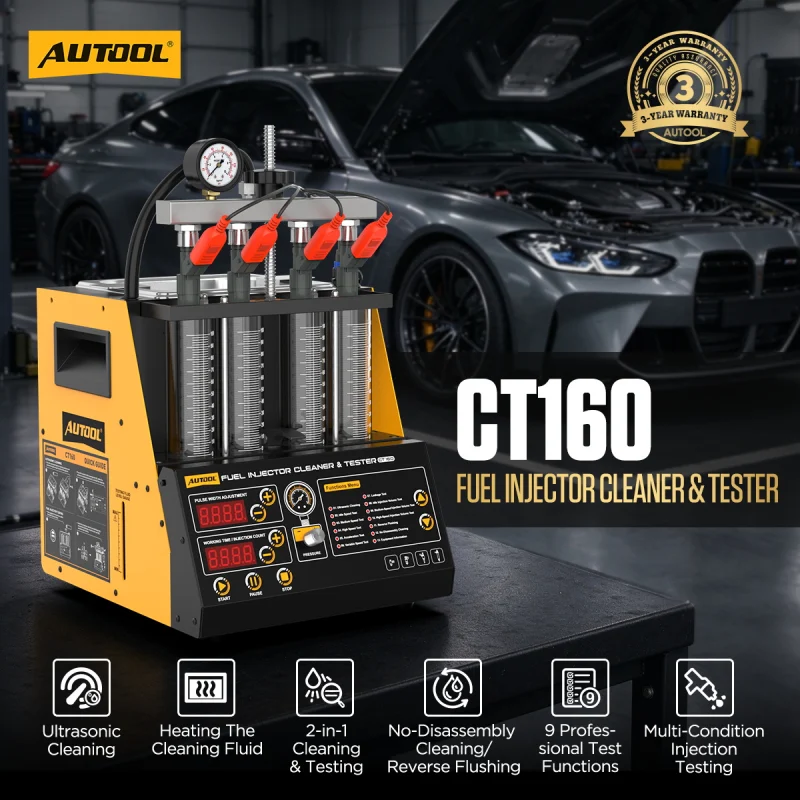
| AUTOOL CT160 | 4 | Standard 12 V EFI/MPI | Heated ultrasonic cleaning, up to 45°C | Four-injector users who want heating |
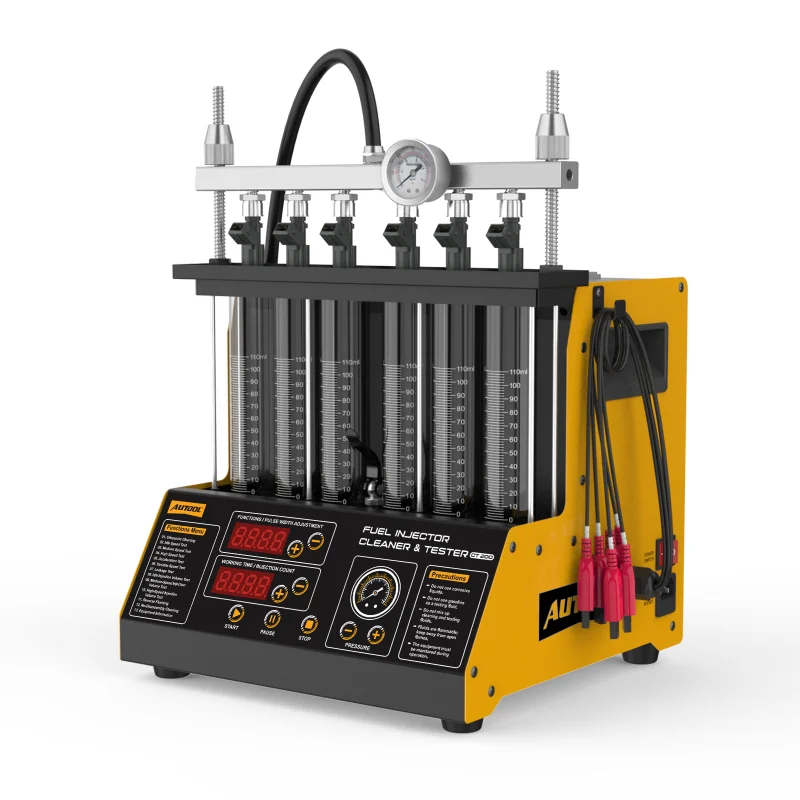
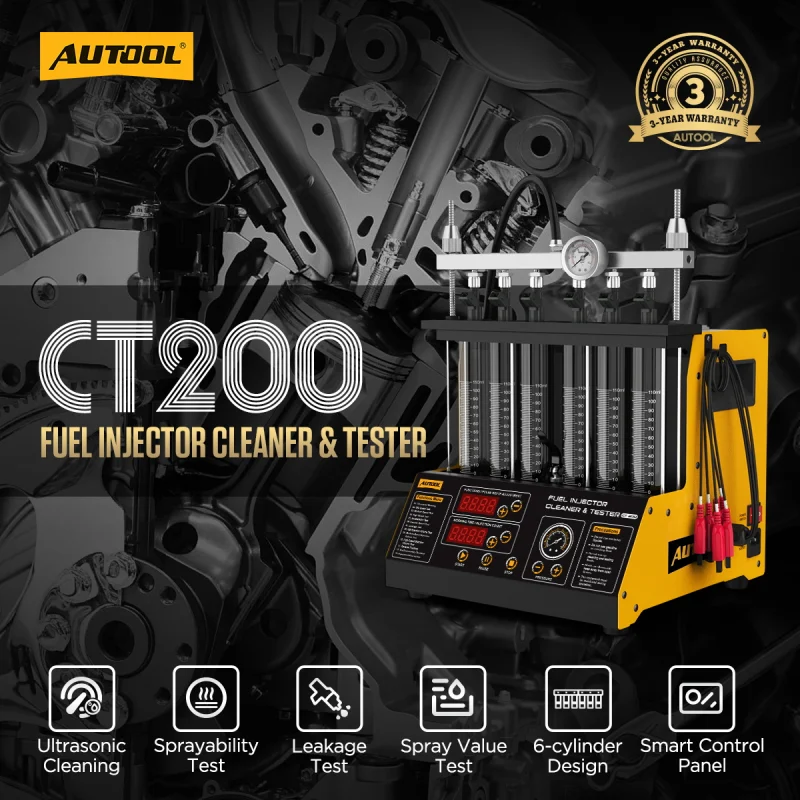
| AUTOOL CT200 | 6 | Standard 12 V EFI/MPI | Six-injector group comparison; not a GDI upgrade | Shops servicing four- and six-cylinder port-injection vehicles |
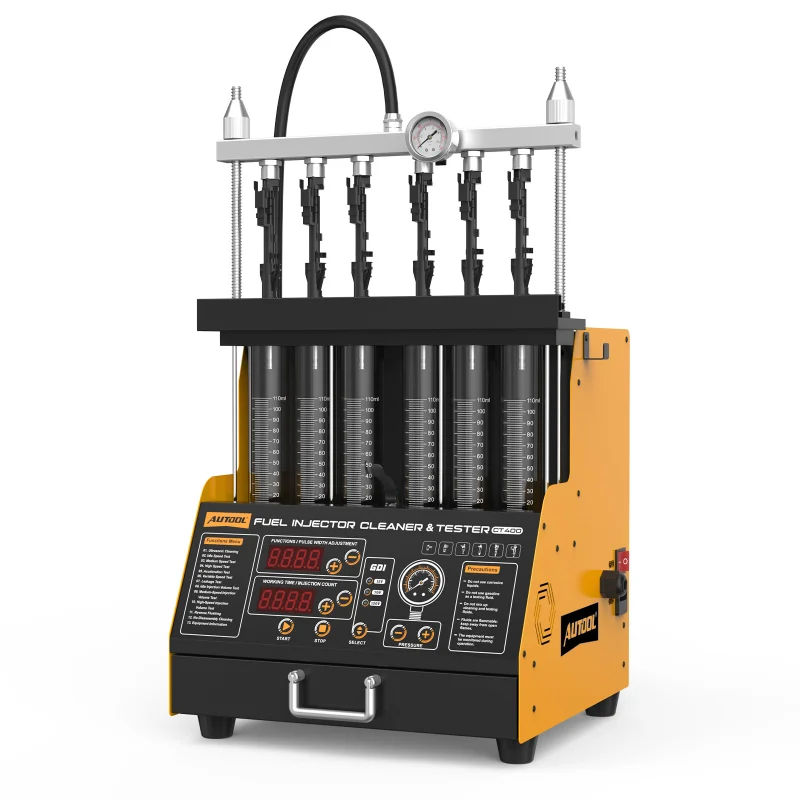
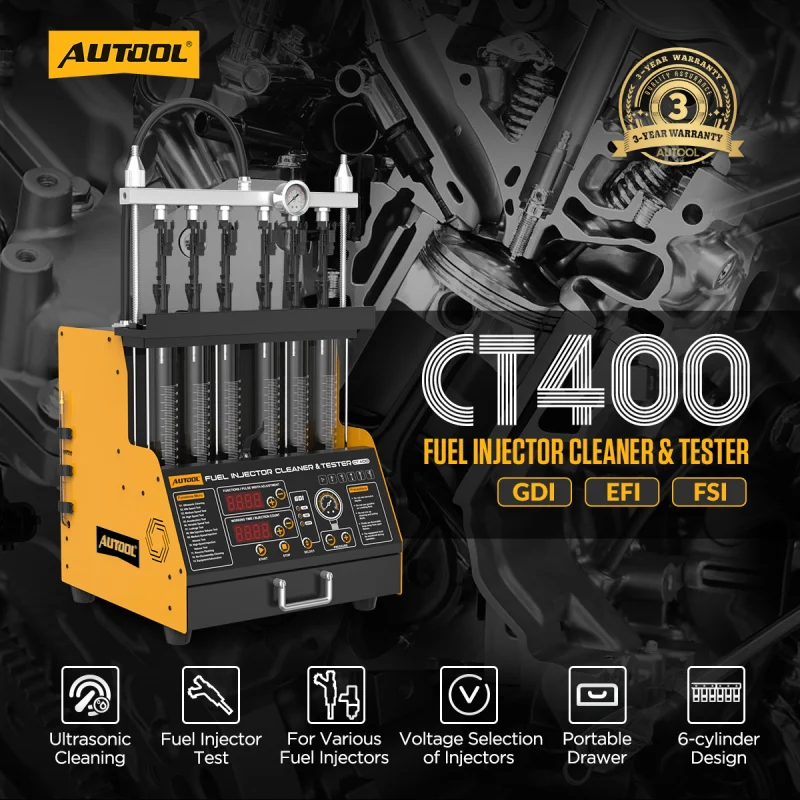
| AUTOOL CT400 | 6 | Compatible GDI/EFI/FSI | Selectable 12 V / 70 V / 120 V drive | Shops adding compatible direct-injection work |
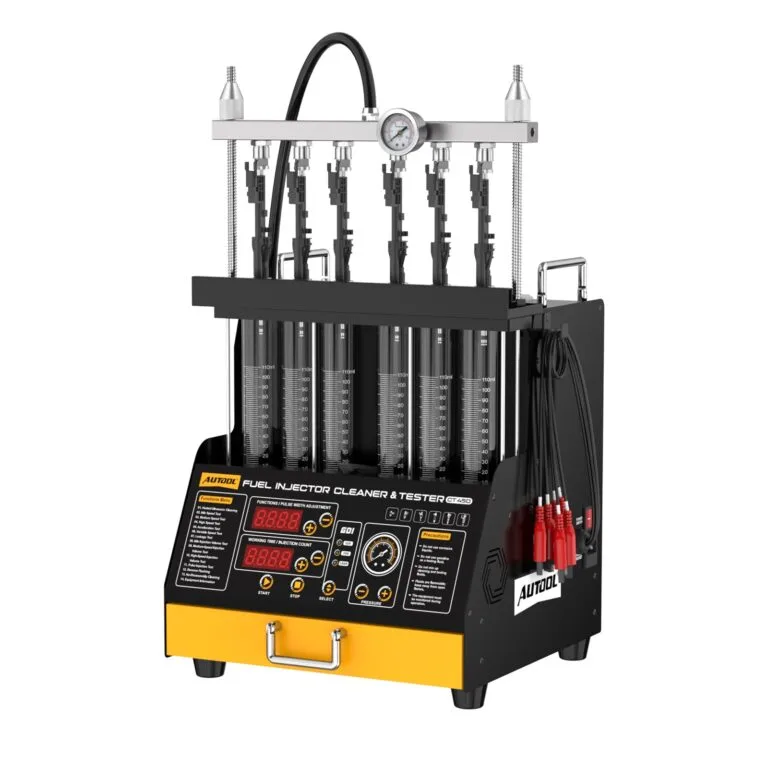
| AUTOOL CT450 | 6 | Compatible GDI/EFI/FSI | Heated cleaning up to 50°C | Shops prioritizing heating and GDI compatibility |
| AUTOOL CT500 | 6 | Compatible GDI/EFI/FSI | Finer pulse control and additional test modes; no heating | Users prioritizing test settings and repeatable comparisons |
| AUTOOL FN602 | 4 | Compatible GDI/EFI/FSI | Four positions and heated cleaning | Users mainly handling four-injector sets |
| AUTOOL FN603 | 6 | Compatible GDI/EFI/FSI | Six positions and heated cleaning | Mixed four- and six-cylinder workshop traffic |
| AUTOOL FN606 | 6 | Compatible injectors requiring wider drive options | Wider drive ranges and a separate heated cleaner | Specialist users with a verified compatibility need |
| AUTOOL FN608 | 8 | Eight-injector comparison and compatible GDI work | Eight positions and twin independent pumps | Shops regularly servicing V8 injector sets |
Application categories are a shortlist, not a guarantee that every injector in that category is supported. Check the current product page and supplied revision before ordering.
CT150, CT160 and CT200: Choosing for Standard EFI Work#
These three models suit users starting with conventional gasoline injector cleaning and comparison testing.
CT150: A Straightforward Four-Injector Starting Point
If you mainly service four compatible standard injectors at a time and use the machine occasionally, CT150 is an entry-level option for ultrasonic cleaning and before-and-after comparison. It is intended for standard 12 V gasoline injector work, rather than GDI applications.
CT160: Four Positions with Heated Cleaning
CT160 adds ultrasonic heating up to approximately 45°C. It is worth considering if you want a heated cleaning process without moving to a six-position bench. Use approved fluid and the prescribed settings; heating does not replace correct injector compatibility or cleaning procedures.
CT200: Six-Injector Capacity for Conventional Gasoline Systems
CT200’s main advantage is its six test positions. For shops that regularly handle six-injector sets, it reduces the need to split a set into batches. The upgrade is in working capacity: CT200 does not add GDI compatibility.
Explore the models: AUTOOL CT150 · AUTOOL CT160 · AUTOOL CT200
CT400, CT450 and CT500: Which Suits a General Repair Shop?#
All three are candidates for supported GDI applications. The practical differences lie in heating and parameter control, so choose around the procedures you perform most often.
CT400: Start with Compatible Direct-Injection Service
For a shop adding direct-injection cleaning and bench testing, CT400 is a starting point for checking injector compatibility. Its selectable drive settings help it cover suitable applications beyond standard 12 V injectors; the benefit is broader supported drive options, not more positions than CT200.
CT450: Prioritize Heated Ultrasonic Cleaning
CT450 adds heated ultrasonic cleaning up to approximately 50°C. It is a useful comparison candidate when heating is part of your routine cleaning workflow and you also need compatibility with supported direct-injection injectors.
CT500: Prioritize Pulse Adjustment and Test Modes
CT500 provides pulse-width adjustment from 0–40 ms in 0.1 ms steps. Compared with CT450, its additional modes include wide-pulse injection and continuous injection testing. These differences matter when you need more control over repeated fuel injector testing and clean-and-retest comparisons.
CT500 does not include ultrasonic heating. Choose CT450 if heating is the priority; compare CT500 if finer settings and more test modes are the priority. CT400 remains an option when you need a simpler GDI-compatible bench.
Explore the models: AUTOOL CT400 · AUTOOL CT450 · AUTOOL CT500
FN602 and FN603: Heated Options for Four- and Six-Injector Sets#
The first distinction between FN602 and FN603 is four versus six simultaneous test positions.
FN602 suits users who mainly work with four-injector sets. Its supported GDI/EFI/FSI applications and heated cleaning make it worth comparing with six-position CT models when four-injector capacity is sufficient for your actual workload.
FN603 suits shops handling both four- and six-injector sets. It provides six-position comparison, selectable 12 V / 70 V / 120 V drive settings, and a 2,000 mL heated cleaning tank rated up to approximately 45°C.
If six-injector jobs are rare, four positions may be enough. If they regularly enter the shop, six positions make whole-set comparisons and setup more convenient. Neither choice removes the need to verify adapters and drive requirements.
Explore the models: AUTOOL FN602 · AUTOOL FN603
FN606 and FN608: When Is an Upgrade Worthwhile?#
FN606: Upgrade for a Specific Drive or Cleaning Requirement
FN606 builds on a six-position layout with wider supported drive ranges, a separate heated ultrasonic cleaner and finer pulse adjustment. Consider it when your regular injector applications justify those features, rather than upgrading on the model name alone.
Check your common injector part numbers against the supported drive settings and adapter options before deciding whether the extra capability is useful for your shop.
FN608: Eight-Injector Comparison with Twin Pumps
FN608 offers eight test positions and two independent pumps, with a listed bench pressure range of 0–0.8 MPa. For shops regularly servicing compatible V8 injector sets, testing eight together reduces batch changes and makes whole-set observation easier.
Drive voltage and test pressure are different specifications. Drive settings determine whether the bench can operate a supported injector as required. Test pressure defines the hydraulic conditions on the bench. GDI drive compatibility does not mean the machine recreates the vehicle’s full high-pressure operating conditions.
Explore the models: AUTOOL FN606 · AUTOOL FN608
A Quick Buying Checklist for Your Workshop#
- Identify your injectors: record the vehicle, engine and injector part number, along with EFI/MPI or direct-injection type.
- Confirm compatibility: check drive requirements, connector cables, adapters and seals before choosing a model.
- Match capacity to workload: choose four, six or eight test positions around the sets you regularly service.
- Choose useful features: compare heating, pulse adjustment, test modes and cleaning-tank access.
- Plan daily operation: confirm power supply, approved cleaning and test fluids, fluid changes and maintenance procedures.
Choose the Fuel Injector Tester That Fits Your Work#
There is no single best model for every user. CT150, CT160 and CT200 are starting points for standard EFI work. For supported direct-injection applications, compare CT400, CT450, CT500 and the FN models by their actual drive and cleaning specifications. Shops with regular eight-injector work should consider the workflow benefits of FN608.
Before ordering, list the vehicles you commonly service, confirm injector type and drive requirements, then balance capacity, budget and operating features. A suitable fuel injector cleaner and tester can support more consistent cleaning, comparison testing and customer explanations.
Need help narrowing the shortlist? Send your common vehicle models, injector part numbers and expected workload to AUTOOL so we can help you check the configuration.

Discussion
Comments 0
Need help with an order, warranty or a fault? Contact support
No comments yet. Ask a question or share how the tool worked for you.