



When checking a vehicle for leaks, locating the problem is often the most time-consuming part. Hoses may be tucked into tight spaces, connections may show no visible damage, and small leaks can be difficult to pinpoint. For technicians looking to improve their diagnostic workflow, a smoke leak detector suited to their needs deserves a place on their 2026 tool shopping list.
The AUTOOL SML series offers four models with distinct strengths: the SML310, SML330, SML400, and SML500. From basic air and smoke testing to flow adjustment, timed pressure-hold testing, and touchscreen settings, the range lets users choose features that match their work. Below, we explore each model’s specifications and features to help you choose.
1. Why Use a Smoke Leak Detector?#
Smoke testing makes leak paths easier to locate. Once the system is properly connected and sealed, technicians can look for escaping smoke around hoses, connections, and seals to narrow down the source of a leak.
When choosing a detector, consider more than smoke output. Controls, pressure feedback, air supply requirements, and retesting needs also matter. Routine leak checks, tests requiring adjustable output, and pressure-hold testing call for different capabilities. Understanding these differences helps you choose the right equipment for your budget.
2. SML310: Built for Everyday Leak Checks#
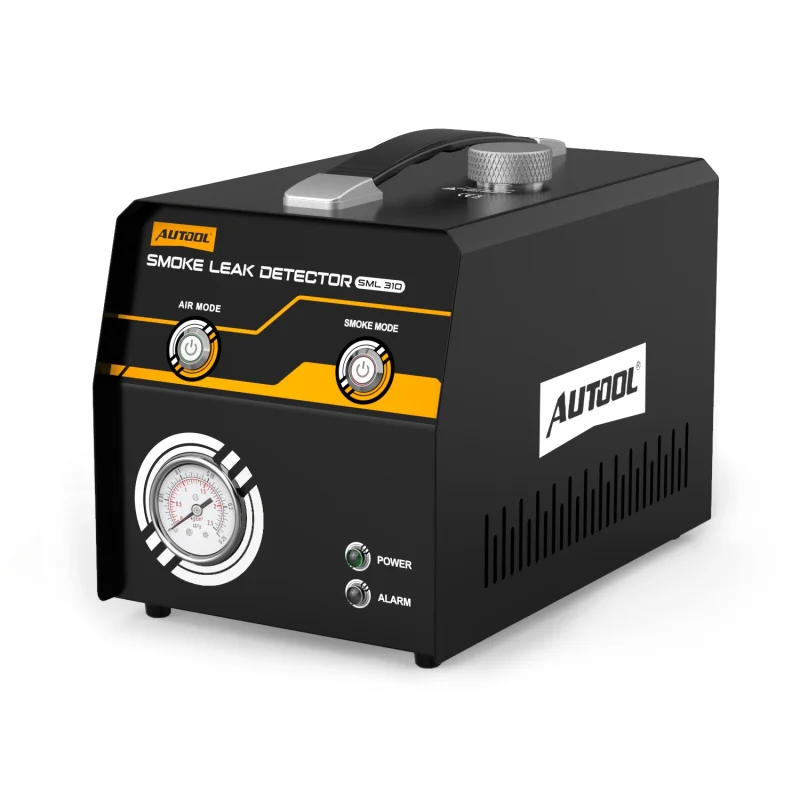
If you are adding a smoke leak detector to your workstation and value essential features and straightforward operation, the SML310 is a good starting point.
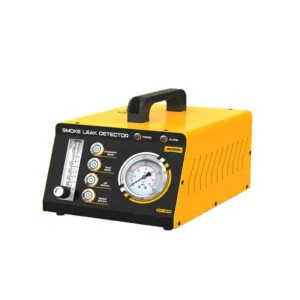
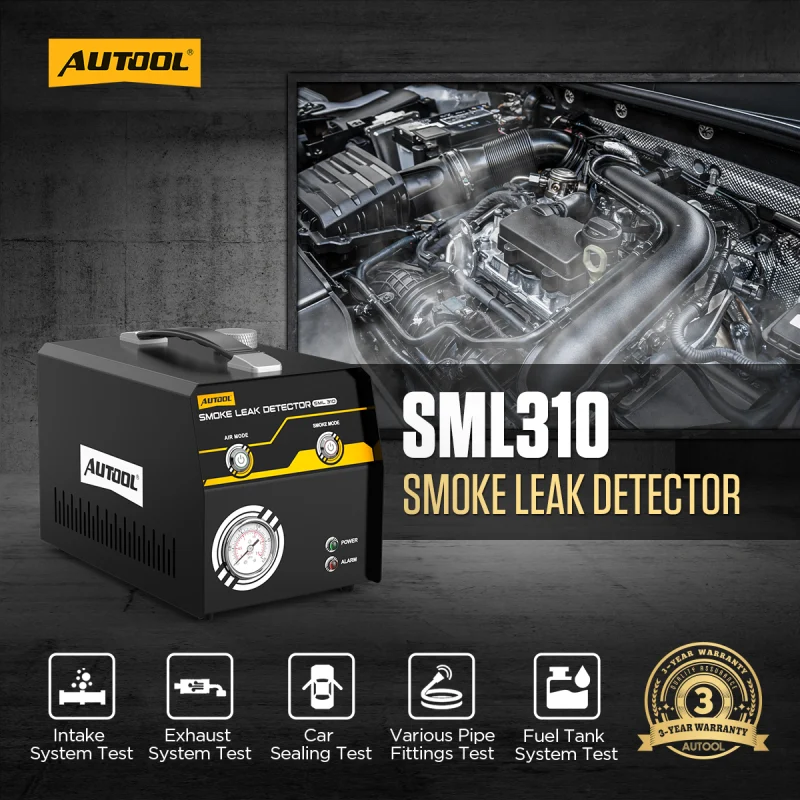
It offers air and smoke modes, a built-in air pump, and a mechanical pressure gauge. You can first use air mode to observe pressure behavior, then switch to smoke mode to locate visible leak paths. The built-in pump eliminates the need for a separate shop air compressor, making workstation setup easier.
According to the official specifications, the SML310 requires a DC 12V/5A power supply and begins producing smoke in approximately five seconds once setup is complete and the appropriate mode is activated. This refers to the start of smoke output, not the time needed to complete a vehicle inspection.
For users focused on routine leak checks, the SML310 brings air delivery, pressure monitoring, and smoke tracing together in one unit, helping connect the basic testing steps into a practical workflow.
3. SML330: For Users Who Want Flexible Smoke Output Control#
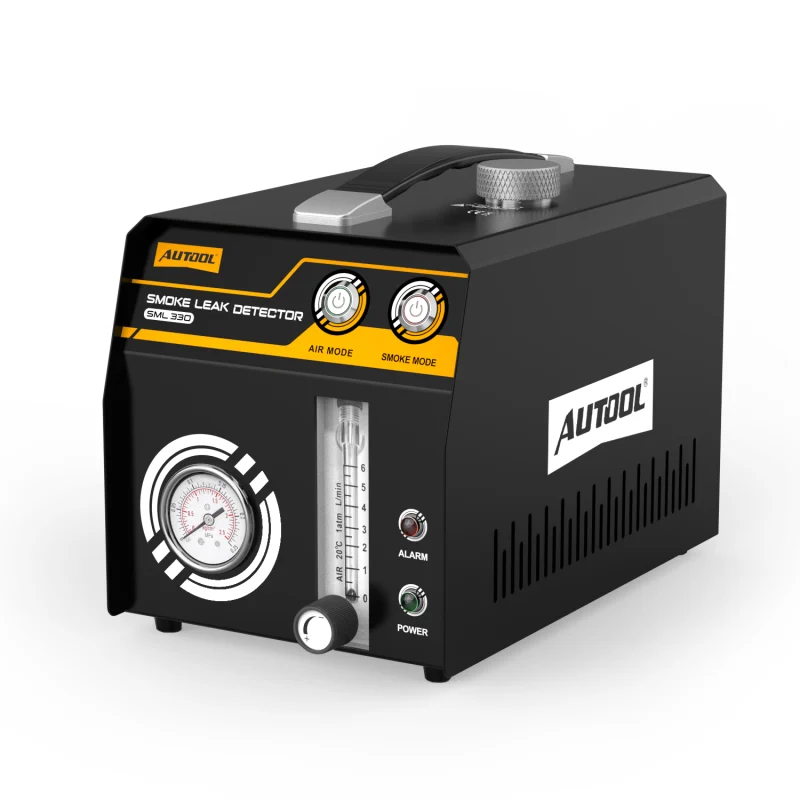
If you want to adjust smoke output to suit the test volume and inspection conditions, consider the SML330.
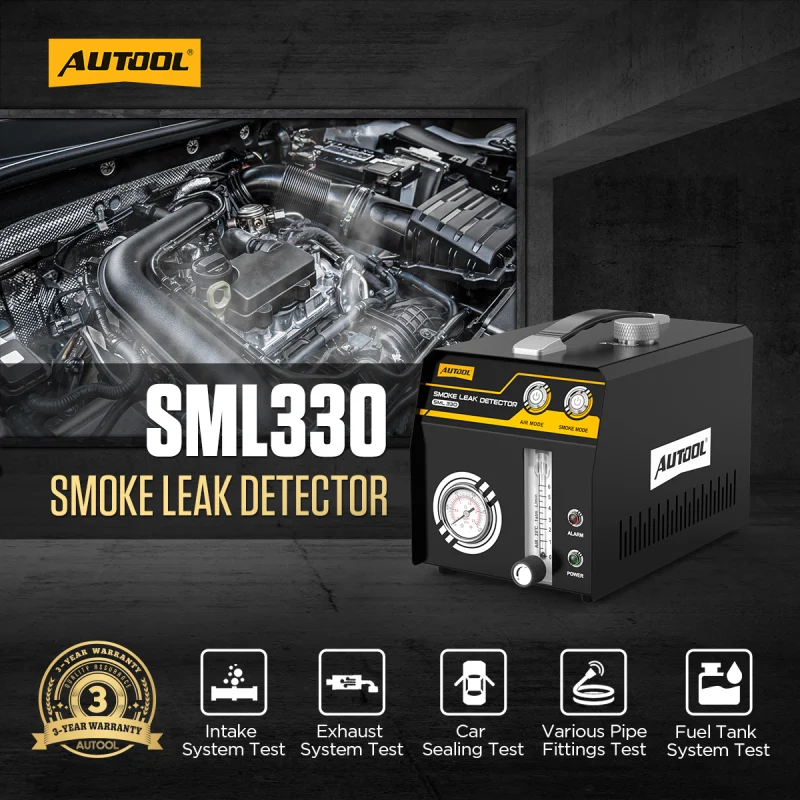
Like the SML310, it features air and smoke modes, a built-in air pump, and a pressure gauge. Its standout feature is adjustable smoke flow. Technicians can gradually adjust output while monitoring pressure behavior and inspecting the system. This provides greater flexibility when testing hoses and systems with different internal volumes.
The main reason to choose the SML330 is the additional control it offers over smoke delivery. For technicians who frequently switch between test setups or want to adjust smoke output themselves, this capability is worth considering.
Smoke flow adjustment and test pressure settings serve different purposes. Always follow the vehicle or component’s testing requirements; smoke volume alone does not determine whether the test conditions are appropriate.
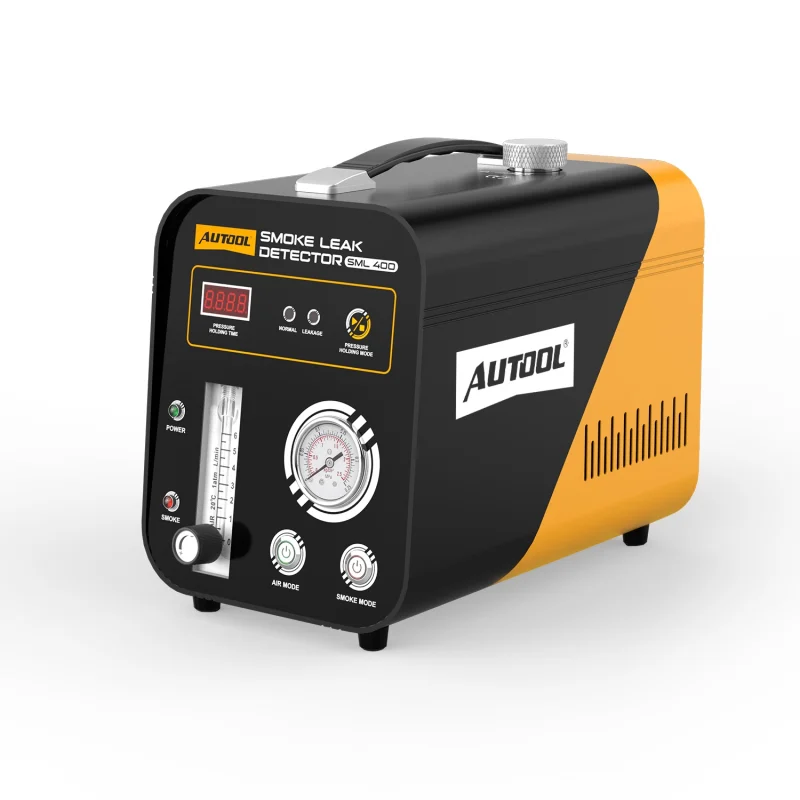
4. SML400: Add Pressure-Hold Testing to Your Workflow#
If you want a timed test with a displayed result before tracing leaks with smoke, the SML400 is a strong fit.
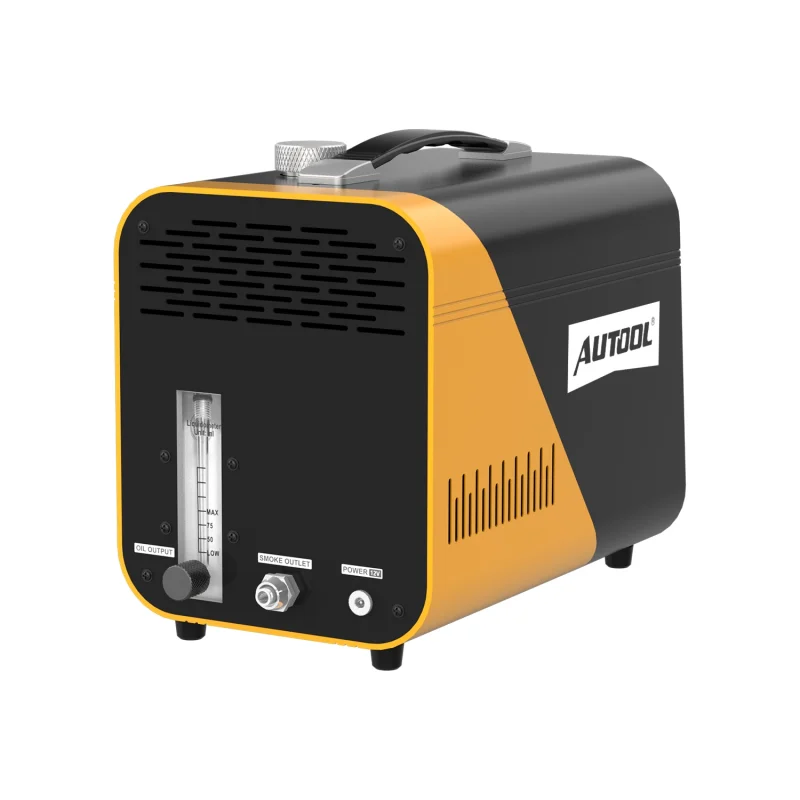
It offers an automatic 180-second pressure-hold routine, with a TFT screen displaying the countdown and a PASS or ERR result. It also supports air and smoke testing. A built-in air pump, pressure gauge, and flow meter allow users to gradually adjust pressure and flow according to the applicable procedure.
These features support a workflow of pressure-hold testing, smoke tracing, repair, and retesting. For example, after replacing a suspected leaking hose, technicians can repeat the test under the same conditions and use pressure behavior alongside smoke inspection to check the repair.
The SML400’s listed accessories include conical adapters, inflatable airbag adapters, and an EVAP connector for connecting and sealing different openings. Before purchasing, confirm the accessory list for your selected version and check compatibility with your intended test points.
5. SML500: For Users Who Value Configurable Settings and Result Review#
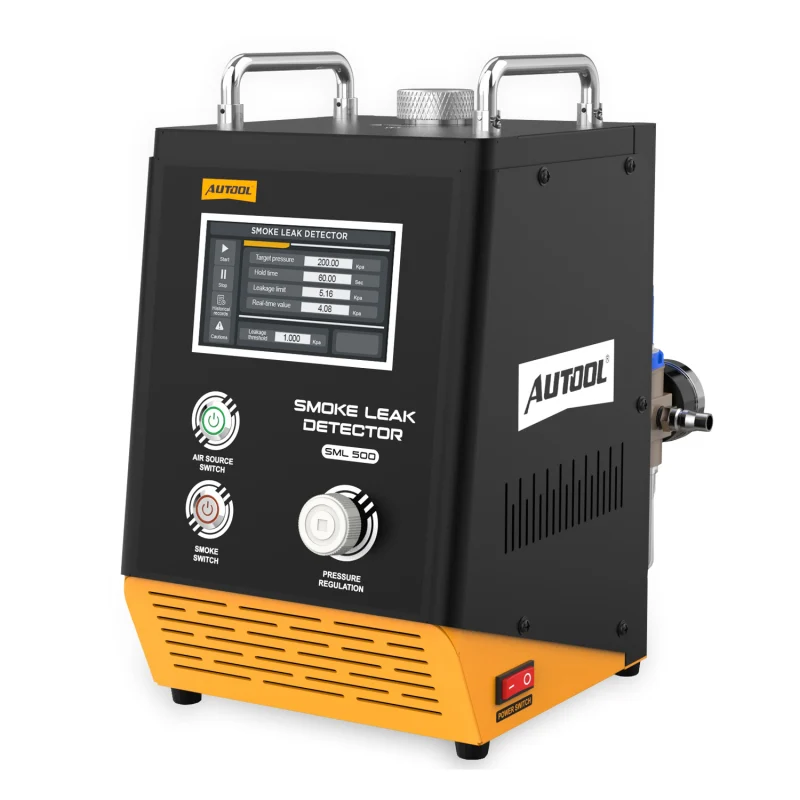
If your work requires more flexibility in setting pressure-hold test conditions, take a closer look at the SML500.
It features a 4.3-inch color touchscreen and allows users to set the target pressure, hold time, and permitted leakage threshold. The hold time can be set to a maximum of 655 seconds. Settings, live pressure, the countdown, and the corresponding result appear on the same interface, making test status easy to follow.
The unit also lets users review the five most recent test results, supporting repeat checks and comparisons before and after repairs. After pressure testing, smoke can be used to inspect specific leak paths.
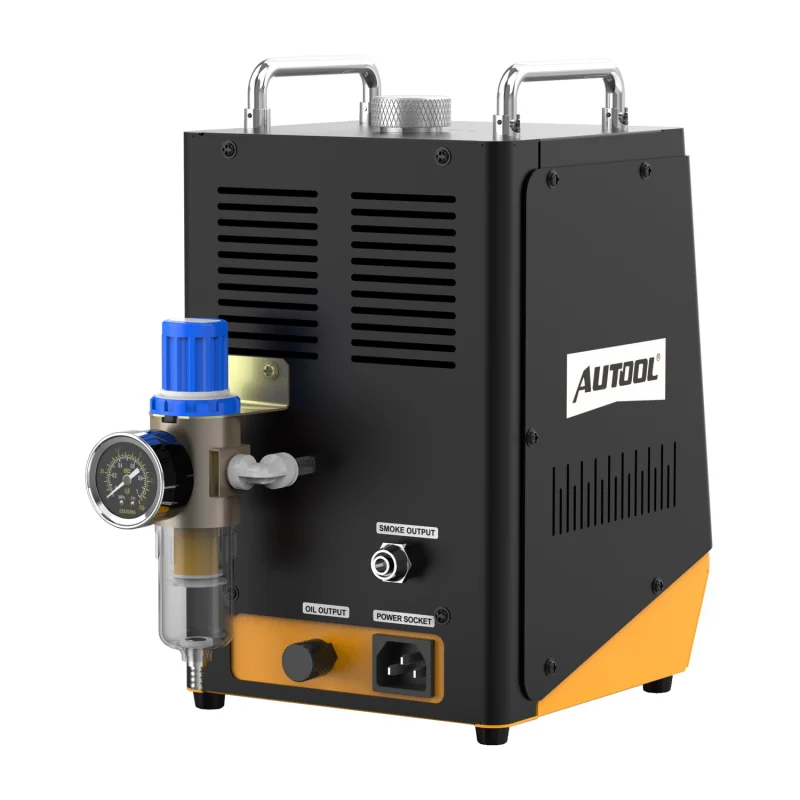
The SML500’s main strengths are configurable test parameters and access to recent results. These features are particularly useful for workstations that follow established testing procedures and need different settings for different tasks. Before purchasing, confirm the power supply and air connection requirements for your selected version.
6. Which Model Is Right for You?#
Start with the tasks your workstation handles most often. For basic air and smoke testing, consider the SML310. If you want adjustable smoke flow, look at the SML330. For a three-minute pressure-hold routine with on-screen results, explore the SML400. If configurable pressure-hold conditions and recent test history are priorities, focus on the SML500.
Then compare your shortlisted models against your budget, usage frequency, accessory needs, and available air supply. Listing the systems you commonly test, the connections you use, and your retesting procedures can also make the selection process easier.
You can also contact us directly with your requirements and typical applications. We can help you choose the equipment that best fits your work and provide a competitive quote.

Discussion
Comments 0
Need help with an order, warranty or a fault? Contact support
No comments yet. Ask a question or share how the tool worked for you.