Still Scrubbing Carbon by Hand in 2026? There’s a Better Way
Introduction
Engine carbon buildup is a problem nearly every repair shop encounters.
With GDI (gasoline direct injection) engines in particular, carbon and sludge tend to accumulate on intake valves and intake ports as mileage adds up. When deposits become severe, symptoms like rough idle, sluggish acceleration, increased fuel consumption, and even a check engine light can follow.
Many shops still rely on traditional chemical cleaning or manual disassembly methods to address carbon. But for stubborn deposits on intake valves and ports, these approaches often take considerable time — and cleaning results can vary significantly depending on the technician’s technique.
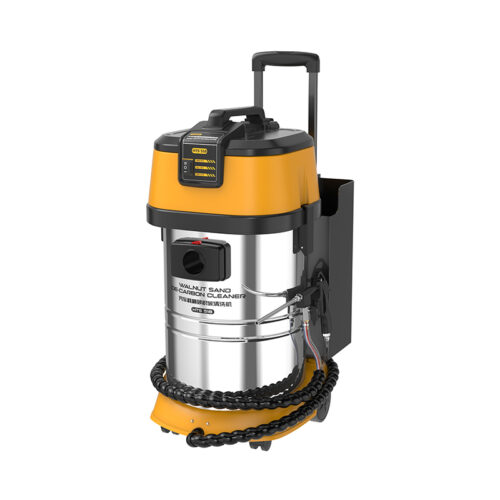
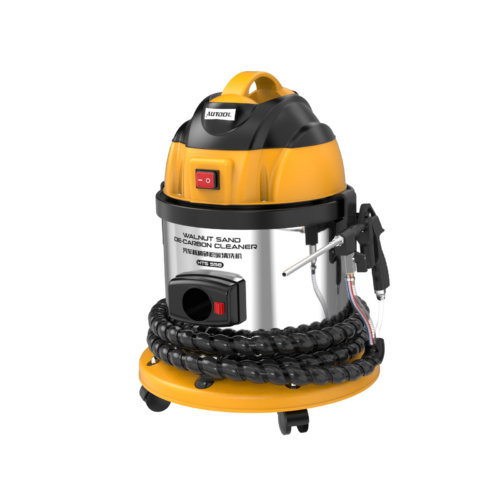
There is, however, a cleaning method that is especially well-suited for repair shops: walnut blasting.
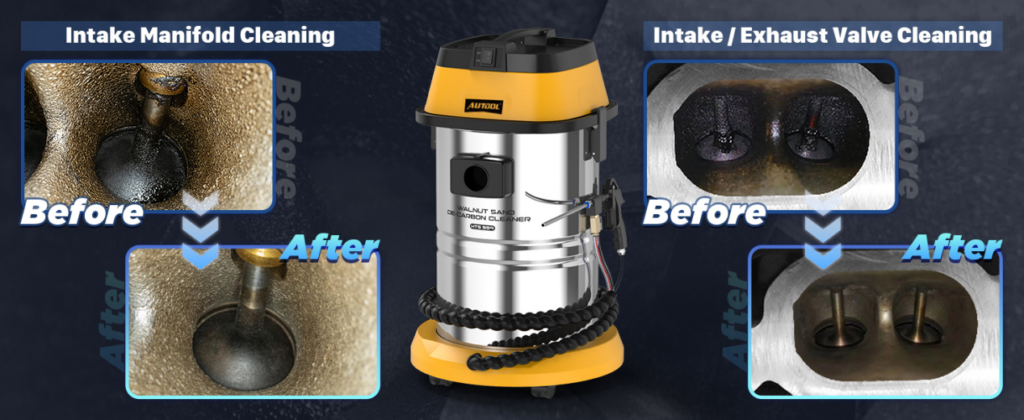
This process uses compressed air to propel fine walnut shell particles at high speed against carbon deposits — quickly breaking up and removing buildup from intake valves and ports while minimizing the risk of damage to metal components.
So what makes walnut blasting stand out? And how should a repair shop choose the right walnut blasting machine?
I. How to Clean Engine Carbon – You Need a Walnut Blasting Machine
Traditional carbon cleaning methods include fuel additives, chemical cleaning, and manual disassembly.
While these approaches aren’t entirely ineffective, they demand significant time and labor — especially when dealing with heavy carbon deposits in the intake system.
Walnut blasting takes a fundamentally different approach.
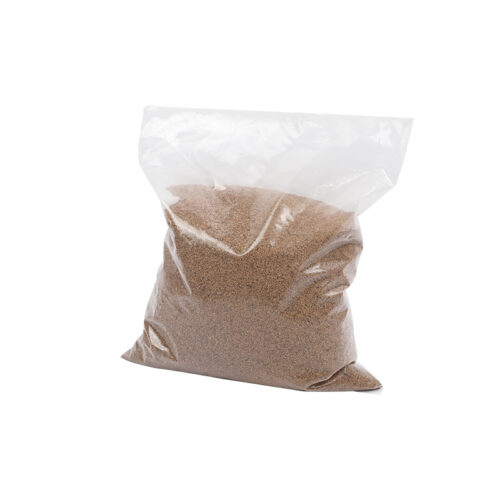
Instead of relying on chemical solvents to dissolve carbon, it uses fine walnut shell particles for physical cleaning.
During operation, the technician accesses the intake system to the appropriate service position and uses the walnut blasting machine to direct the particles at the carbon buildup. The high-speed airflow carries the walnut shell particles to impact the deposits, causing hardened carbon to fracture and detach.
Walnut shell particles are hard enough to remove carbon effectively, yet softer than metal abrasives — making them suitable for cleaning precision components like intake valves and ports.
For repair shops, the biggest value of this method is that the cleaning process is more direct and targeted, significantly reducing the time spent manually scraping carbon.
II. Walnut Blasting vs. Traditional Cleaning – More Efficient, More Cost-Effective, More Eco-Friendly
Do you find traditional carbon cleaning methods too time-consuming and labor-intensive? Spending hours on stubborn carbon buildup — only to end up with less-than-perfect results — wastes time and eats into your profitability. Walnut blasting solves these pain points:
Higher Efficiency
When dealing with thick carbon deposits, relying solely on manual scraping or brushing requires repeated effort. With a walnut blasting machine connected to a 6–8 bar air compressor, high-pressure particles work continuously to remove carbon — achieving in minutes what would take an hour of manual labor.
Lower Cost
For repair shops, saving labor time is critical. Traditional cleaning methods often require extended hands-on work — and paying multiple technicians for hours can quickly add up to the cost of a walnut blasting machine itself, often with less-than-satisfactory results. A professional walnut blasting machine not only cleans more thoroughly but also saves significant time.
This means repair shops can not only improve processing efficiency per vehicle, but also have the opportunity to serve more customers within the same working hours.
Better Cleaning Results
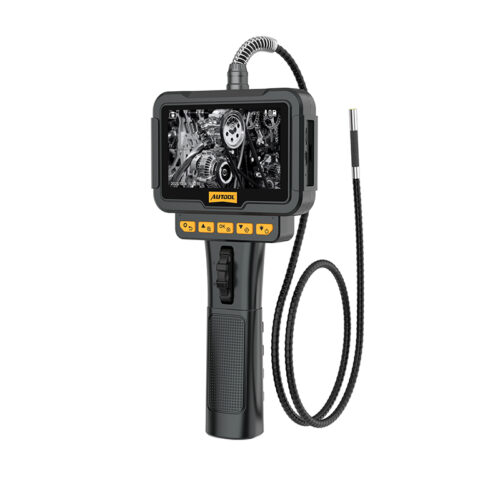
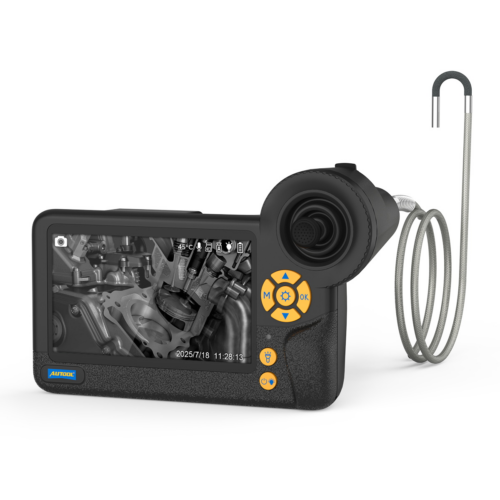
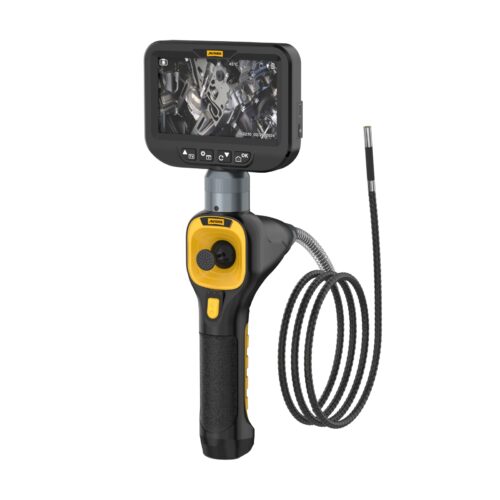
Walnut shell particles can reach areas that manual tools can’t easily access — cleaning around intake valves and deep into intake ports with precision. After cleaning, technicians can use a borescope to verify the results.
More Eco-Friendly Cleaning Media
Walnut shells are a natural plant-based material — reducing reliance on harsh chemical solvents. That said, waste material from the blasting process must still be collected and disposed of according to local workshop waste regulations — so it’s not a completely “waste-free” solution, but it is significantly more environmentally friendly.
For repair shops handling a high volume of vehicles daily, the real advantage of walnut blasting isn’t about any single metric — it’s the balanced combination of efficiency, labor savings, and cleaning effectiveness.
III. What Can a Walnut Blasting Machine Clean?
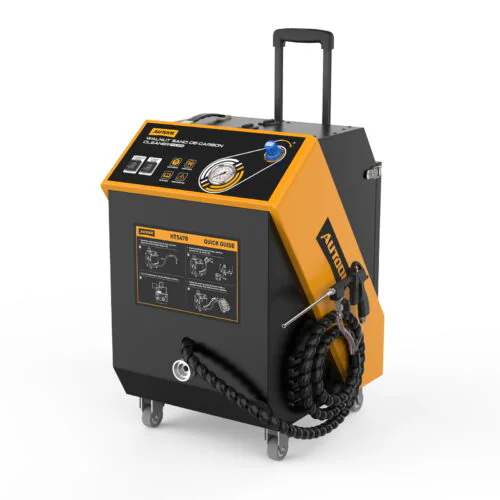
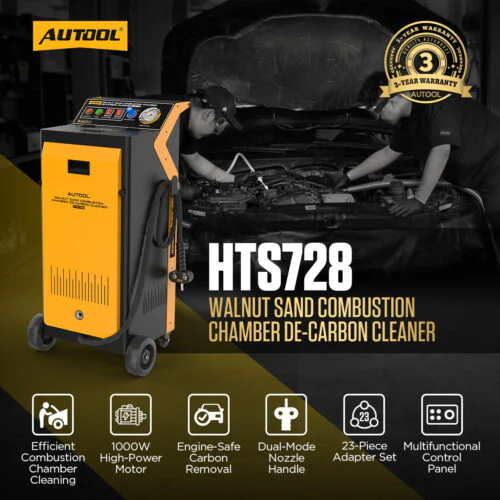
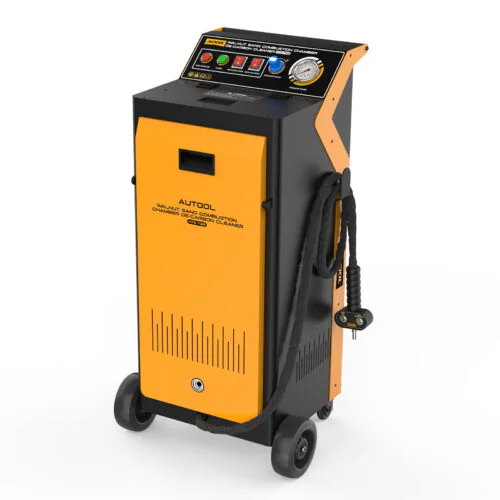
The most typical application for a walnut blasting machine is cleaning carbon from the intake manifold and intake ports. Some higher-end models, like the AUTOOL HTS728, also support combustion chamber cleaning.
On GDI engines, fuel is injected directly into the cylinder — unlike port-injected engines where fuel continuously washes over the intake valves. As a result, carbon tends to build up on the backs of intake valves over time.
This is precisely why many shops choose walnut blasting for GDI carbon cleaning.
However, walnut shell blasting is not a tool that can be sprayed into any part of the engine without limitation. Technicians must select the appropriate nozzle, pressure settings, and walnut shell media based on the engine design — while also ensuring proper masking, vacuuming, and waste collection to prevent media from entering the cylinders or other sensitive areas.
A proper workflow and professional equipment are equally important.
IV. Is Walnut Media Easy to Source? How Long Does It Last? Does It Leave Residue?
Is Walnut Media Easy to Source?
Many first-time buyers ask:
“Is walnut media hard to find?”
Not at all. Walnut shell media has become a widely available blasting material in the automotive carbon cleaning industry. Shops can easily source the appropriate grade for their equipment.
How Long Does One Fill Last?
It is important to note that walnut shell media cannot be reused indefinitely simply by adding it into the machine.
During the cleaning process, walnut shell media comes into contact with carbon deposits, oil residue, and other contaminants. Some particles may break down during blasting, while others may become contaminated. Therefore, the actual number of times walnut shell media can be reused depends on several factors, including particle size and quality, carbon buildup severity, the machine’s filtration system, and the methods used for collection and screening.
For repair shops looking to reduce consumable costs, used walnut shell media can be properly collected and screened before reuse. This process should remove obvious contaminants and excessively fine particles, while technicians should determine whether the media remains suitable for continued use based on the equipment requirements.
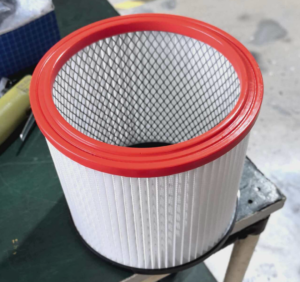
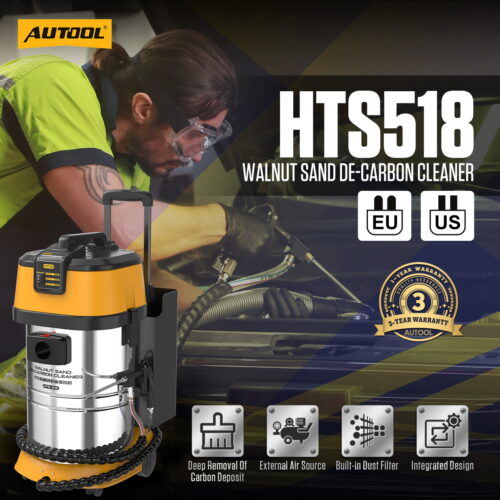
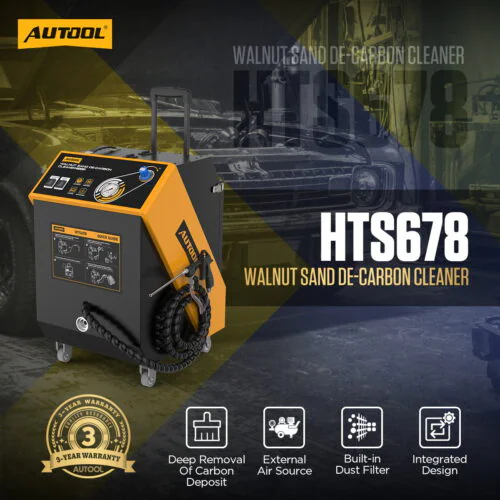
Alternatively, shops can choose a walnut shell blasting machine equipped with a built-in filtration system. For example, all AUTOOL walnut shell carbon cleaning machines feature integrated filtration systems. High-end models such as the AUTOOL HTS678 and HTS728 are also equipped with HEPA filters, allowing the media to be effectively recycled and supporting continuous cleaning of 10+ vehicles in typical applications.

 autoolstore.com