
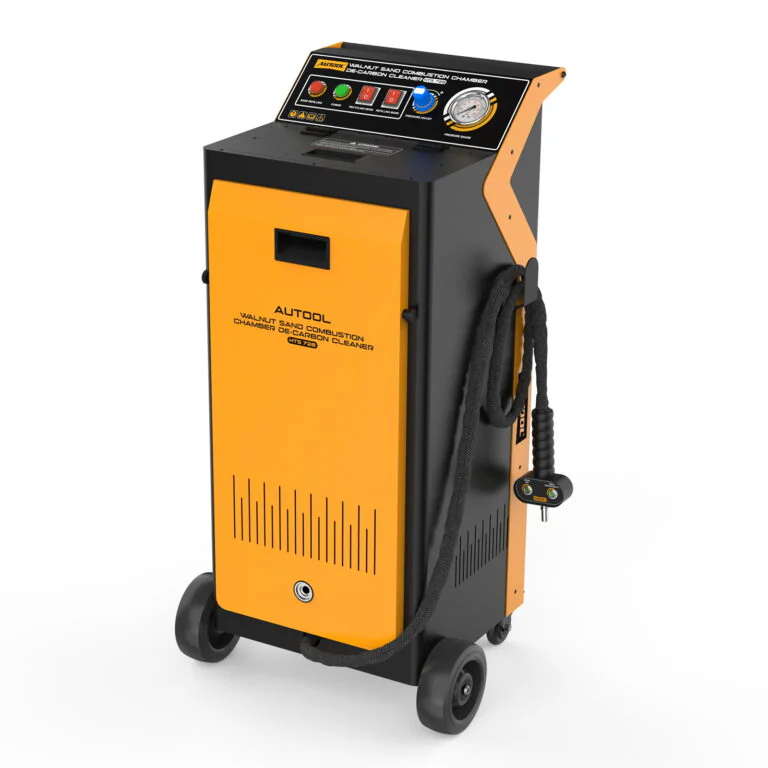
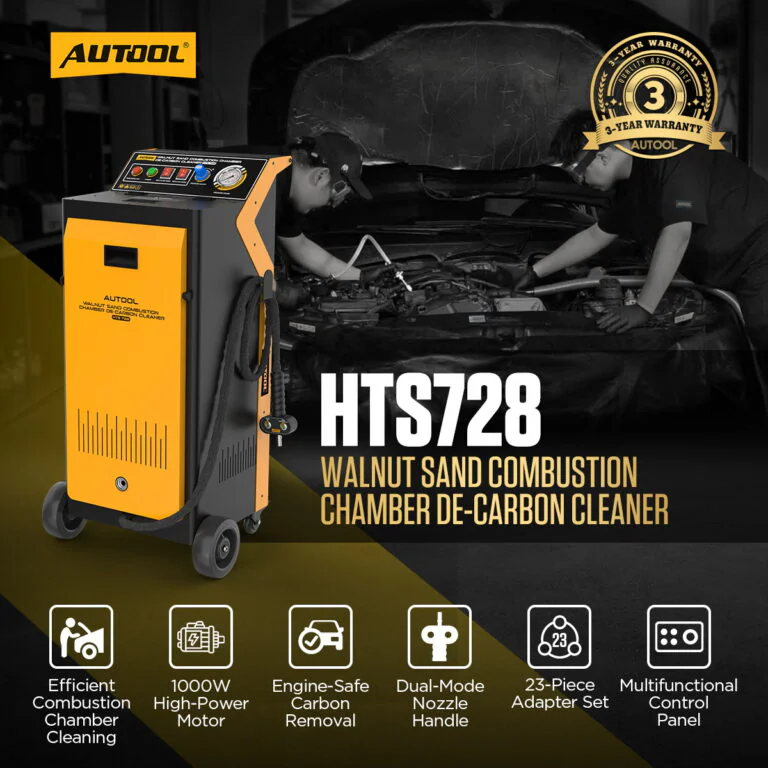






AUTOOL HTS728 Walnut Blasting Machine
US$2,399.00
- HEPA Media Recovery
- Dedicated Operating Controls
- Expanded Cleaning Workflows
- Adapters & Nozzles
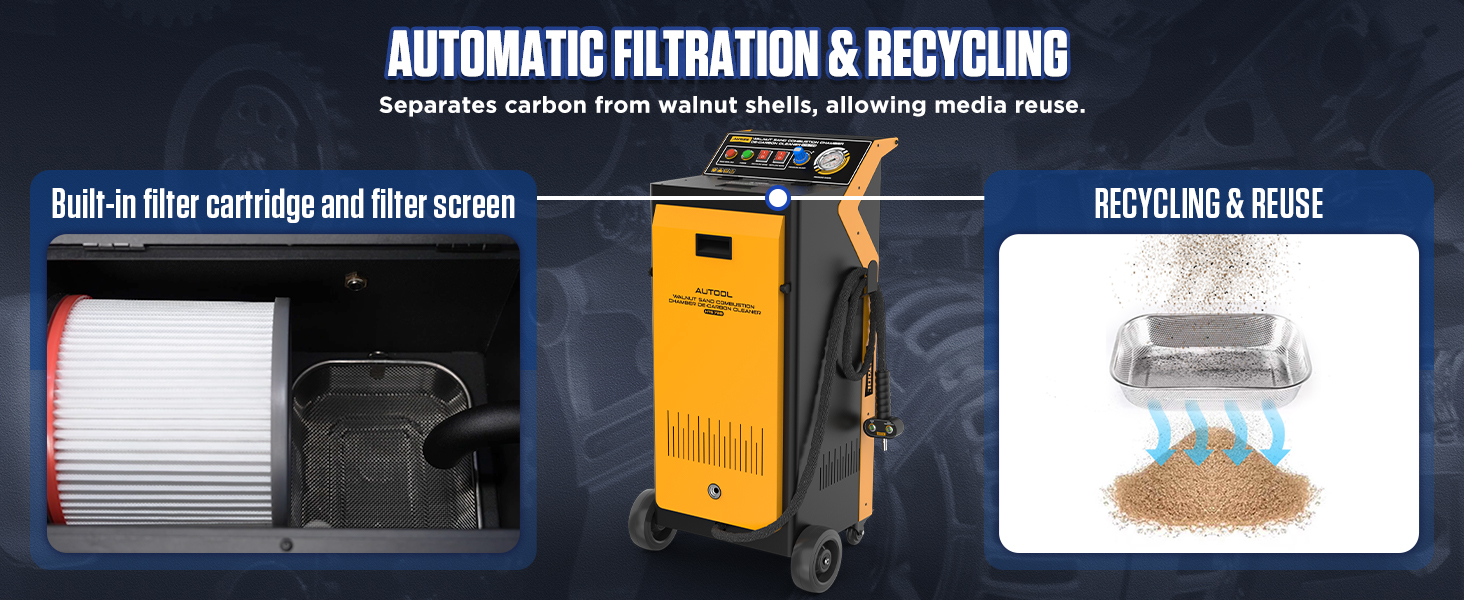
- HEPA Media Recovery: Integrated recovery with HEPA and dust filtration helps collect walnut media, carbon residue, and fine particulate during professional cleaning work.
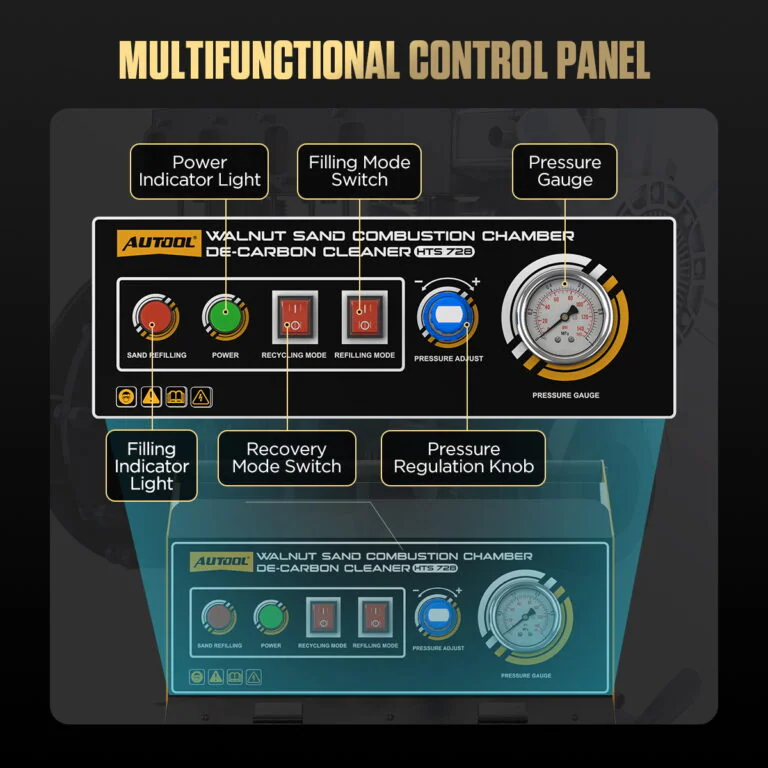
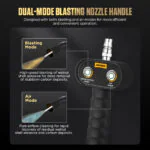
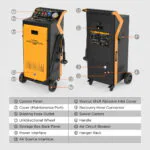
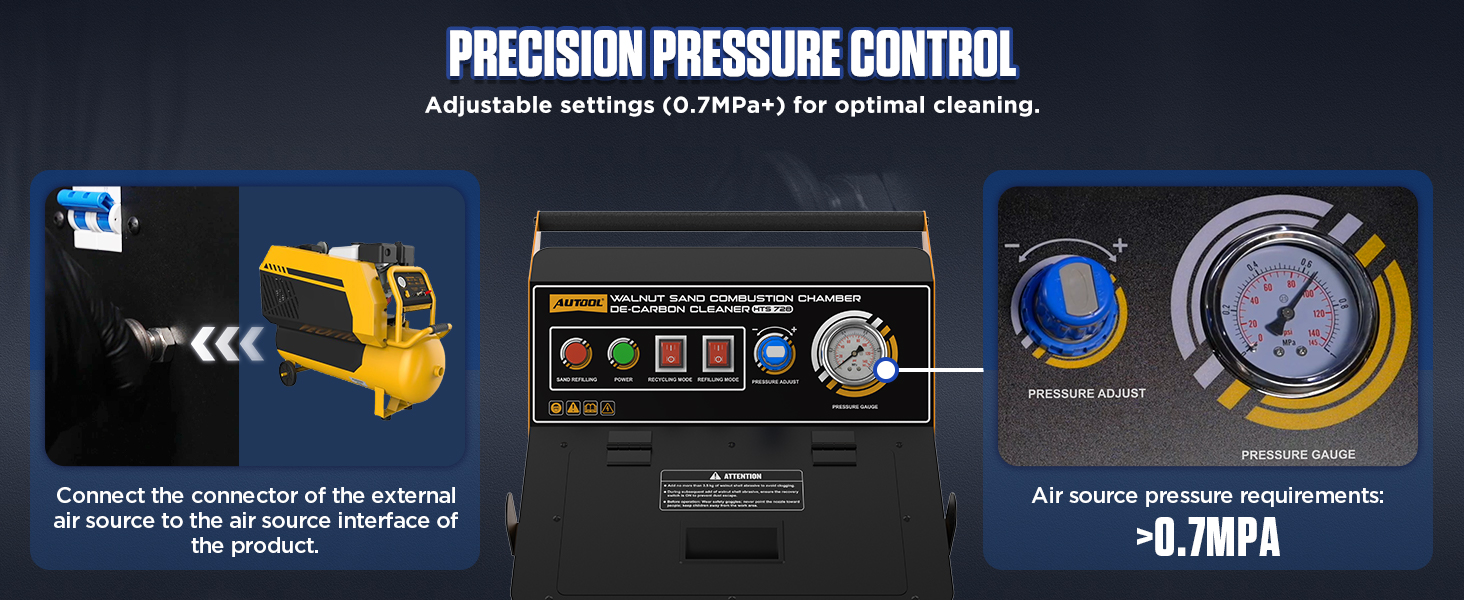
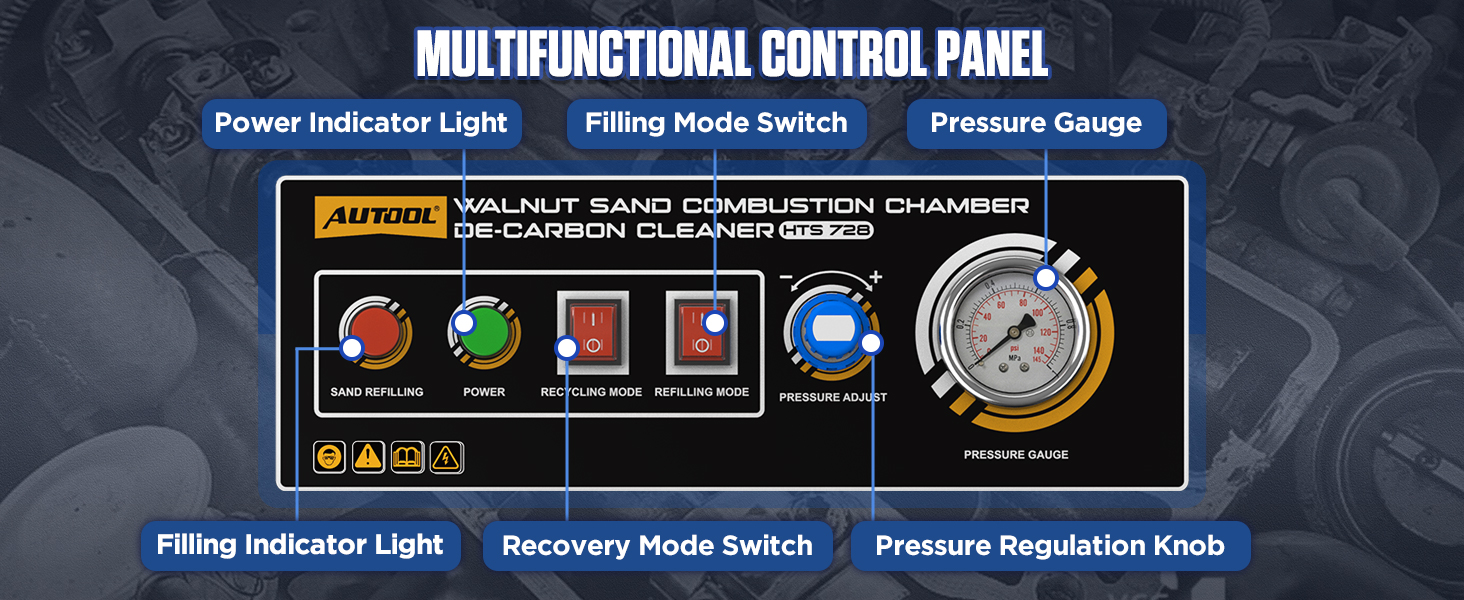
- Dedicated Operating Controls: Recovery / Filling modes, a pressure gauge, and a regulating knob provide dedicated controls for media handling and blasting setup.
- Expanded Cleaning Workflows: Supports intake-manifold and valve-area cleaning, with a combustion-chamber procedure reserved for specifically validated applications.
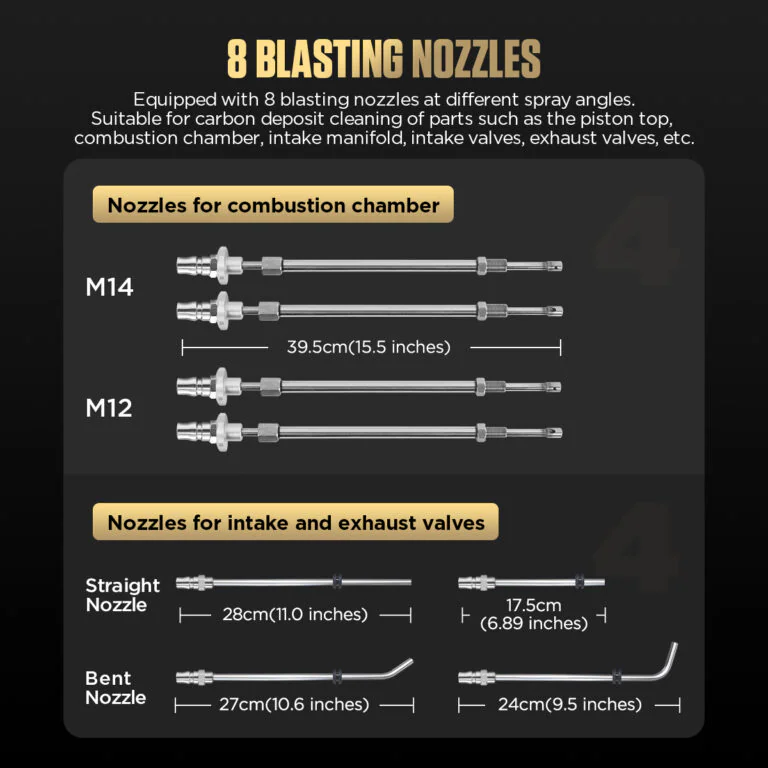
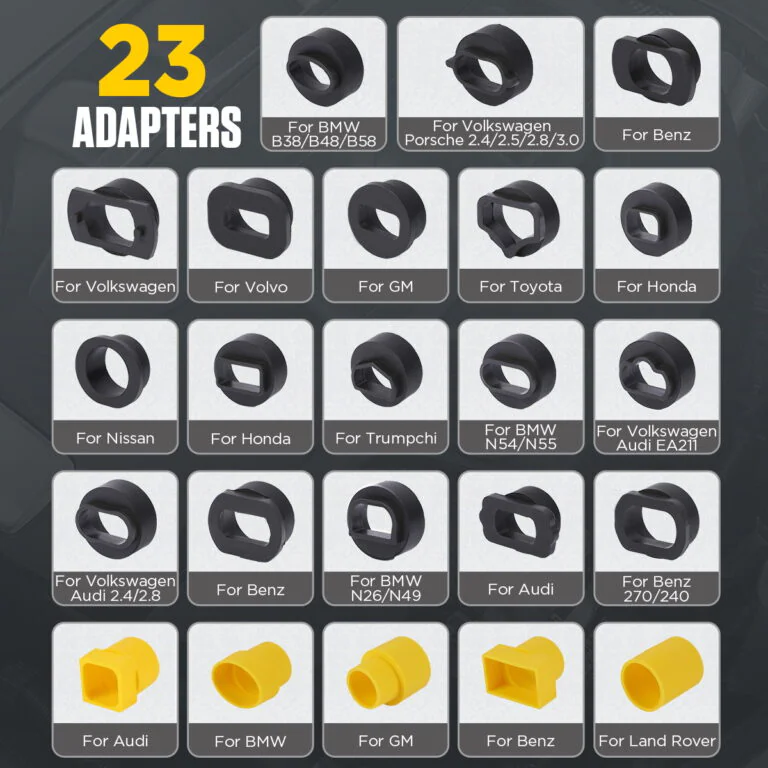
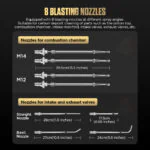
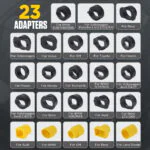
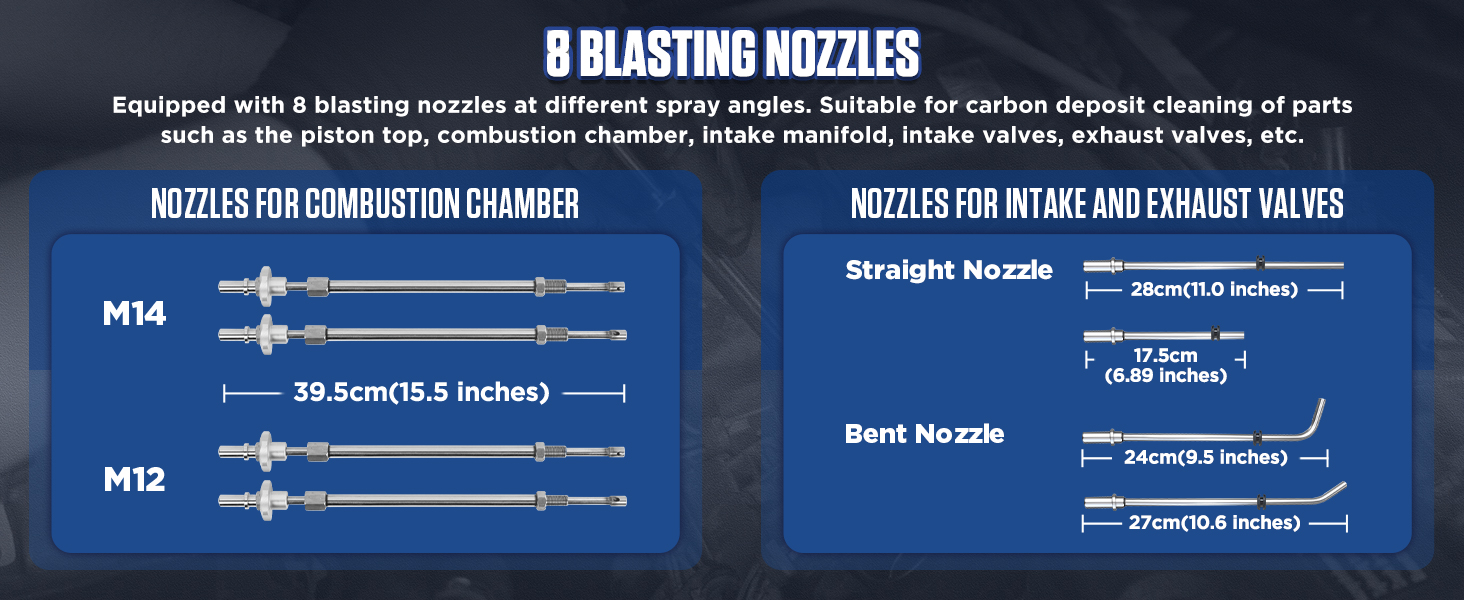
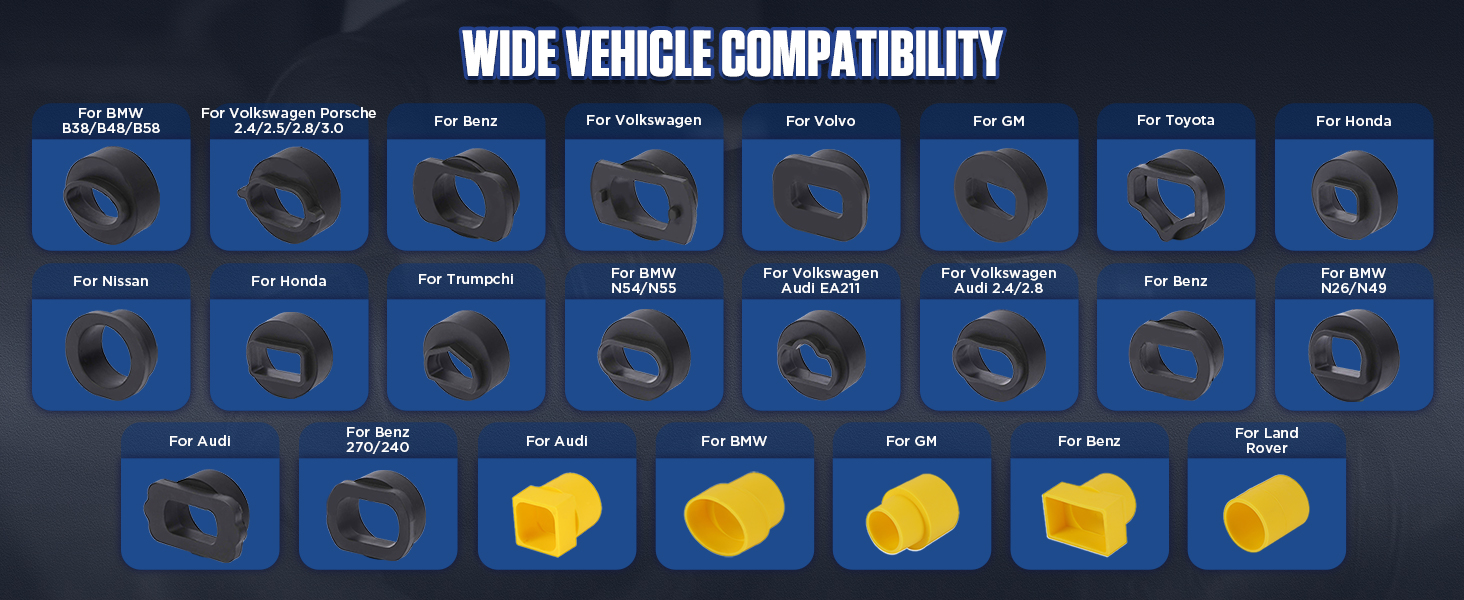
- Adapters & Nozzles: Five adapter types and multiple blasting nozzles support different port shapes and cleaning setups.
- HEPA Media Recovery: Integrated recovery with HEPA and dust filtration helps collect walnut media, carbon residue, and fine particulate during professional cleaning work.
- Dedicated Operating Controls: Recovery / Filling modes, a pressure gauge, and a regulating knob provide dedicated controls for media handling and blasting setup.
- Expanded Cleaning Workflows: Supports intake-manifold and valve-area cleaning, with a combustion-chamber procedure reserved for specifically validated applications.
- Adapters & Nozzles: Five adapter types and multiple blasting nozzles support different port shapes and cleaning setups.
- 3-Year Warranty Main unit 3 years · Accessories 1 year
- 90-Day Returns Eligible returns within 90 days
- Official Store Genuine products · Direct support
AUTOOL HTS728 · Expert-Grade Walnut Blasting Machine
HEPA Filtration with Integrated Media Recovery
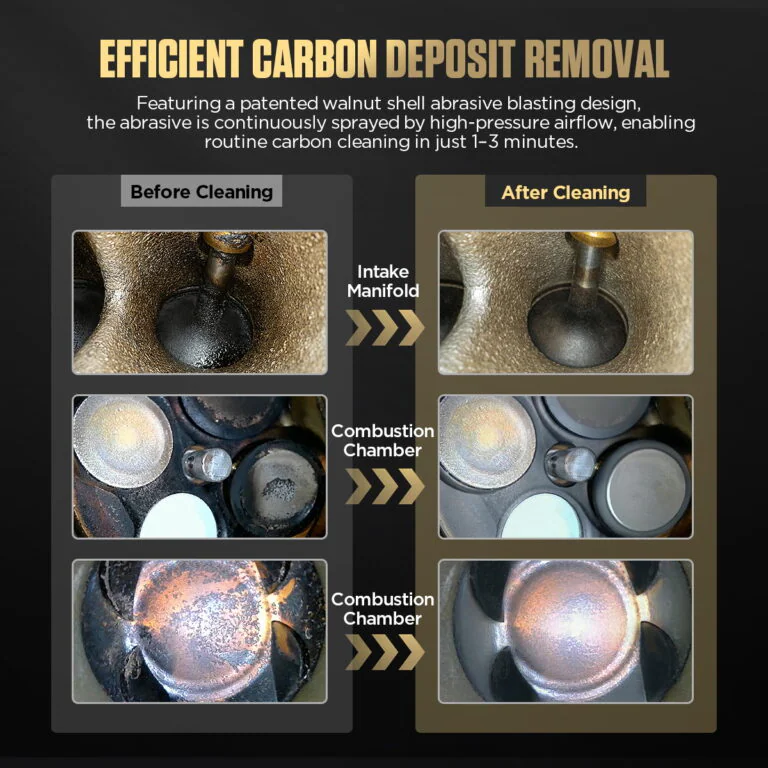
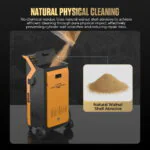
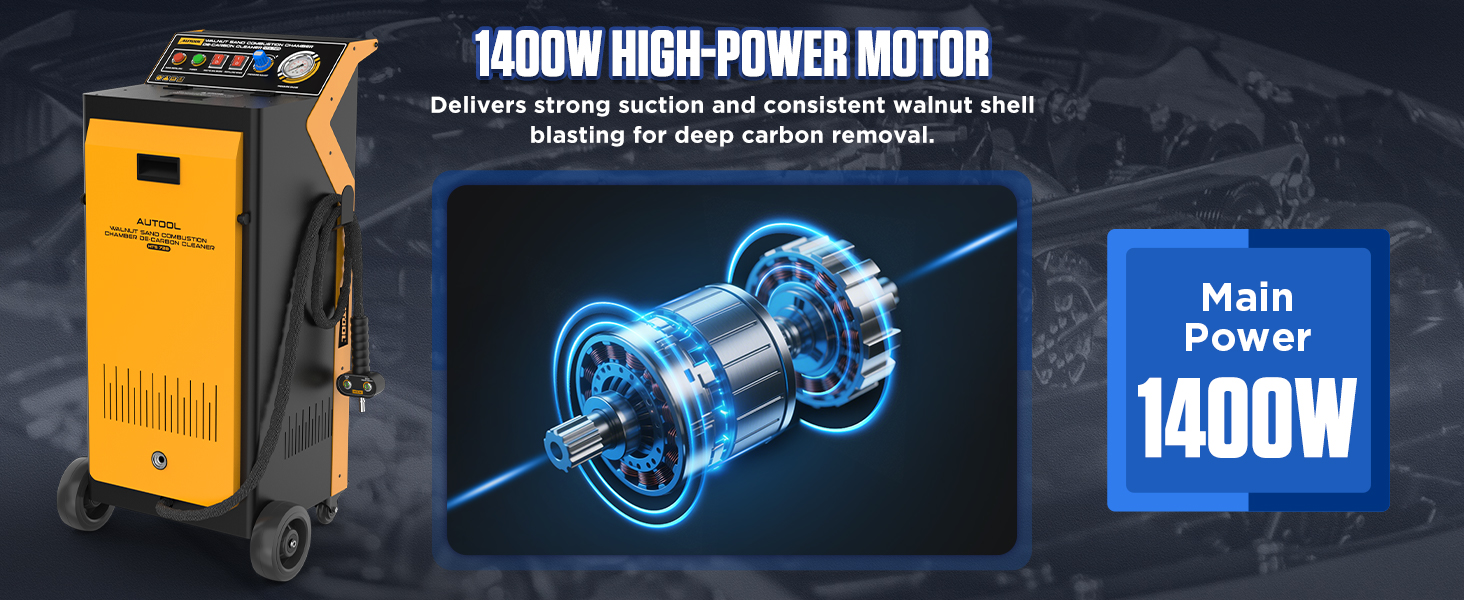
The AUTOOL HTS728 is a professional walnut blasting machine that uses compressed air and fine 0.4–0.6 mm walnut shell abrasive with built-in recovery and HEPA filtration. HTS728 is rated at 1400W. HTS728 supports intake and valve-area cleaning as well as combustion-chamber cleaning. Use combustion-chamber, exhaust-valve, or other extended-area cleaning only when the service procedure for the specific vehicle supports that method.
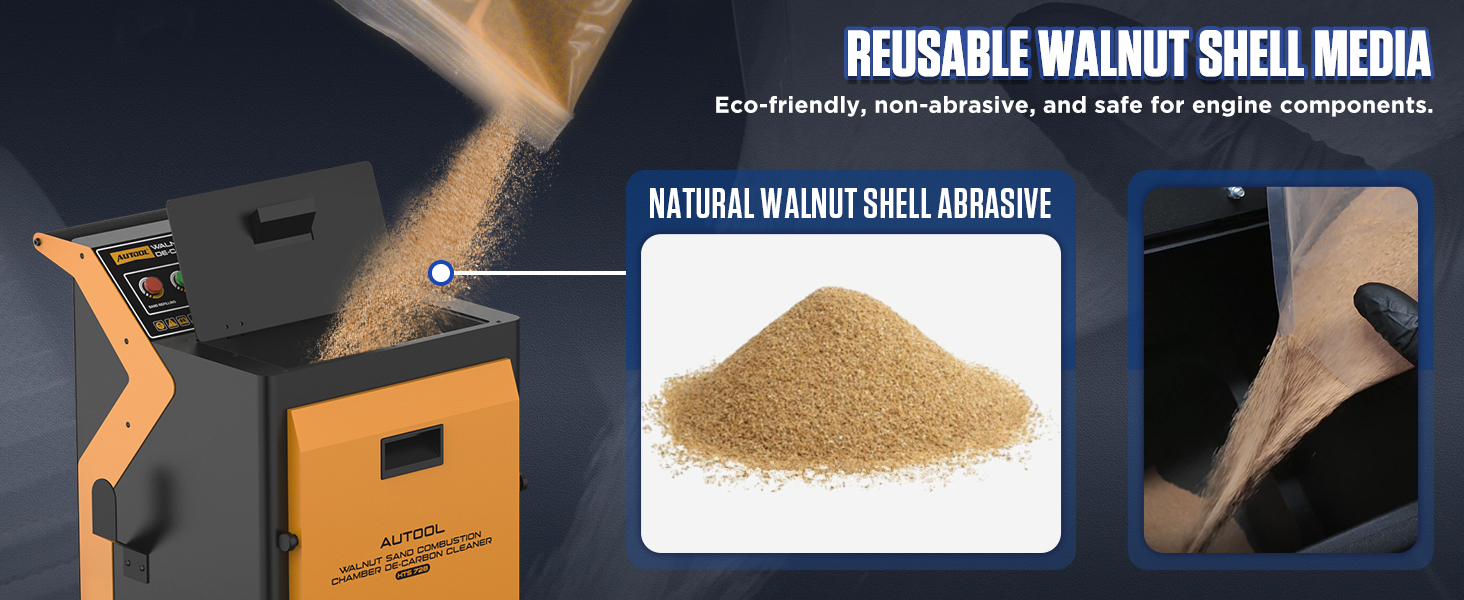
- 0.4–0.6 mm Walnut Media
- HEPA Filtration + Recovery
- Recovery / Filling Modes
- Validated Combustion-Chamber Workflow
Best for: professional workshops performing intake and valve-area walnut blasting, including combustion-chamber cleaning when supported by the vehicle service procedure.
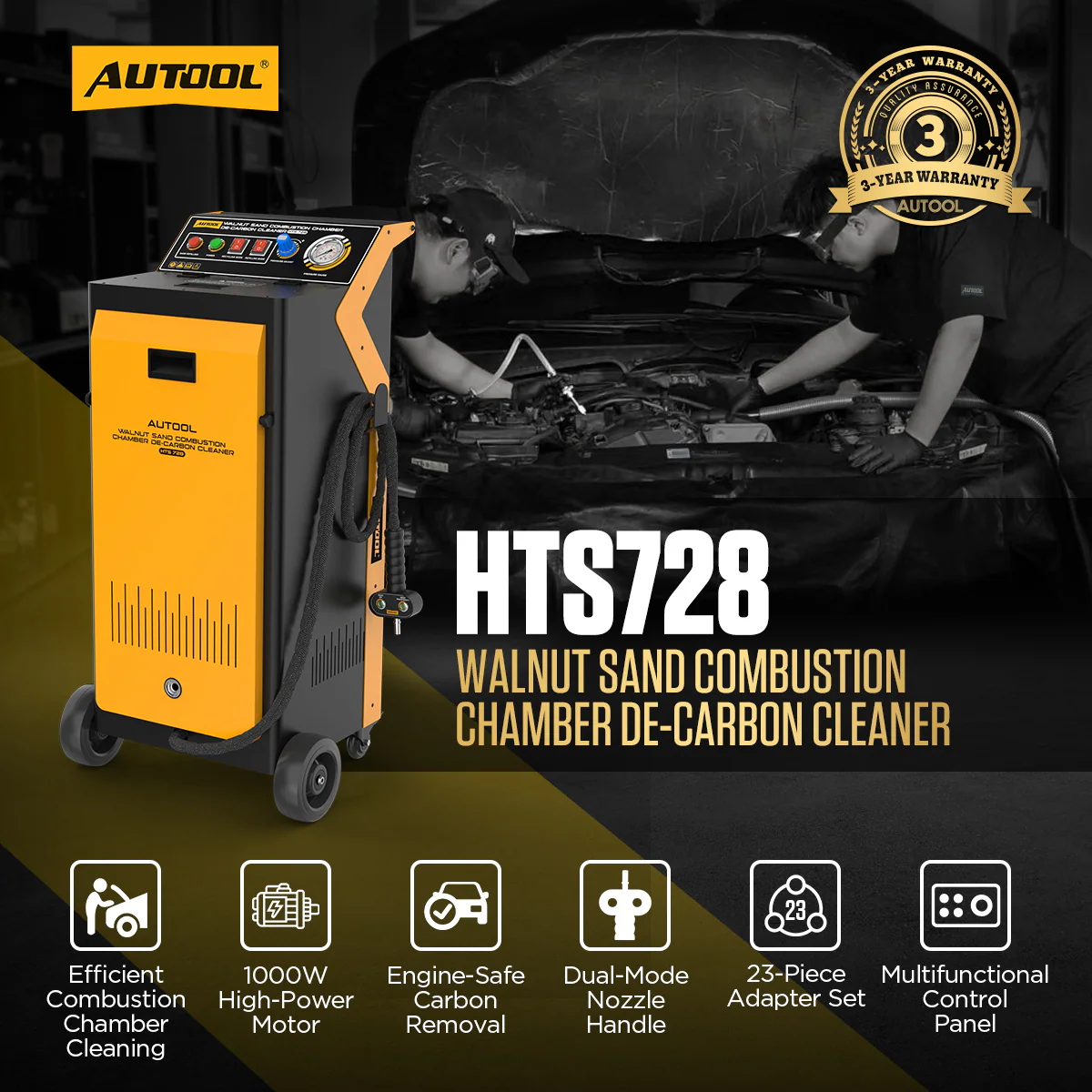
HEPA Recovery + Extended Cleaning Scope
Key Features
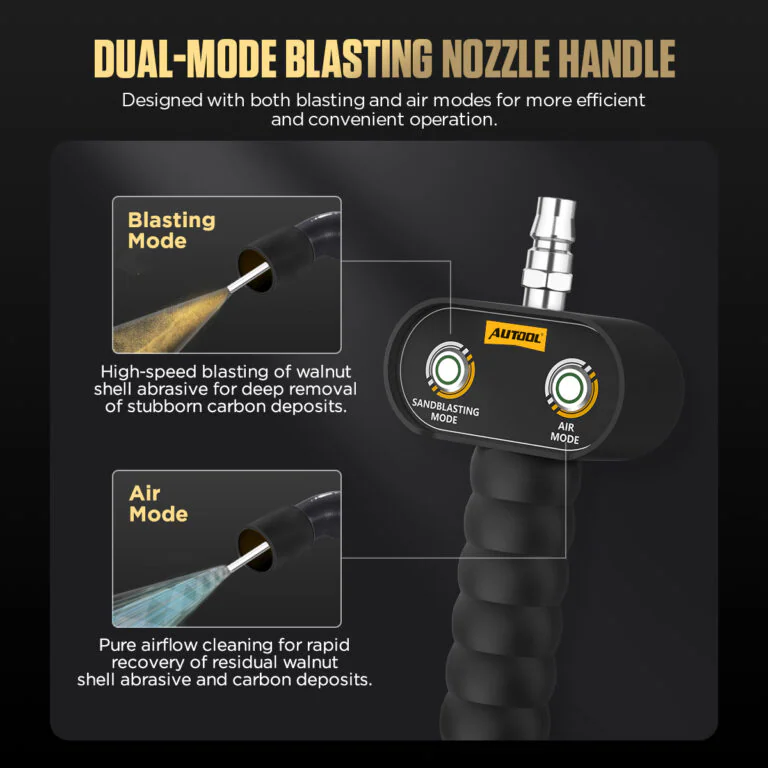
HTS728 combines recovery and HEPA filtration, dedicated control modes, model-specific walnut abrasive, adapter/nozzle options, pressure control, external-air blasting, workshop mobility, and support for intake/valve and supported combustion-chamber cleaning.
HEPA Filtration + Integrated Media Recovery
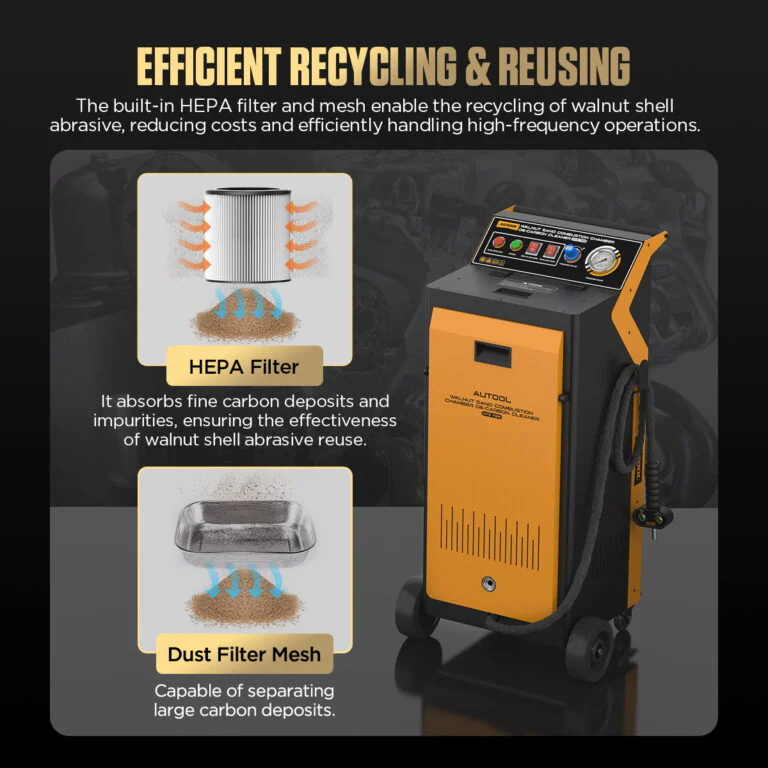
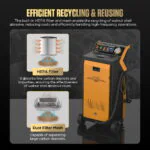
The equipment sprays and recovers at the same time, while the HEPA filter and dust-filter structure help manage collected walnut abrasive, carbon residue and fine particulate. The collection and filtration system supports abrasive recovery. Recovered abrasive should be reused only when the vehicle service procedure permits it and the media remains suitable for reuse.
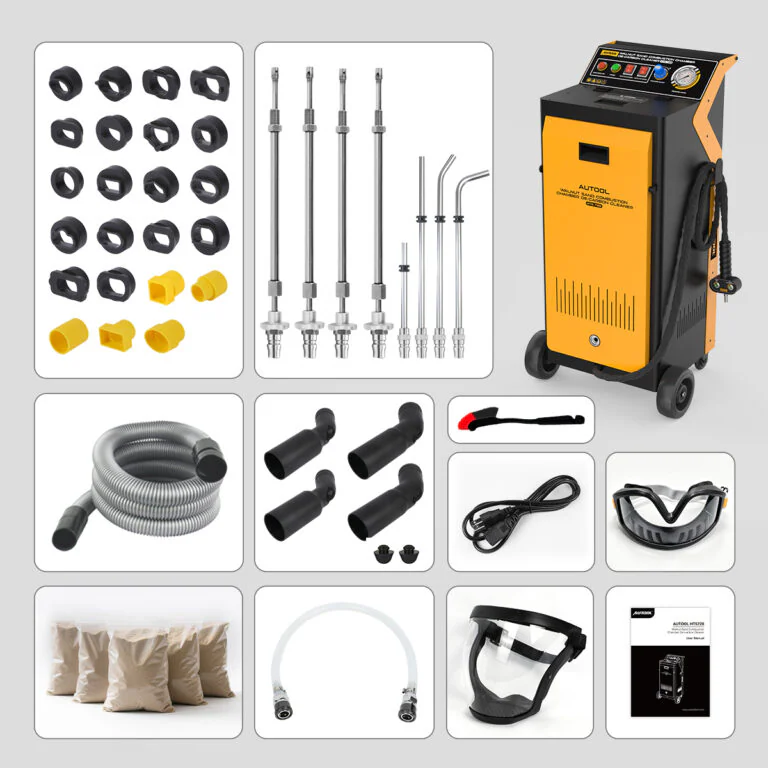
5 Adapters And Blasting Nozzles
The kit includes 5 adapter types and multiple blasting nozzles for different port shapes and cleaning setups. Match the adapter and nozzle to the specific engine, port shape, and cleaning procedure before service. The included adapters and nozzles fit multiple port shapes, but they are not universal for every engine or vehicle.
Combustion Chamber Cleaning — Vehicle-Specific Procedures
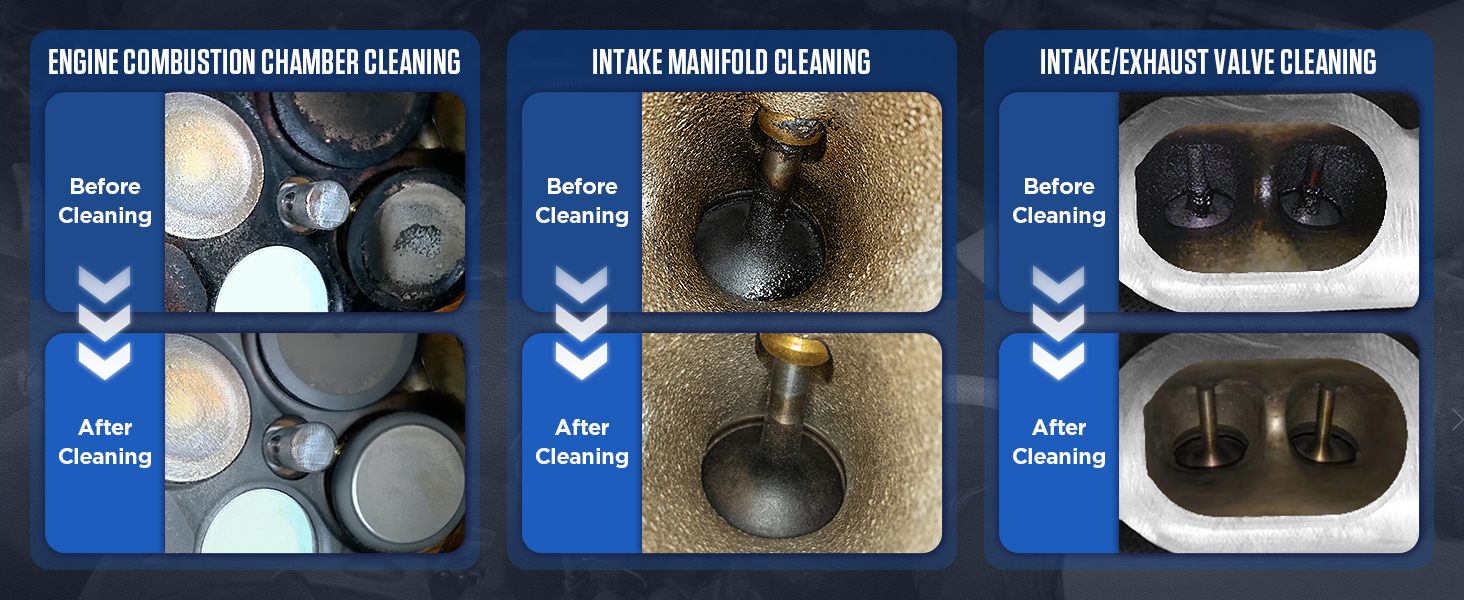
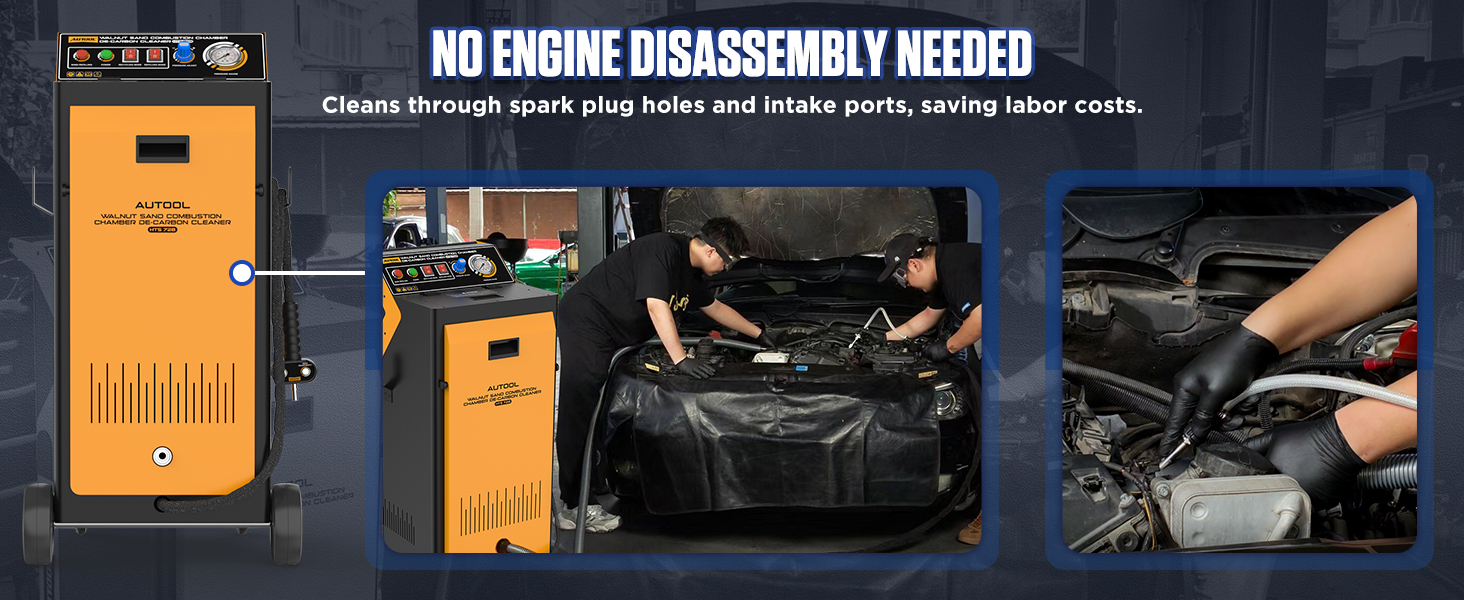
HTS728 supports combustion-chamber cleaning through the spark-plug hole. Use combustion-chamber cleaning only when the service procedure for the specific vehicle supports this method, and complete the required valve/port preparation, media recovery, and residual-media inspection.
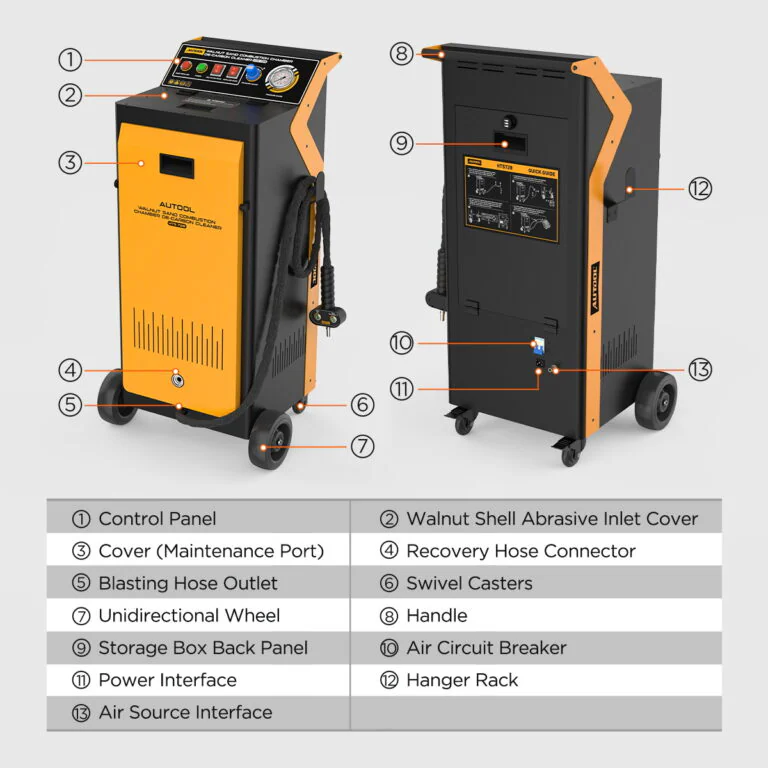
Recovery Mode / Filling Mode Control
HTS728 provides Recovery Mode and Filling Mode. Follow the HTS728 manual for when and how to use Recovery Mode and Filling Mode.
Pressure Gauge + Pressure Regulation Knob
HTS728 includes a pressure gauge and pressure-regulation knob for monitoring and adjusting blasting pressure. Follow the HTS728 manual for the correct pressure range and operating procedure.
Intake Manifold And Valve Area Cleaning
HTS728 supports intake manifold cleaning and intake valve carbon cleaning with walnut-shell abrasive, working sequentially across supported intake-manifold ports and intake-valve areas. Use exhaust-valve or other extended-area cleaning only when the service procedure for the specific vehicle supports that cleaning method.
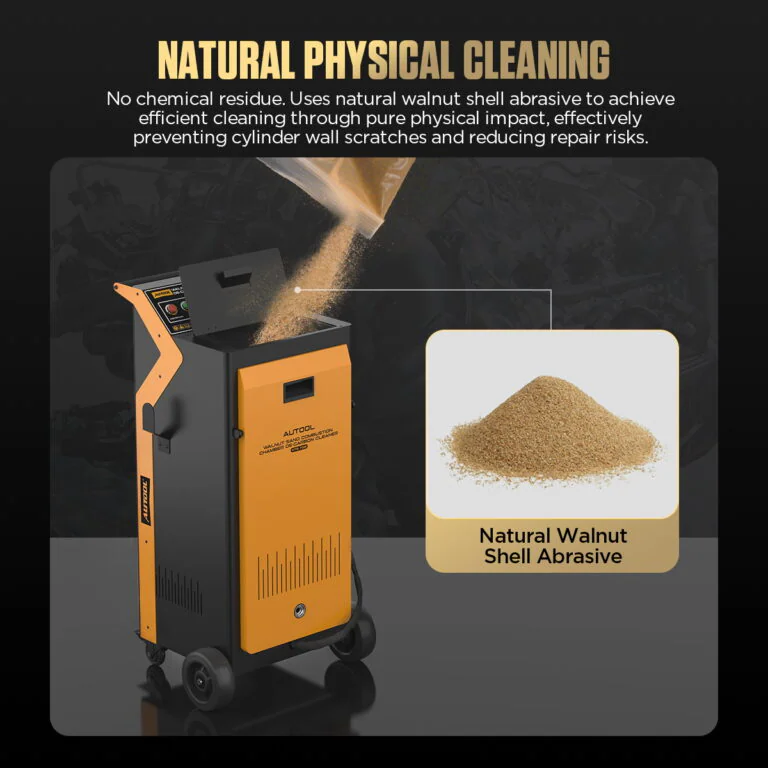
0.4–0.6 mm Walnut Shell Abrasive
HTS728 uses 0.4–0.6 mm walnut-shell abrasive. Use dry, compatible 0.4–0.6 mm walnut-shell abrasive with HTS728. Other machines or vehicles may require a different abrasive size.
Mobile Workshop Design
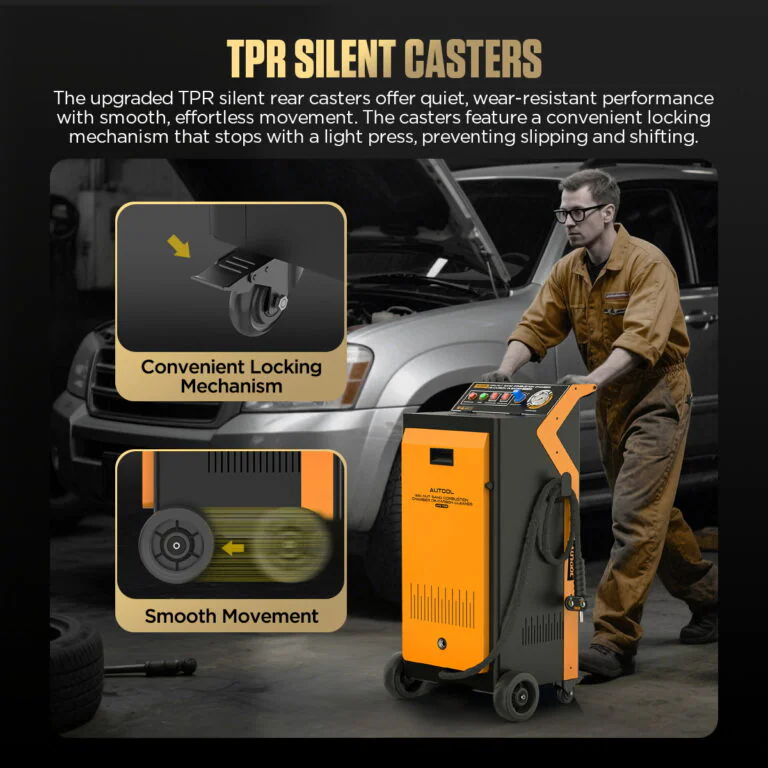
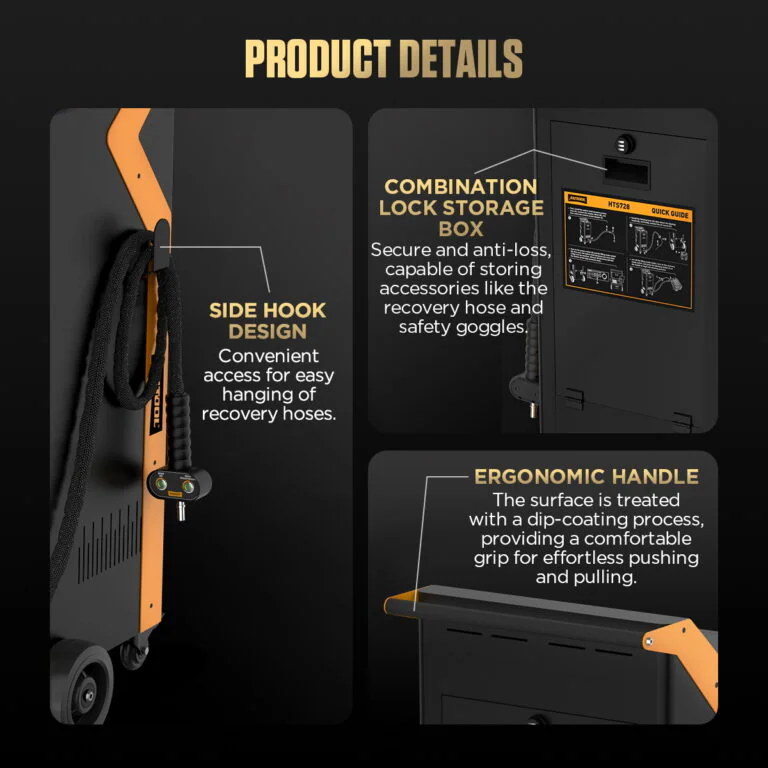
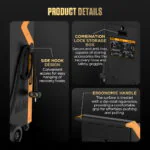
A mobile body with handle and 360° swivel casters makes the unit easier to move around the workshop and keeps the machine practical for day-to-day service use.
1400W Rated Power + External Air Source
The external compressor supplies the abrasive blasting force, while HTS728 is rated at 1400W for the machine recovery and filtration system.
Walnut Media Recovery & Reuse
The recovery and filtration system helps separate collected walnut-shell abrasive from carbon residue so suitable media can be reused. Under normal conditions, walnut-shell abrasive can be reused 5–10 times. Keep the media dry and replace it if it becomes contaminated, clumped, or cleaning performance drops.
3-Year Main Unit Warranty
Main unit: 3-year warranty. Standard accessories: 1-year warranty. Warranty Policy.
HTS728 Product Gallery
HTS728 Advanced Walnut Blasting & Recovery Details
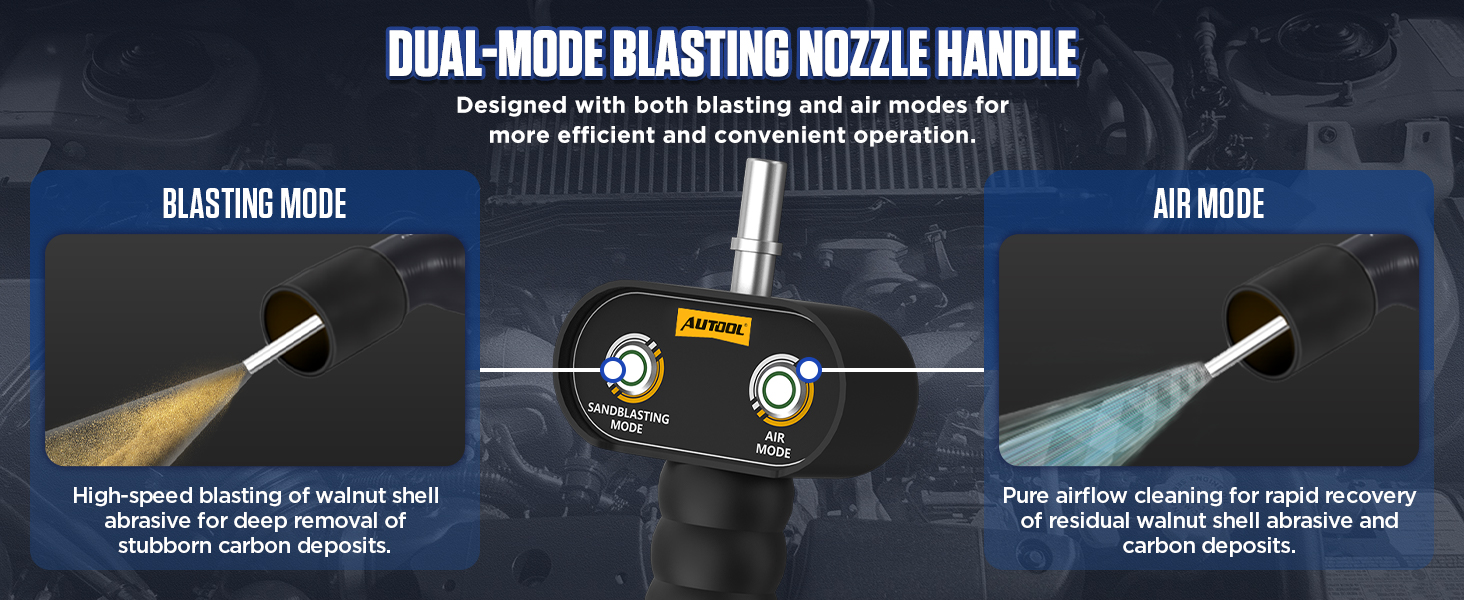
Explore HTS728 dual-mode operation, intake-valve and supported combustion-chamber workflows, the 1400W recovery and filtration system, precision pressure control, media filtration and reuse, control-panel functions, nozzle and adapter options, component layout, specifications, and package contents.
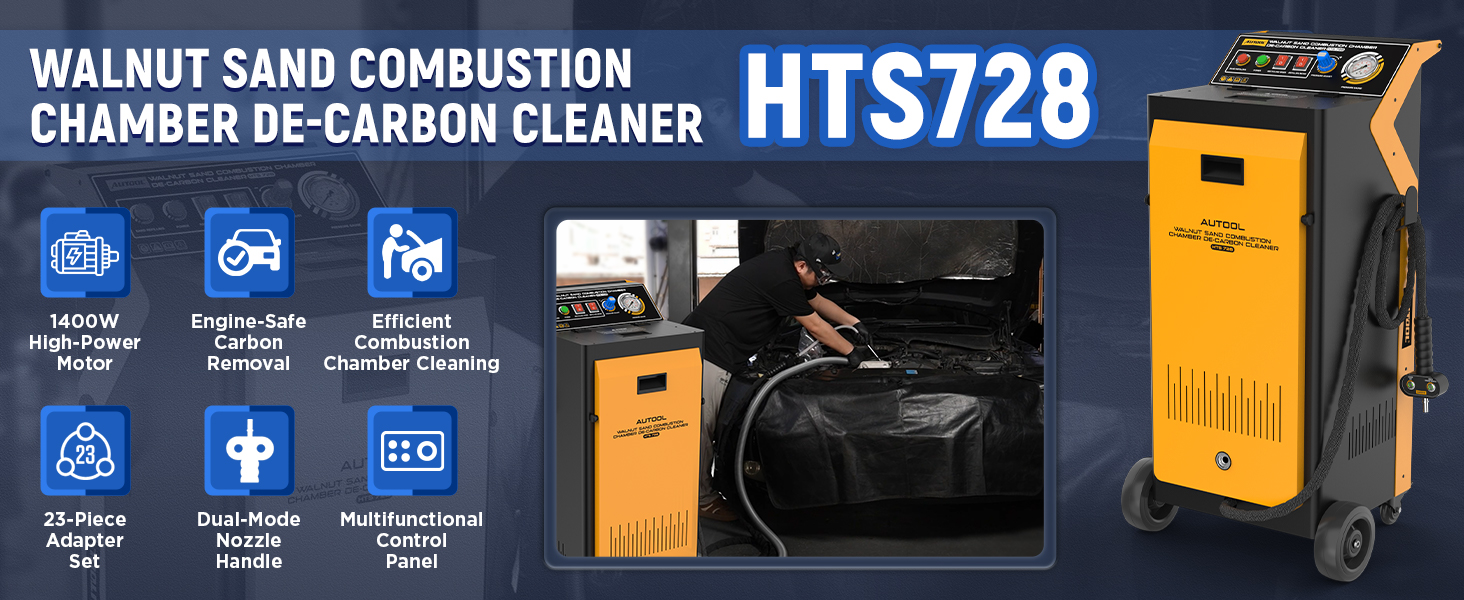
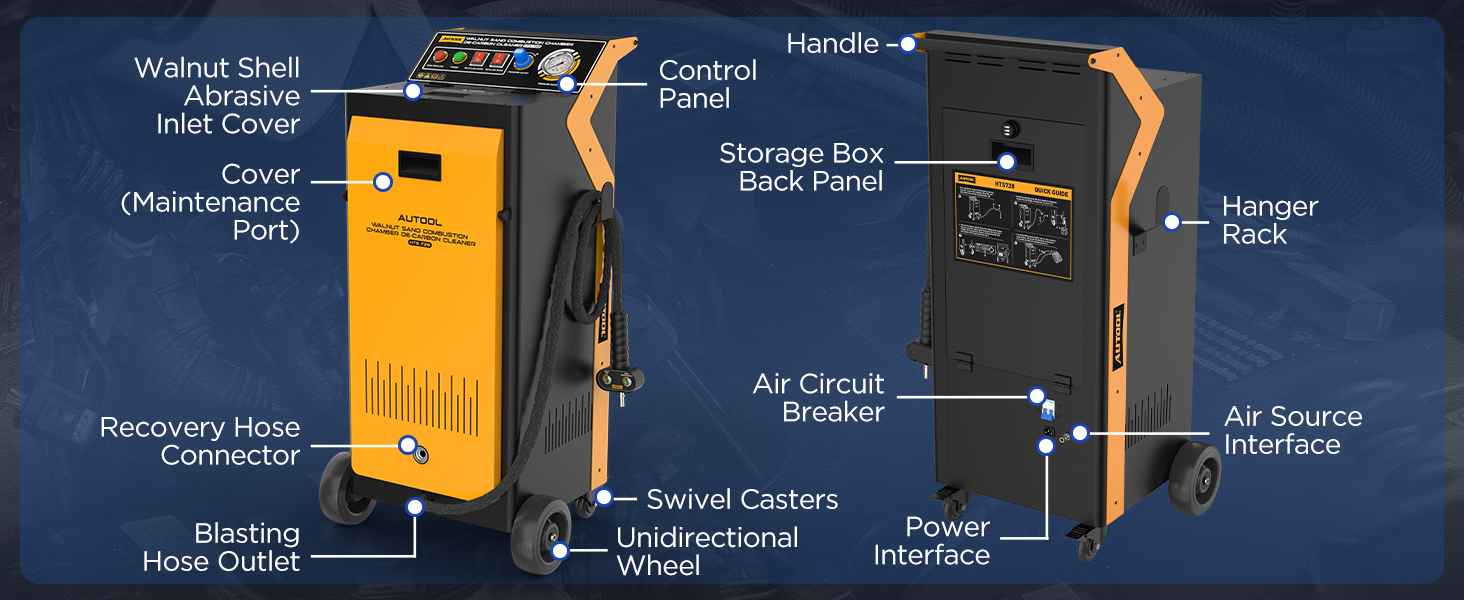
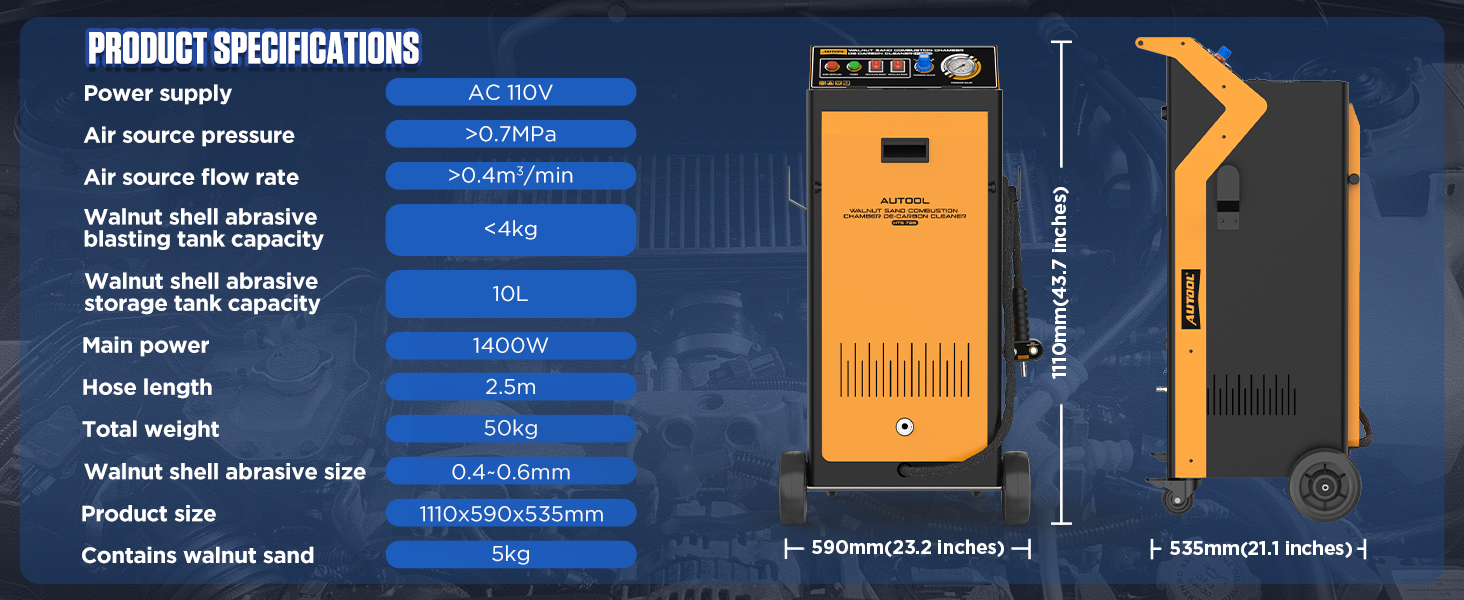
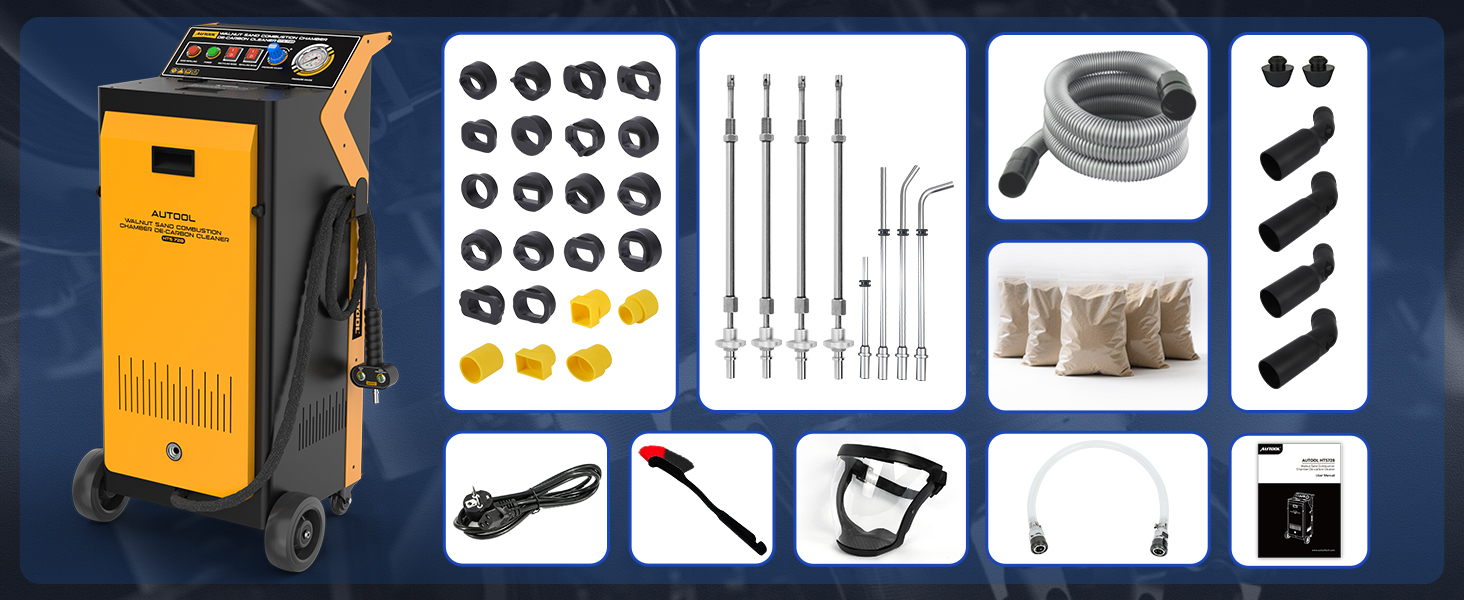
Showing product image 1 of 14.
From Setup to Final Vehicle Check
Step-by-Step Workflow
Compressed air accelerates the specified walnut media while the recovery hose and filtration structure collect media and residue. The workflow below covers connection setup, media loading, valve and port preparation, blasting, media recovery, residual inspection, reassembly, leak checks, diagnostic scanning, and a final vehicle check.
Step 1
Set Up The Machine
Set up the recovery, blasting, air, and power connections before loading walnut abrasive.
- Connect the recovery hose and elbow.
- Connect the blasting tube or nozzle.
- Connect the external air supply and AC power.
- Make sure all hose, nozzle, air, and power connections are secure.
Step 2
Load Walnut Media
Load the specified fine walnut abrasive with the controls in the required filling state, then prepare the system for pressure.
- Set Recovery Mode to OFF and Filling Mode to ON as instructed.
- Add compatible 0.4–0.6 mm walnut abrasive.
- Load no more than 3.5 kg of walnut abrasive during use.
- Switch Filling Mode off and build pressure according to the HTS728 manual.
Step 3
Prepare The Vehicle
Prepare only the area supported by the vehicle service procedure, and confirm valve positions and port isolation before blasting.
- Remove the spark plugs, intake manifold, or both when required by the vehicle service procedure.
- Check valve positions and close the target valves.
- Seal the other ports before blasting.
Step 4
Clean Intake Ports
Use a sealed recovery connection and controlled nozzle and air settings to clean each intake port in sequence. The blasting pass takes approximately 2 minutes per port before inspection; total service time also includes access, setup, recovery, inspection, and reassembly.
- Establish a sealed recovery connection.
- Switch Recovery Mode on.
- Adjust the nozzle direction and depth.
- Set the required blasting airflow and pressure.
- Clean each port in sequence and inspect after approximately 2 minutes of blasting.
Step 5
Combustion Chamber Cleaning — Vehicle-Specific Procedures
Use the combustion-chamber workflow only when the service procedure for the specific vehicle supports this method.
- Access the combustion chamber through the spark-plug hole.
- Confirm valve closure and sealing.
- Control the walnut-abrasive flow.
- Recover the abrasive during cleaning.
- Complete a final residual-media inspection.
Step 6
Finish And Clear Residue
Finish by stopping the media and air functions, recovering remaining walnut abrasive, and inspecting the cleaned area.
- Switch off the media and air functions as required by the procedure.
- Disconnect the blasting setup.
- Use an air blow or purge only when the vehicle service procedure calls for it.
- Complete final vacuum recovery.
- Inspect the cleaned area with adequate lighting or a borescope when applicable.
Step 7
Reassemble And Check The Vehicle
Reassemble the intake components and verify vehicle operation before returning the vehicle to service.
- Reinstall the spark plugs and intake components.
- Complete leak checks and diagnostic scanning.
- Complete idle and other required functional checks.
Before You Start
Safety & Compatibility
Within this AUTOOL range, HTS728 supports a broader set of cleaning applications, but compatibility still depends on the specific vehicle, engine, target area, and service procedure—not nozzle reach alone. Before use, check the walnut abrasive, external air supply, adapter seal, valve position, required personal protective equipment (PPE), and final residual-media recovery steps.
Use HTS728-Specific Media
Use 0.4–0.6 mm walnut-shell abrasive with HTS728. Other machines or vehicles may require a different abrasive size; use the media specification for the equipment and vehicle being serviced.
Load Limit
Load no more than 3.5 kg of walnut abrasive during use. Follow the HTS728 manual and machine nameplate for the loading limit.
External Compressor Required
Use an external air source above 0.7 MPa with airflow above 0.4 m³/min. Use dry, filtered air and make sure the air tank, hose, quick-connect fittings, and compressor duty cycle support the required airflow.
Valve Closure And Port Isolation
Never blast with the target valve open. Seal uncleaned intake ports and isolate unintended paths according to the vehicle-specific procedure.
Adapter/Nozzle Fit
The kit includes five adapter types and multiple nozzles for different port shapes, but it is not universal for every engine or vehicle. Before cleaning, make sure the selected adapter/nozzle fits the engine port, forms a secure seal, and matches the cleaning procedure.
Combustion Chamber And Extended Areas
Use combustion-chamber, exhaust-valve, or other extended-area cleaning only when the service procedure for the specific vehicle supports that method. Do not clean an area just because the nozzle can reach it; follow the vehicle service procedure for supported cleaning areas.
Protective Equipment and Walnut-Media Safety
Walnut-shell media can create dust and may trigger allergies. Wear suitable goggles and respiratory protection, provide ventilation, and follow the media supplier Safety Data Sheet (SDS).
When To Perform Cleaning
Determine the need for cleaning through inspection and diagnosis, then follow the service guidance for the specific vehicle rather than using one fixed mileage interval for all vehicles.
Engine And Vehicle Compatibility
HTS728 compatibility varies by engine, vehicle, and target cleaning area. Before cleaning, confirm the engine design, target area, access, walnut abrasive, air setup, recovery method, and vehicle service procedure.
Walnut Abrasive Reuse
Reuse walnut abrasive only when the service procedure for the specific vehicle permits it and the recovered media remains suitable for reuse.
Final Residual-Abrasive Inspection
Complete active recovery and a final residual-media inspection before reassembly/startup. Remove visible residual abrasive before starting the engine instead of relying on it to burn away.
Compatible Parts And Operating Instructions
Use parts and media that meet HTS728 and vehicle-service requirements. Check regional availability before purchase.
Compare models
Compare AUTOOL Walnut Blaster Models
Use this table to compare key specifications and feature differences across the AUTOOL walnut blasting models.
Compare models
Choose one or more models. HTS728 is selected by default.
| Specification | ModelAUTOOL HTS558 | ModelAUTOOL HTS559 | ModelAUTOOL HTS518 | ModelAUTOOL HTS678 | ModelAUTOOL HTS728 |
|---|---|---|---|---|---|
| Core operation | |||||
| Cleaning Method | Walnut Shell Blasting | Walnut Shell Blasting | Walnut Shell Blasting | Walnut Shell Blasting | Walnut Shell Blasting |
| Input Voltage | 110/220 V | 110/220 V | 110/220 V | 110/220 V | 110/220 V |
| Rated Frequency | 50/60 Hz | 50/60 Hz | 50/60 Hz | 50/60 Hz | 50/60 Hz |
| Rated Power | 1200 W | 1400 W | 1400 W | 1500 W | 1400 W |
| Vacuum Suction | 0.02 MPa | 0.02 MPa | 0.02 MPa | 0.02 MPa | >0.7 MPa |
| Airflow | <300 L/min (<0.3 m³/min) | <300 L/min (<0.3 m³/min) | <300 L/min (<0.3 m³/min) | <300 L/min (<0.3 m³/min) | >400 L/min (>0.4 m³/min) |
| Walnut Shell Abrasive Size | 0.6–1.2 mm | 0.6–1.2 mm | 0.6–1.2 mm | 0.6–1.2 mm | 0.4–0.6 mm |
| Main Unit Capacity | 13 L | 30 L | 30 L | 10 L | 10 L |
| Product Weight | 10 kg | 12 kg | 23.5 kg | 52 kg | 50 kg |
| Adapter Types | 5 Types | 5 Types | 23 Types | 23 Types | 5 Types |
| Workshop hardware | |||||
| External Air Compressor Required | ✓Included | ✓Included | ✓Included | ✓Included | ✓Included |
| Storage Box | ×Not included | ×Not included | ✓Included | ✓Included | ×Not included |
| Pressure Gauge | ×Not included | ×Not included | ×Not included | ✓Included | ✓Included |
| Pressure Settings | ×Not included | ×Not included | ×Not included | Pressure Regulation Knob | Pressure Regulation Knob |
| Modes & filtration | |||||
| Mode Switch | ×Not included | ×Not included | High/Low Mode; Low-Speed Mode | Standard Mode; Expert Mode | Recovery Mode; Filling Mode |
| Built-In Dust Filter | ✓Included | ✓Included | ✓Included | ✓Included | ✓Included |
| HEPA (High-Efficiency Particulate Air) Filter | ×Not included | ×Not included | ×Not included | ✓Included | ✓Included |
| Cleaning scope & mobility | |||||
| Combustion-Chamber Cleaning | ×Not included | ×Not included | ×Not included | ×Not included | ✓Included |
| 360° Swivel Casters | ✓Included | ✓Included | ✓Included | ✓Included | ✓Included |
| Three-Section Telescoping Handle | ×Not included | ×Not included | ✓Included | ✓Included | ×Not included |
Model guide
Review the main differences below, then select models above for a side-by-side comparison.
AUTOOL HTS558
A lighter 13L walnut blasting model with five configured adapter types and built-in dust filtering.
AUTOOL HTS559
Keeps 1400W power and a 30L capacity, with five configured adapter types and no storage box.
AUTOOL HTS518
1400W, 30L capacity, 23 configured adapter types, storage box, and telescoping handle.
AUTOOL HTS678
Adds 1500W rated power, 23 adapter types, a pressure gauge, pressure regulation, HEPA filtration, and storage.
AUTOOL HTS728
Current model: Adds combustion-chamber cleaning capability, HEPA filtration, pressure regulation, and higher airflow.
Included & Not Included
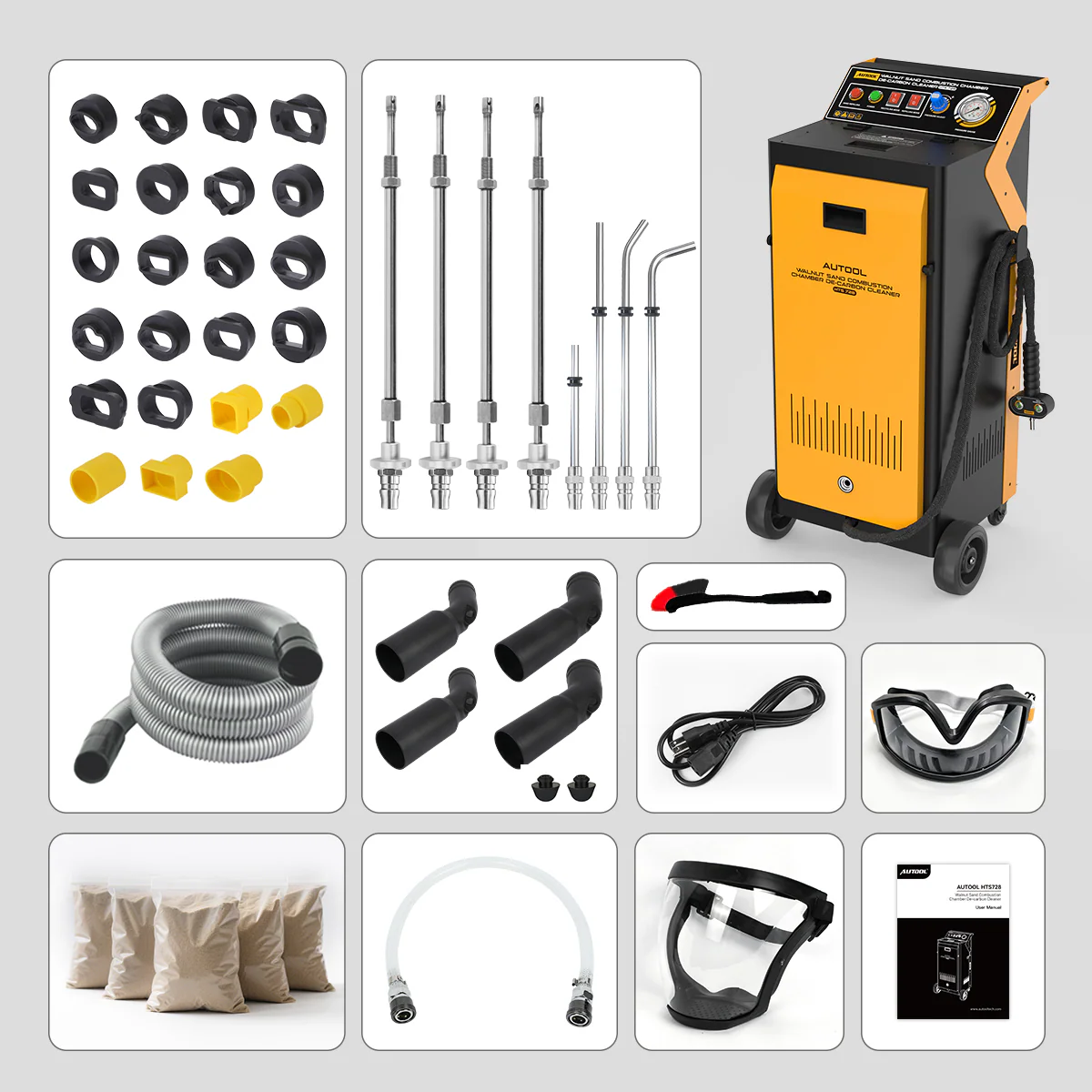
Package Contents
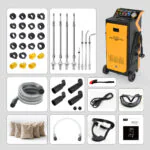
The package includes the HTS728 main unit, adapters/nozzles, recovery hose, transparent hose, elbow/connection parts, safety goggles, and the user manual. Walnut media inclusion and quantity depend on the selected package option, so check the selected package before ordering. The external compressor is required and not included. The 0.4–0.6 mm media size and ≤3.5 kg load limit are operating requirements.
- Main UnitAUTOOL HTS728 walnut blasting machine
- Adapters And Nozzles5 vehicle adapters and blasting nozzles
- Hoses And ConnectorsRecovery hose, transparent hose, elbow connectors, blasting hose, and connection parts
- Safety And ManualSafety goggles and user manual
- Walnut MediaWalnut media inclusion and quantity depend on the selected package option
- Setup RequirementsExternal compressor required. Use 0.4–0.6 mm walnut media and load no more than 3.5 kg during use.
Downloads & Help
Manual & Support
Use the HTS728 manual for media size, loading limit, air setup, Recovery/Filling modes, valve/port preparation, combustion-chamber procedures, residual-media removal, and maintenance. Contact support for replacement parts or setup questions.
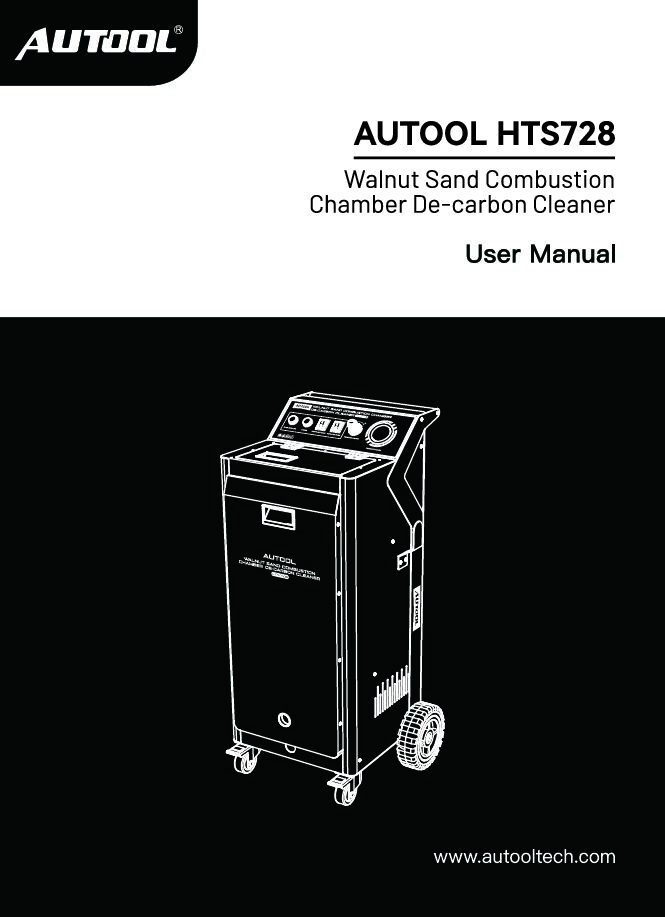
AUTOOL HTS728 User Manual
Open the PDF manual for detailed operation, media loading, recovery mode, combustion chamber cleaning, and safety guidance.
Product, Setup & Service Answers
Frequently Asked Questions
Find answers about walnut blasting basics, HTS728 media size, air compressor requirements, engine compatibility, combustion-chamber cleaning, cleaning intervals, personal protective equipment (PPE), residual-abrasive removal, and replacement parts.
What Is a Walnut Blaster for Carbon Cleaning?
A walnut shell blaster uses crushed walnut-shell abrasive and compressed air to mechanically clean carbon deposits from intake and valve areas, as well as other engine areas supported by the service procedure for the specific vehicle.
How Does HTS728 Use Walnut Blasting on Intake Valves?
Compressed air drives the specified walnut abrasive across supported intake-valve surfaces, while HTS728 uses HEPA filtration and recovery to collect spent media and loosened residue. Use the process only on target areas supported by the service procedure for the specific vehicle, and complete a final residual-media inspection.
What Walnut Abrasive Size Should I Use for HTS728?
Use 0.4–0.6 mm walnut-shell abrasive for HTS728.
Can Walnut Abrasive Be Reused?
Reuse recovered abrasive only when the service procedure for the specific vehicle permits it and the media remains suitable for reuse.
How Much Walnut Abrasive Can I Add?
Load no more than 3.5 kg of walnut abrasive during use. Follow the HTS728 manual and machine nameplate for the loading procedure.
What Air Compressor Is Required?
HTS728 requires an external compressor. Use an external compressor above 0.7 MPa with airflow above 0.4 m³/min and dry, filtered air. Make sure the air tank, hose, quick-connect fittings, and compressor duty cycle support the required airflow.
Can HTS728 Clean The Combustion Chamber?
HTS728 supports a combustion-chamber cleaning workflow through the spark-plug hole. Use this capability only when the service procedure for the specific vehicle supports combustion-chamber cleaning. Before cleaning, confirm the correct valve position and a secure seal, set the specified media and air conditions, then complete media recovery and a final residual-media inspection.
Is Walnut Blasting Safe To Use On All Types Of Engines?
No. Compatibility depends on the engine and vehicle design, target area, access, valve position, adapter fit and seal, walnut abrasive, pressure and airflow, recovery method, and vehicle service procedure. Check these items before service.
Are There Any Risks When Using A Walnut Blasting Machine?
Key risks include incorrect valve position, poor sealing, abrasive entering unintended areas, inadequate recovery or residual media, wet or clumped media, dust or allergen exposure, and incorrect reassembly. Use appropriate personal protective equipment (PPE) and dry air, isolate the required ports, confirm adapter fit, complete final vacuum recovery and a borescope inspection, and follow the service procedure for the specific vehicle.
How Often Should I Use A Walnut Blaster For Intake Manifold And Valve Cleaning?
For cleaning intake valves and intake-manifold areas, there is no universal fixed mileage interval. Determine cleaning need through inspection, diagnosis, and the service guidance for the specific vehicle.
Are Replacement Parts And More Media Available?
Replacement parts and blasting media are available from AUTOOL. Use parts and media that meet HTS728 requirements, and check regional availability before purchase.
John –
I really need a walnut-blasting machine capable of cleaning combustion chambers! The HTS728 fits the bill perfectly. Plus, it delivers high pressure, allowing me to get everything thoroughly clean.