



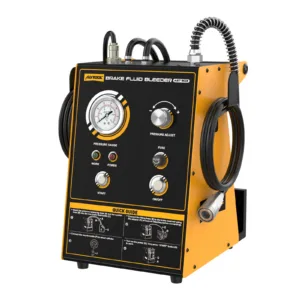


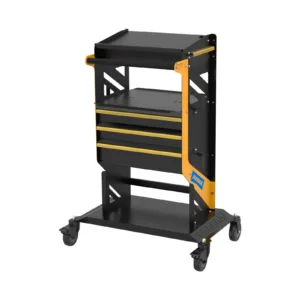
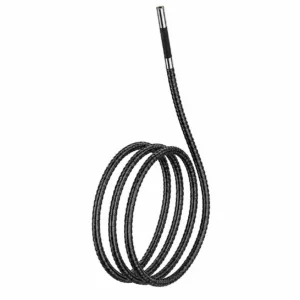
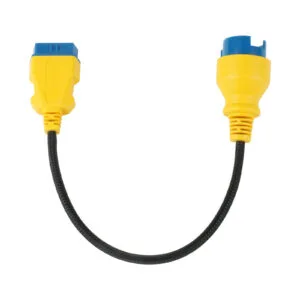

As an automotive professional, you already know the profound impact a thorough carbon cleaning service has on a Gasoline Direct Injection (GDI) engine. Restoring lost horsepower, smoothing out a rough idle, and eliminating misfires creates an immediate, tangible result that customers love. For years, Walnut Media Blasting has been the heavy-duty workhorse of the industry—the proven, reliable method for rapidly knocking down thick, baked-on carbon crusts.
But as vehicle architectures become more complex and diagnostic bays face tighter turnaround times, shop owners are discovering that while walnut blasting is incredibly powerful, it isn't always the perfect tool for every scenario. What happens when you are dealing with deeply recessed EGR passages, intricate variable valve timing components, or sensitive electrical connectors where introducing solid media is too risky or cleanup is impossible?
This is where the concept of 'Zero-Residue' thermodynamics changes the game.
The Next Evolution in Carbon Decontamination: Dry Ice Cleaning Machine#
To achieve aggressive carbon removal in the most sensitive or hard-to-reach areas of an engine, without the teardown required for solid media cleanup, we must leverage the laws of thermodynamics. A dry ice cleaning machine utilizes an aerospace-grade technology that relies on a three-tier physical reaction to obliterate carbon and grease, leaving behind absolutely no secondary waste.
- Kinetic Impact: Accelerated by high-pressure compressed air, the dry ice pellets strike the carbon deposit at supersonic speeds, cracking the surface layer of the contaminant.
- Thermal Shock (Micro-Cracking): At a temperature of -78.5°C (-109.3°F), the dry ice instantly freezes the carbon deposit upon impact. This extreme, localized drop in temperature causes the carbon to embrittle, shrink rapidly, and lose its adhesion to the base metal, creating thousands of microscopic cracks.
- Sublimation Micro-Explosion: As the dry ice pellet penetrates the micro-cracks, it absorbs the ambient heat of the engine block and instantly sublimates—transitioning directly from a solid to a gas. The CO2 expands to nearly 800 times its original volume in a fraction of a second, creating a micro-explosion from beneath the carbon layer, blasting the dirt completely off the surface.
Because the dry ice sublimates entirely into harmless CO2 gas, there is zero blasting media left to clean up. The only residue is the dislodged dirt itself.
Beyond the Basics: The Generational Leap of the AUTOOL HTS709 Dry Ice Blaster#
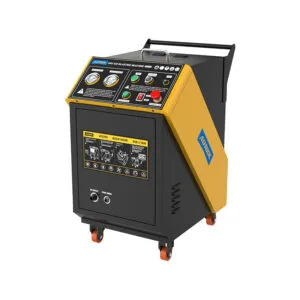
First-generation blasters suffer from three notorious flaws: ice bridging (clogging), inconsistent media feed, and moisture contamination causing the machine to freeze mid-job. The AUTOOL HTS709 dry ice blaster is not a mere iteration; it is a complete mechanical overhaul of pneumatic delivery. It takes aerospace-grade cryogenic technology and compresses it into a high-precision 'surgical scalpel' specifically engineered for high-end diagnostic bays.
Here is the proprietary technology and upgraded engineering that puts the HTS709 in a class of its own as a premier piece of cryogenic cleaning equipment:
- Integrated Moisture-Separation & Anti-Clog Pneumatics: The fatal flaw of standard dry ice machines is that they freeze solid after a few minutes of continuous use. The HTS709 upgrades the system with a built-in, high-efficiency water separator and air filtration matrix. It actively strips moisture from the compressed air before it ever reaches the freezing chamber, guaranteeing uninterrupted, continuous blasting all day long without the dreaded 'ice clog.'
- Variable-Frequency Micro-Control Ice Feeding: This is what separates the HTS709 from standard 'on/off' blasters. Driven by a high-precision rotary feeding mechanism, technicians have stepless, surgical control over the dry ice consumption rate. Dial it up to obliterate rock-hard carbon in an exhaust manifold, or dial it down to a micro-feed to safely restore dusty ECU wiring harnesses or delicate interior components. It is true full-spectrum versatility.
- Zero-Lag Instant Actuation Valve: Traditional machines suffer from 'media lag'—spitting out residual dry ice long after the technician releases the trigger, wasting expensive media and risking collateral damage. The HTS709 utilizes upgraded transient-response pneumatic valves that deliver millisecond start/stop precision. When you pull the trigger, it blasts; when you release it, it stops instantly.
- Supersonic Venturi Nozzle Array: A dry ice blaster is only as good as its nozzle fluid dynamics. The HTS709 comes equipped with an array of straight and articulated nozzles engineered with a Venturi acceleration profile. This minimizes internal pressure drop and accelerates the dry ice pellets to supersonic speeds. Even when navigating deep into complex V-engine valleys or tortuous EGR passages, the kinetic impact remains devastatingly powerful.
Elevate Your Shop’s Decontamination Capabilities#
Modern engines demand modern solutions. Equipping your bay with both a robust Walnut Blaster for heavy crusts and the AUTOOL HTS709 Dry Ice Machine gives your technicians the ultimate carbon-cleaning arsenal. Slash your tear-down time and restore components to a factory-clean state using the power of thermodynamics.
Experience the Ultimate Zero Residue Engine Cleaning Tool#
A true zero-residue clean is an engineering necessity for complex GDI maintenance. Visit the AUTOOL Official Website to view the complete technical specifications of the HTS709 and add the ultimate zero residue engine cleaning tool to your shop's service offerings.
Learn more: AUTOOL HTS709 Automotive Dry Ice Cleaning Machine

Discussion
Comments 0
Need help with an order, warranty or a fault? Contact support
No comments yet. Ask a question or share how the tool worked for you.