Tips & Tutorials
Function and maintenance of the automotive suspension system

July 29, 2021
Share:
 autoolstore.com
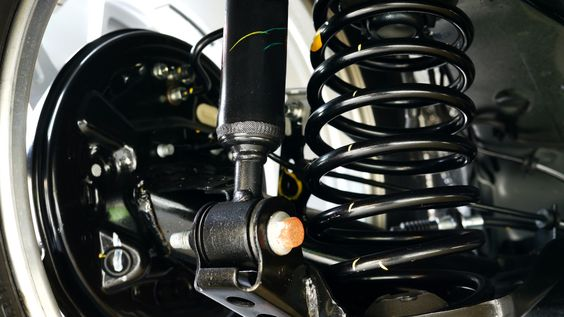
A suspension system is the support system between the vehicle body and the tires. It is made up of springs, shock absorbers, and related mechanical components that support the body, absorb vibration, and improve ride feel.
Different suspension settings give drivers different driving experiences. A simple-looking suspension system actually integrates many forces, and it directly affects vehicle stability, comfort, and safety. That is why suspension is one of the most critical components in modern cars.
Working principle
The suspension system exists for two reasons: to isolate the unevenness of the road to make driving more comfortable, and to keep the tires in contact with the road when the vehicle travels across uneven surfaces. For drivers focused on handling, improving suspension has one clear purpose: to improve control.
Suspension springs are most commonly coil springs because they are easy to manufacture, efficient in performance, and inexpensive. In physics, a spring stores energy. When a fixed force is applied to the spring, it deforms. When the force is removed, the spring tends to return to its original state.
However, when a spring rebounds, the oscillation amplitude can exceed its original length. Friction resistance and the shock absorber then slow the free oscillation of the spring. This is why the shock absorber is essential: it controls spring movement after impact.
A typical spring is a linear spring. That means the amount of compression and deformation under force follows Hooke’s law: F=KX, where F is the applied force, K is the elasticity coefficient, and X is the deformation. For example, if a linear spring carrying 40Kg compresses by 1 cm, each additional 40Kg of weight will increase the compression by another 1 cm.
In actual vehicle use, suspension springs face more than simple vertical load. Even when the spring is fully extended, it remains under pressure so that it stays in place on the car. In a conventional spring-and-shock suspension design, the spring supports the body and absorbs impacts from uneven roads as well as forces from acceleration, deceleration, braking, and cornering.
What matters most is keeping the tire in constant contact with the road while vibration is being controlled. Improving contact between the tires and the road is a primary consideration when trying to improve handling.
The role of springs
The main functions of springs are to maintain vehicle comfort and keep the tires in full contact with the ground. Using the wrong springs can negatively affect both driving quality and handling.
If the springs are completely stiff, the suspension system will not work properly. A stiff spring setup can reduce comfort and handling at the same time. When the car jumps over an uneven surface, the tires can leave the ground. If this happens during acceleration, braking, or cornering, the car loses traction.
If the springs are too soft, the suspension can bottom out, meaning it runs out of travel. If bottoming out happens during cornering, the spring coefficient effectively becomes infinite because there is no remaining room for compression. Immediate weight transfer can then cause loss of traction.
A long shock travel may help avoid bottoming out, but the body becomes higher. A high body means a higher center of gravity, and a higher center of gravity has a decisive impact on handling performance. For that reason, shocks that are too soft can create handling obstacles.
If the road is absolutely flat, springs and suspension would not be needed. When roads are rougher, softer springs are needed to help the tires stay in contact with the road, and spring travel must be increased. Road roughness determines spring stiffness, but how soft the spring should be is a critical issue that often requires experience from car manufacturers and racing teams.
Generally, softer springs provide better comfort and better traction over rough roads. However, they can make the suspension sway up and down more on normal roads, affecting handling. In vehicles with strong aerodynamic components, soft springs can also cause height changes at high speed, leading to different handling characteristics at low and high speeds.
Springs have two main functions: they cushion the suspension or chassis from the ground to maintain comfort, and they help keep the tires on the ground when the car travels over uneven surfaces. These goals can conflict, so different elasticity factors may be required.
One way to balance these goals is to use springs with a compound spring coefficient, also known as progressive springs. Progressive springs increase the spring force coefficient as the spring is compressed. They are difficult to design and manufacture, but they can combine initial softness with stronger compression resistance.
On bumpy roads, the initial softer spring improves tire adhesion. As compression increases, the rising elasticity coefficient helps maintain body stability and prevents the suspension or spring from bottoming out. This can allow a lower-height spring to reduce the center of gravity while maintaining short suspension travel without bottoming out.
To create a progressive spring, the elasticity coefficient must change with compression. Many progressive springs use unequal-pitch springs or springs with varying diameters. When an unequal-pitch spring is compressed, part of the coils make contact, changing the effective number of turns and the elasticity coefficient K. Another direct way to change the elasticity coefficient is by changing the diameter of the upper and lower coils.
Spring modification
The main purpose of spring modification is to improve handling, usually by using stiffer springs or shorter springs. Springs control many factors related to handling, so changes in springs can create complex changes in vehicle behavior.
Increasing stiffness can improve the suspension’s ability to resist roll and reduce body roll during cornering. Reducing ride height lowers the center of gravity, reduces weight transfer during cornering, and can improve stability. Lower height may also create a desired aesthetic effect.
At the same time, spring modification should not be treated as a simple visual change. Because springs influence comfort, traction, suspension travel, bottoming-out behavior, and tire contact, any change should consider the vehicle’s road environment and actual use.
Troubleshooting
One common failure phenomenon is that when the car drives and vibrates up and down, the suspension device makes a clucking sound or a thumping sound. This usually indicates that the suspension device is not working properly, especially when the sound becomes stronger on uneven roads.
The normal shock absorber will be hot when it works. If it does not become hot, or if oil leakage is found, the shock absorber may be damaged. During inspection, also check the condition of the shock absorber sleeve. If the sleeve is broken, it should be replaced together with the shock absorber in time.
The suspension system sits between the wheels and the car body. It bears the body and absorbs vibration to provide ride comfort. It also affects passability, stability, and adhesion performance. The system includes shock absorbers, springs, anti-roll bars, connecting rods, and other mechanical components.
If the body tilts too much during a sharp turn, the shock absorber, stabilizer bar, or guide mechanism components may be damaged. These symptoms should be checked instead of ignored, because suspension condition directly affects vehicle smoothness and stability.
The automotive suspension system is more than a set of springs and shock absorbers. It supports the body, absorbs road impact, keeps tires connected to the ground, and affects comfort, stability, passability, adhesion, and handling.
Understanding spring stiffness, progressive spring behavior, shock absorber condition, abnormal sounds, and related brake checks makes it easier to identify problems early and maintain safer vehicle behavior on real roads.
Related Products
Rendered through WooCommerce product shortcode so the cards inherit the product-card structure used by the reference post style.