



Repair Information
Transmission Fluid Exchange vs Change: What Is the Difference?#
Many car owners hear the terms Transmission Fluid Change and Transmission Fluid Exchange, but the difference is not always clear.
These two maintenance methods differ in operation principle, cleaning efficiency, replacement rate, fluid usage, and maintenance cost. Understanding the difference helps you choose the most suitable method for the vehicle instead of treating every automatic transmission fluid service the same way.
This guide explains the difference between automatic transmission fluid change and ATF fluid exchange, and highlights important points to consider when performing a car transmission fluid change.




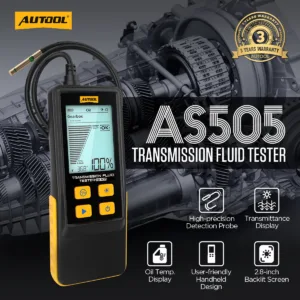
Service Methods
Methods of Transmission Fluid Replacement#
The main options are gravity drain and automatic transmission fluid exchange. The key differences are how much old fluid is removed and how thoroughly the system is refreshed.
1. Gravity Drain Method: Single Drain
In the single gravity drain method, old fluid flows out naturally under the vehicle's weight. An equal amount of new fluid is then added until the correct level is reached.
The replacement rate is only about 40%-50%, with typical fluid usage of 4-5 liters, depending on the actual drained volume. Since much of the old fluid remains inside the system, new fluid is diluted by remaining degraded oil, reducing the protective effect.
2. Gravity Drain Method: Double Drain
After the first gravity drain, the vehicle is driven for approximately 10-20 kilometers and then returned for a second drain. This does not require disassembling the transmission or replacing the filter.
Total fluid usage is around 10-12 liters, achieving a replacement rate of approximately 75%. It is more effective than a single drain but still less thorough than a transmission fluid exchanger.
3. Automatic Transmission Fluid Exchange
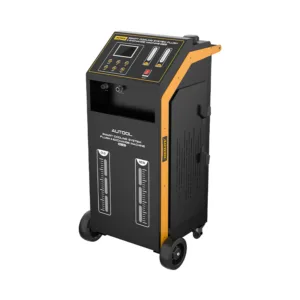
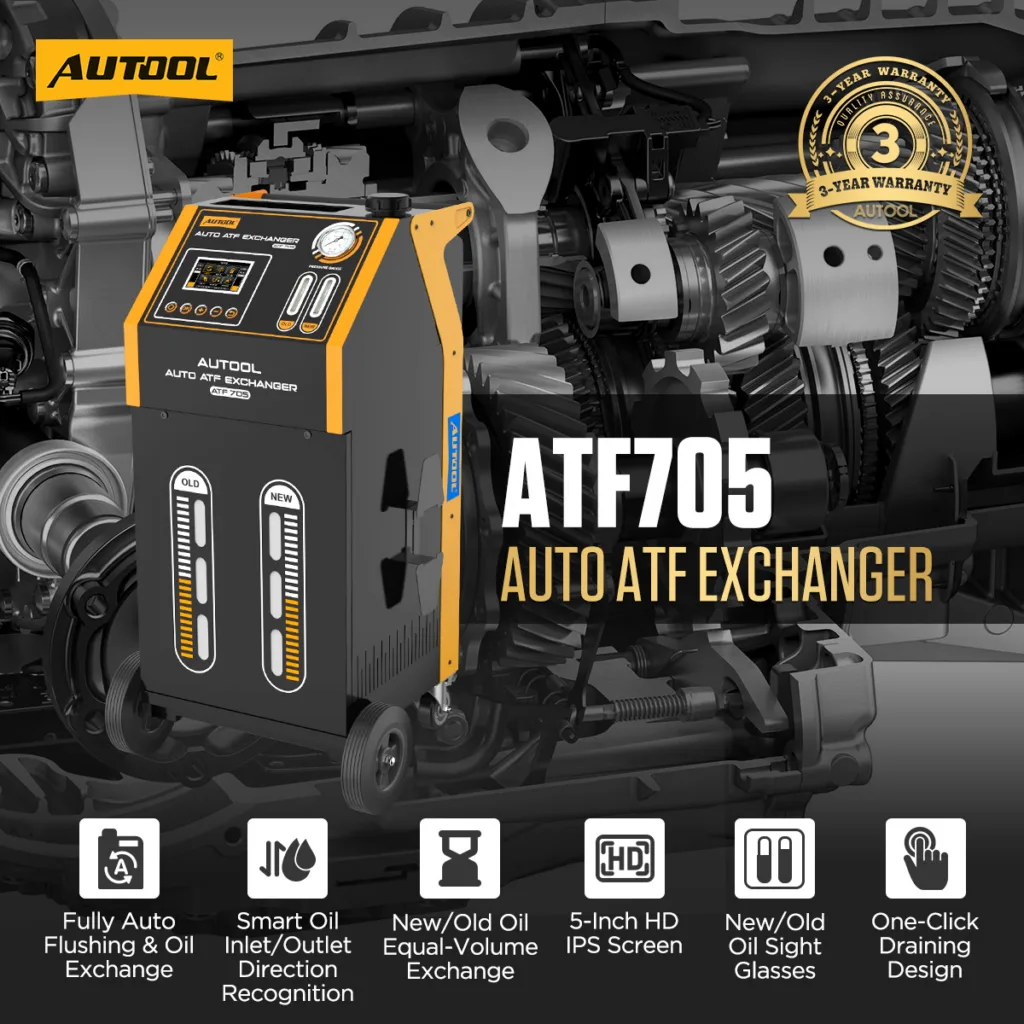
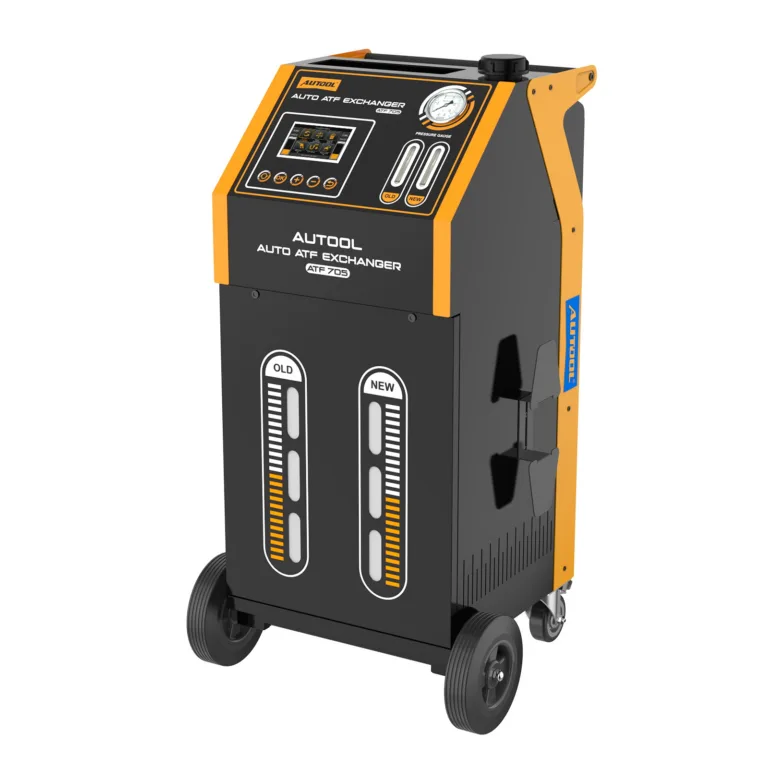
Using a transmission fluid exchanger or ATF fluid exchange machine, the old fluid is replaced while the engine is running.
This method can achieve a replacement rate of over 95%. It usually requires about 10-12 liters of fluid, slightly more than simple gravity methods, but the exchange is much more thorough and offers stronger protection for the transmission.
Comparison
Transmission Fluid Change vs Exchange#
| Replacement Method | Fluid Volume Used | Replacement Rate |
|---|---|---|
| Gravity Drain: Single Drain | 4-5 liters, depending on actual drained volume | 40%-50% |
| Gravity Drain: Double Drain | 10-12 liters | 75% |
| Fluid Exchange, recommended | 10-12 liters | over 95% |
FAQ
Transmission Fluid Replacement FAQ#
Q1: When Should I Change Transmission Fluid?
You should inspect or replace the transmission fluid if you notice rough or delayed shifting, sluggish acceleration, increased fuel consumption, jerking or vibration, unusual transmission noises, or fluid color turning dark brown.
Also pay attention when mileage is over 40,000 km, about 25,000 miles, or after more than 2 years of use.
Q2: Should the Transmission Filter Be Replaced?
The transmission filter works similarly to the engine oil filter. Over time, it collects metal particles, debris, and sludge, which can affect fluid flow and filtration.
It is recommended to replace the transmission filter when performing an automatic transmission fluid change or ATF fluid exchange. Some models have a non-serviceable internal filter due to design constraints; in those cases, replacing only the fluid is acceptable.
Q3: Can Different Transmission Fluids Be Mixed?
Absolutely not. Different transmission fluids vary in viscosity, friction characteristics, and anti-foaming properties. Mixing fluids may reduce performance and can damage the transmission.
Q4: What Precautions Should Be Taken?
- Ensure the fluid type matches the vehicle specifications.
- Inspect the vehicle thoroughly before replacement to confirm there are no other faults.
- Check fluid levels after starting the engine, performing multiple gear shifts, and reaching the correct operating temperature.
- After replacement, conduct a test drive to confirm there are no leaks or shifting issues before returning the vehicle to the owner.
Summary
Choose the Method That Fits the Vehicle#
For a critical vehicle component like the transmission, regular transmission fluid replacement helps prevent costly repairs and supports smooth, safe operation.
Gravity drain service can be useful for basic maintenance, but it leaves more old fluid in the system. ATF fluid exchange is more thorough and is often the better choice when the goal is a higher replacement rate and stronger maintenance protection.

Discussion
Comments 0
Need help with an order, warranty or a fault? Contact support
No comments yet. Ask a question or share how the tool worked for you.