AUTOOLautoolstore.com
Source: https://autoolstore.com/pinhole-leaks-hard-to-find-this-detection-method-gets-it-done-in-half-the-time/

A vehicle contains a complex network of intake, vacuum, EVAP, exhaust, and cooling lines. Over time, these lines can develop leaks due to aging, wear, loose connectors, failed seals, or impact damage. Some leaks are so small they’re nearly invisible to the naked eye, yet they can cause power loss, increased fuel consumption, and even safety hazards. That’s why timely inspection and repair of line leaks matters.

1. What Problems Do Vehicle Line Leaks Cause?

Symptoms vary depending on which system is leaking. Common signs include:

  • Unstable idle, engine shaking, or stalling
  • Weak acceleration and sluggish power response
  • Noticeably increased fuel consumption
  • Difficulty starting the engine
  • Check engine light illuminated on the dashboard
  • Gasoline or exhaust odors inside the cabin or engine bay
  • Failed emissions testing
  • Insufficient boost pressure on turbocharged models
  • Coolant loss or abnormal engine temperature

For example, intake or vacuum leaks cause the actual airflow entering the engine to differ from the ECU’s calculated value, disrupting the air-fuel ratio. EVAP system leaks may trigger related fault codes and allow fuel vapor to escape.

2. What Happens If the Problem Isn’t Fixed in Time?

Minor leaks may not affect drivability at first, but if ignored long-term, the problem typically worsens.

An engine running with an abnormal air-fuel ratio over time can develop carbon buildup, misfires, or catalytic converter damage. Fuel consumption and emissions increase, and the vehicle may fail emissions testing. If the cooling system leaks, the engine may overheat, and in severe cases, this can lead to head gasket or engine damage.

Fuel vapor, fuel, or high-temperature exhaust leaks pose even greater risks, including fire and poisoning hazards. If a strong gasoline odor, visible fluid leak, or abnormal engine temperature is detected, the vehicle should be stopped immediately and professionally inspected.

3. Traditional Line Leak Detection Methods

Technicians typically start by reading fault codes, then combine vehicle symptoms to narrow down possible leak locations. Common traditional methods include:

  1. Visual Inspection

Check for cracks, deformation, or detachment in lines, and inspect clamps, connectors, and seals for looseness. Simple, but difficult to spot hidden or pinhole-sized leaks.

  1. Hand Touch and Hose Flexing

Check whether hoses have hardened, aged, or lost elasticity. However, some cracks only appear when the engine is running or the line is under pressure.

  1. Listening for Sounds

A large vacuum leak may produce a “hissing” sound while the engine runs. But engine bay noise makes small leaks easy to miss.

  1. Soapy Water Test

Apply appropriate pressure to the line, then brush soapy water on suspect areas. Bubbles may indicate the leak point. This works well for exposed, easily visible areas, but has limited effectiveness on complex or hard-to-reach lines.

  1. Sectional Blocking or Disassembly Inspection

Block off different lines section by section to narrow down the range. This typically requires removing multiple components, takes considerable time, and relies heavily on repair experience.

In the past, some technicians sprayed flammable cleaning agents near the intake system and judged leaks by engine RPM changes. This approach carries fire and component damage risks and is not recommended.

4. Why Is a Smoke Leak Detector More Efficient?

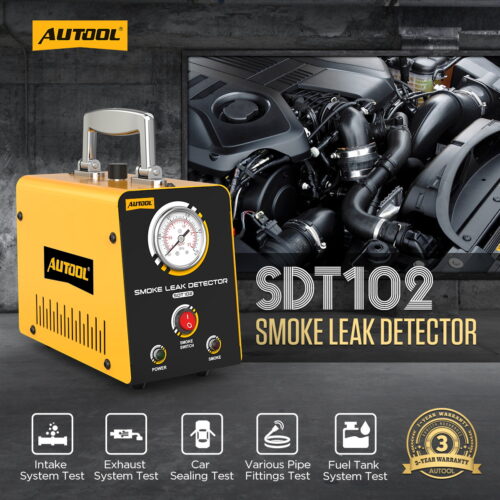
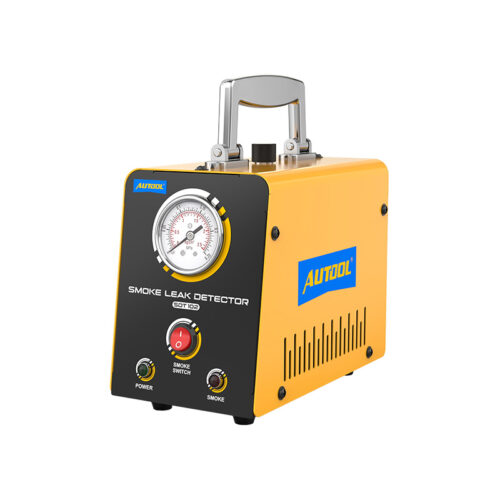
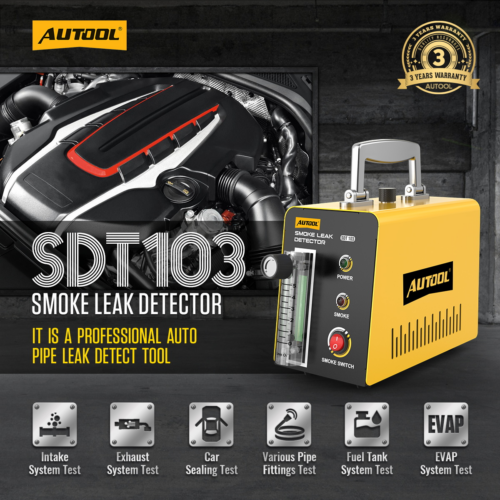
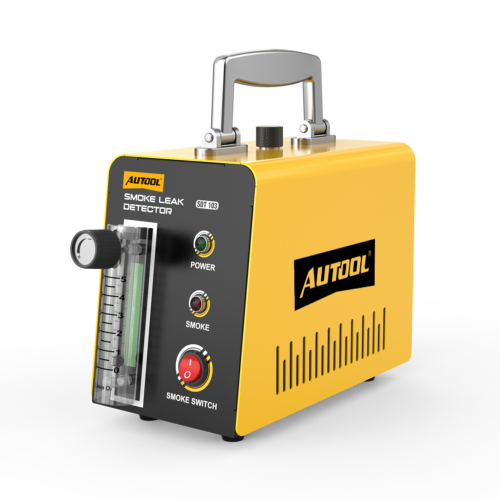
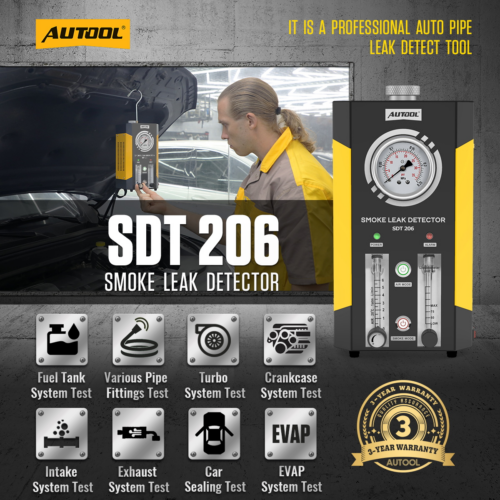
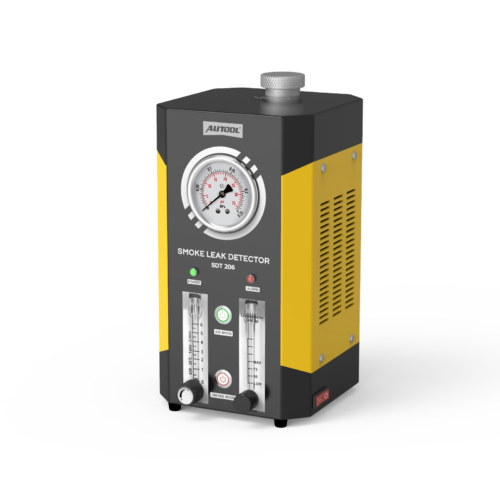
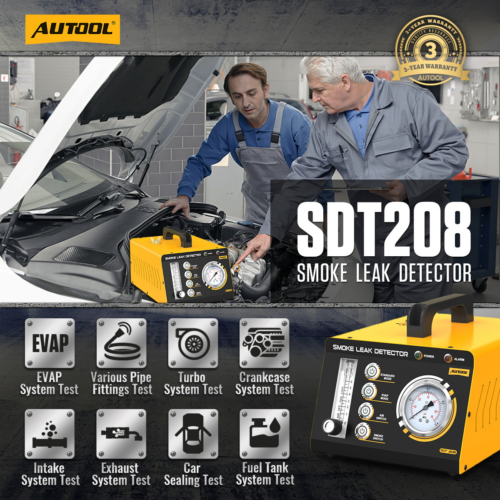
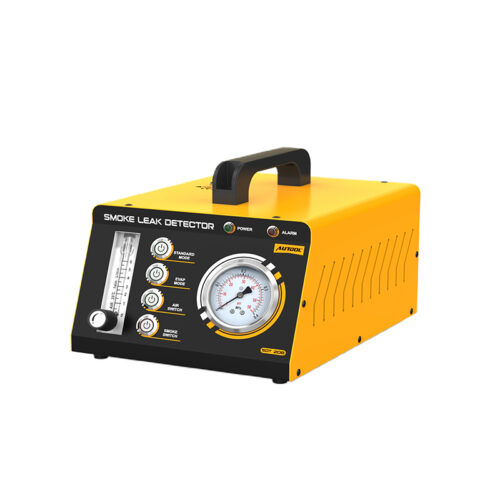
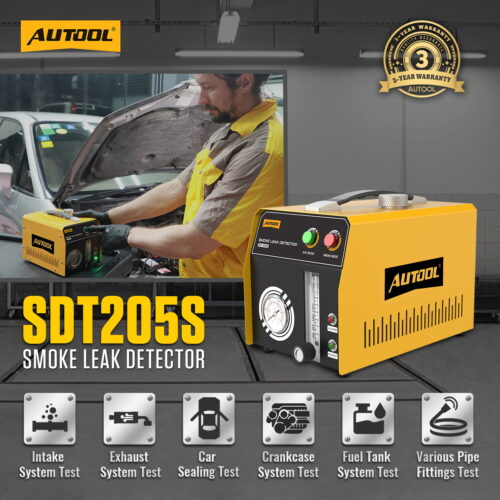
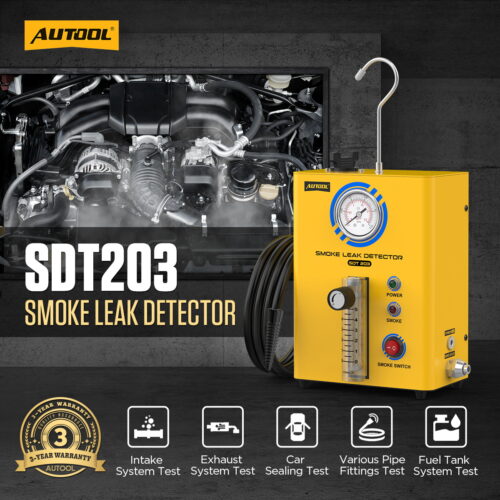
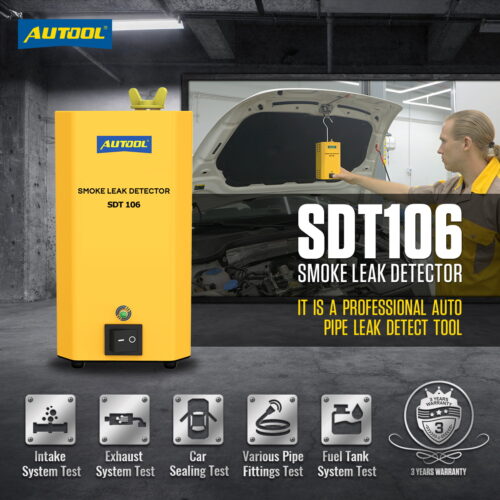
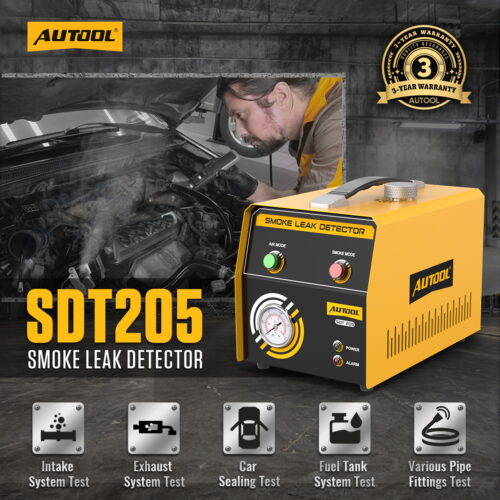
A smoke leak detector introduces low-pressure smoke into a sealed line system. If a leak exists, smoke escapes from the leak point, allowing technicians to see the exact location directly.

Compared with traditional methods, a smoke leak detector offers these advantages:

  • Leaks are more visible: Wherever smoke escapes, that’s usually where the leak is.
  • Detects tiny leaks: Ideal for finding fine cracks and sealing issues invisible to the naked eye.
  • Saves inspection time: No repeated disassembly or guesswork.
  • Wide application range: Works on intake, vacuum, EVAP, turbocharger, and some exhaust lines.
  • Reduces misdiagnosis: Helps confirm whether the issue comes from the line, connector, or seal.
  • Easy to show customers: Results are clearly visible, helping explain the repair.
  • Simple, safe detection material: Baby oil is all that’s needed to generate smoke.

5. What Should Be Noted When Using a Smoke Leak Detector?

Before testing, confirm the device is suitable for the target system, and strictly control pressure according to the manufacturer’s specifications. EVAP systems typically tolerate only low pressure, and excessive pressure can damage valves, sensors, or seals.

Smoke leak detectors are mainly designed for air and sealing systems. They are not a direct substitute for cooling system pressure testing, and should not be connected to high-pressure fuel lines. During testing, the engine should be turned off, open flames kept away, and only the smoke fluid specified by the equipment manufacturer should be used.

Conclusion

Vehicle line leaks may seem like a minor issue, but they can affect power, fuel economy, emissions, and driving safety. Traditional methods are lower in cost, but when it comes to hidden or tiny leaks, they often consume a great deal of time.

A smoke leak detector makes “invisible leaks” clearly visible, helping technicians locate problems faster and more accurately. For auto repair shops and technicians who perform frequent vehicle diagnostics, it’s a practical tool that improves detection efficiency, reduces misdiagnosis, and enhances the customer experience.

Leave a Reply

Your email address will not be published. Required fields are marked *