

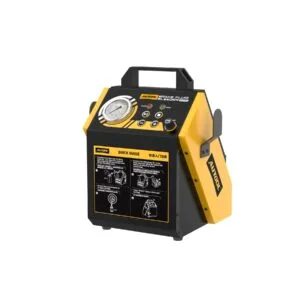



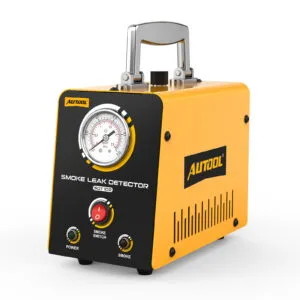

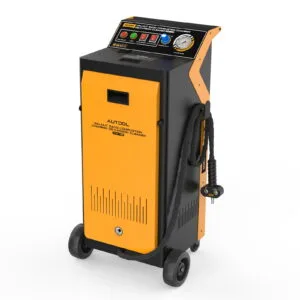
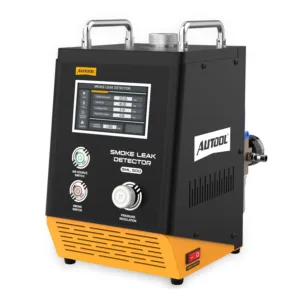
Faced with engine-bay oil residue, dirt on component surfaces, and carbon deposits, more and more repair shops are looking into dry ice cleaning. But when it comes to purchasing, what really matters is whether the equipment fits your existing bays, air supply conditions, and service lineup.
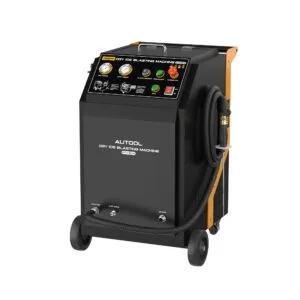
The AUTOOL HTS818 and HTS828 are both aimed at automotive cleaning, with similar base specifications; the main differences lie in pressure monitoring and air supply requirements. Understanding these differences is what lets you judge which model better matches your shop's actual needs.
Specifications shared by both machines#
Both machines feature a 7.5 kg dry ice hopper and an adjustable dry ice output of 0–3.2 kg/min. They use 3 × 6 mm dry ice pellets, operate at an air supply pressure of 0.3–1.0 MPa, and come with casters for mobility. Both require an external air compressor, and the dry ice itself must be sourced separately.
This means you cannot judge capacity or maximum pellet output by the model number alone — a higher number does not mean a bigger hopper or a higher maximum dry ice flow rate. For a repair shop, both machines require you to adjust settings to suit the cleaning target, and actual results also depend on the condition of the fouling, the operator's technique, and the air supply setup.
When selecting, start by listing the cleaning jobs you most often take on, then compare whether the equipment can handle them. Or, if you have other cleaning needs, you are welcome to contact us directly.
Pressure monitoring: the most obvious difference between the two#
The HTS818 uses a single pressure gauge, primarily for reading inlet pressure. The HTS828 uses dual gauges, allowing separate monitoring of inlet pressure and outlet working pressure.
The value of the dual gauges is that they give the operator an extra dimension of observation. When cleaning performance changes, the technician can check the readings against the air supply and working pressure to assess the situation. That said, dual gauges do not mean automatic adjustment, and this configuration alone is no basis for concluding that cleaning is faster.
If your shop has a fixed technician handling relatively consistent work, a demo can help you judge whether a single gauge already meets your needs. If staff rotate between machines or the range of cleaning targets varies widely, dual gauges are worth trying out specifically, to see whether they help employees work to a consistent standard.
Match the air compressor first, then compare the machines#
Before purchasing, send your existing air compressor's specifications to the supplier so they can verify the actual delivered air volume at working pressure, as well as the margin available when other pneumatic tools are running at the same time. Tank size or motor power alone is not enough to judge whether the whole system is properly matched.
If an air compressor upgrade, piping, or air treatment equipment is also needed, those costs should be included in the budget. For shops that already have an air supply, confirming whether the existing setup can be carried over is often more meaningful than simply comparing the two machine prices.
Which shops should prioritize the HTS818?#
If your shop is just getting started with dry ice cleaning, your job volume is not yet stable, and your air supply has been confirmed to meet requirements, the HTS818 is a reasonable first evaluation.
For these shops, the priority is to get the first projects right: define the cleaning scope, record time and dry ice consumption, and produce before-and-after comparisons that customers can understand. Rather than pursuing more features from the start, building a repeatable service process is what helps you determine whether the business can be sustained.
Of course, the choice of the HTS818 should be based on actual quotations and demo results. If the total investment gap between the two complete setups is very small, it is also worth weighing further whether the dual gauges justify the extra budget.
Which shops are better suited to the HTS828?#
If dry ice cleaning has already become a steady service line, and your shop values pressure monitoring, staff training, and process management, the HTS828 deserves close evaluation.
During the demo, have the technicians who will actually operate the machine take part. Observe whether the dual gauge readings are easy to read, whether adjustment feels natural, and whether the machine is convenient to move and maintain day to day. Only when a configuration enters the workflow does it turn into usable value.
For shops planning to expand their cleaning services, also ask the supplier to demonstrate on the workpieces you actually target. Performing well on one type of surface does not mean the same settings can be applied to every material, coating, and type of fouling.
Payback should be calculated from the cost per job#
The investment in a dry ice cleaning service is more than the machine. Shops also need to factor in dry ice purchasing and storage losses, air compressor operation, labor, bay occupancy, and the time needed to clean up the debris that is removed.
For comparison, use workpieces of similar contamination levels and record the total time and consumables needed to reach the same acceptance standard. Total time should include preparation, masking, cleaning, and cleanup — not just the blasting itself.
Then subtract direct costs from the actual price charged to estimate the contribution per job, and combine that with average monthly order volume to estimate the payback period. Order growth that has not yet been verified should not be counted in advance as certain revenue attributable to the equipment.
Turn cleaning results into a service customers understand#
Once the equipment is chosen, the shop still needs to explain what is being cleaned, why, and what the delivery standard is. Showing before-and-after photos from the same angle under the same lighting builds trust more effectively than vague claims about "deep cleaning."
At the same time, the scope of work should be defined according to the material and the vehicle's repair requirements. The manufacturer notes that after dry ice sublimates, the removed oil residue and carbon deposits still need to be collected, and the work area must be ventilated. Sensitive surfaces should be tested first, and no promise should be made that every area can be cleaned without disassembly or with absolutely no damage.
The HTS818 is suited to building a cleaning service around clearly defined jobs, provided the air supply is properly matched; the HTS828 is more worth evaluating for shops that need dual pressure monitoring.


Discussion
Comments 0
Need help with an order, warranty or a fault? Contact support
No comments yet. Ask a question or share how the tool worked for you.