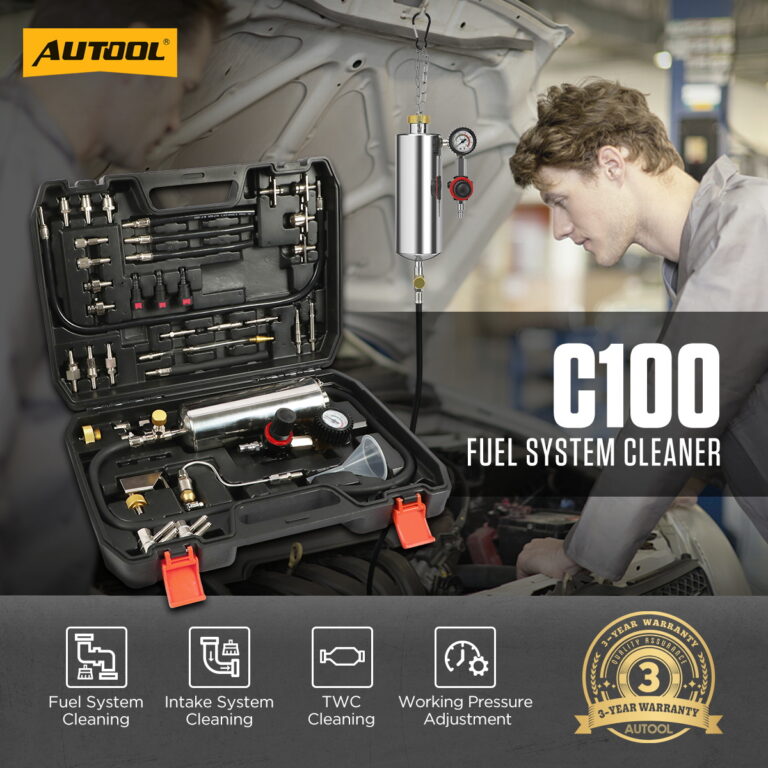
AUTOOL C100 On-Car Fuel and Intake System Cleaning Tool
Original price was: US$119.00.US$90.00Current price is: US$90.00.
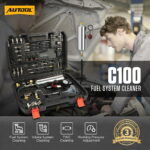
- Multi-Path On-Vehicle Cleaning
- Gauge-Regulated Delivery
- European, Asian & US Petrol Adapters
- Portable Integrated Vessel
- Multi-Path On-Vehicle Cleaning: Clean supported petrol EFI circuits, throttle passages, intake paths, and compatible TWC-related service paths without removing the injector assembly.
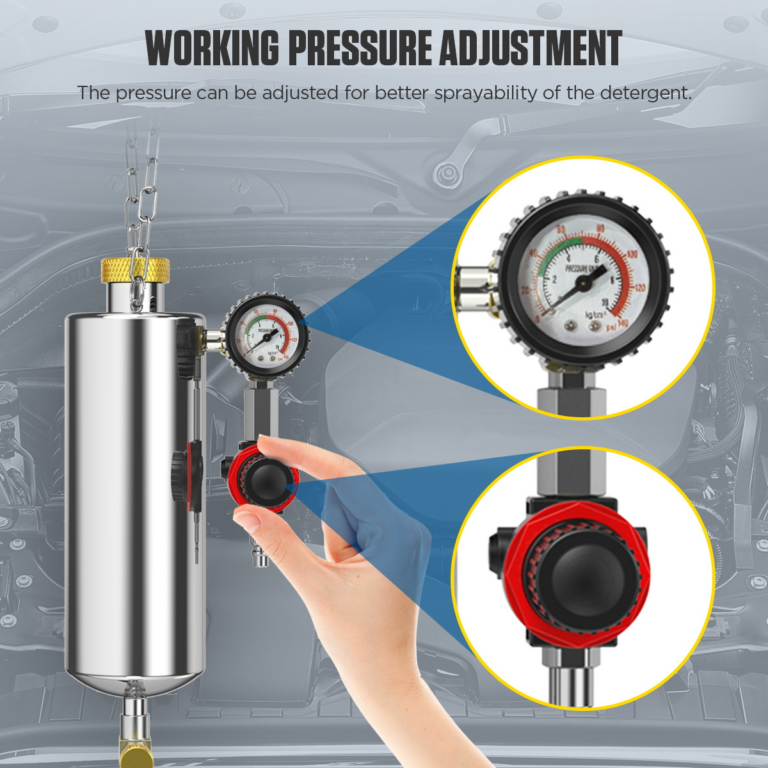
- Gauge-Regulated Delivery: A pressure gauge and regulating valve provide controlled detergent delivery through the selected service path.
- European, Asian & US Petrol Adapters: Hoses, couplings, nozzles, and vehicle adapters support many European, Asian, and US petrol cars and light trucks after fitment confirmation.
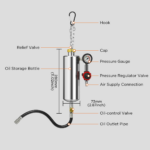
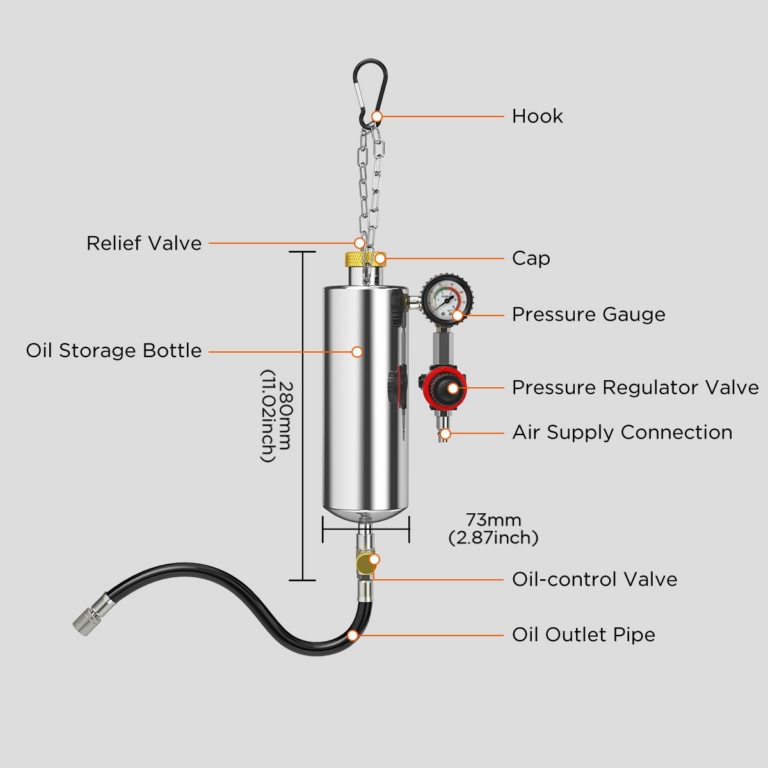
- Portable Integrated Vessel: The bottle body combines fluid storage, pressure monitoring, regulation, and controlled output in one portable assembly.
- Multi-Path On-Vehicle Cleaning: Clean supported petrol EFI circuits, throttle passages, intake paths, and compatible TWC-related service paths without removing the injector assembly.
- Gauge-Regulated Delivery: A pressure gauge and regulating valve provide controlled detergent delivery through the selected service path.
- European, Asian & US Petrol Adapters: Hoses, couplings, nozzles, and vehicle adapters support many European, Asian, and US petrol cars and light trucks after fitment confirmation.
- Portable Integrated Vessel: The bottle body combines fluid storage, pressure monitoring, regulation, and controlled output in one portable assembly.
- 3-Year Warranty Main unit 3 years · Accessories 1 year
- 90-Day Returns Eligible returns within 90 days
- Official Store Genuine products · Direct support
AUTOOL C100 · On-Vehicle Fuel and Intake Cleaning Kit
Clean Supported Petrol Fuel and Intake Paths On-Vehicle
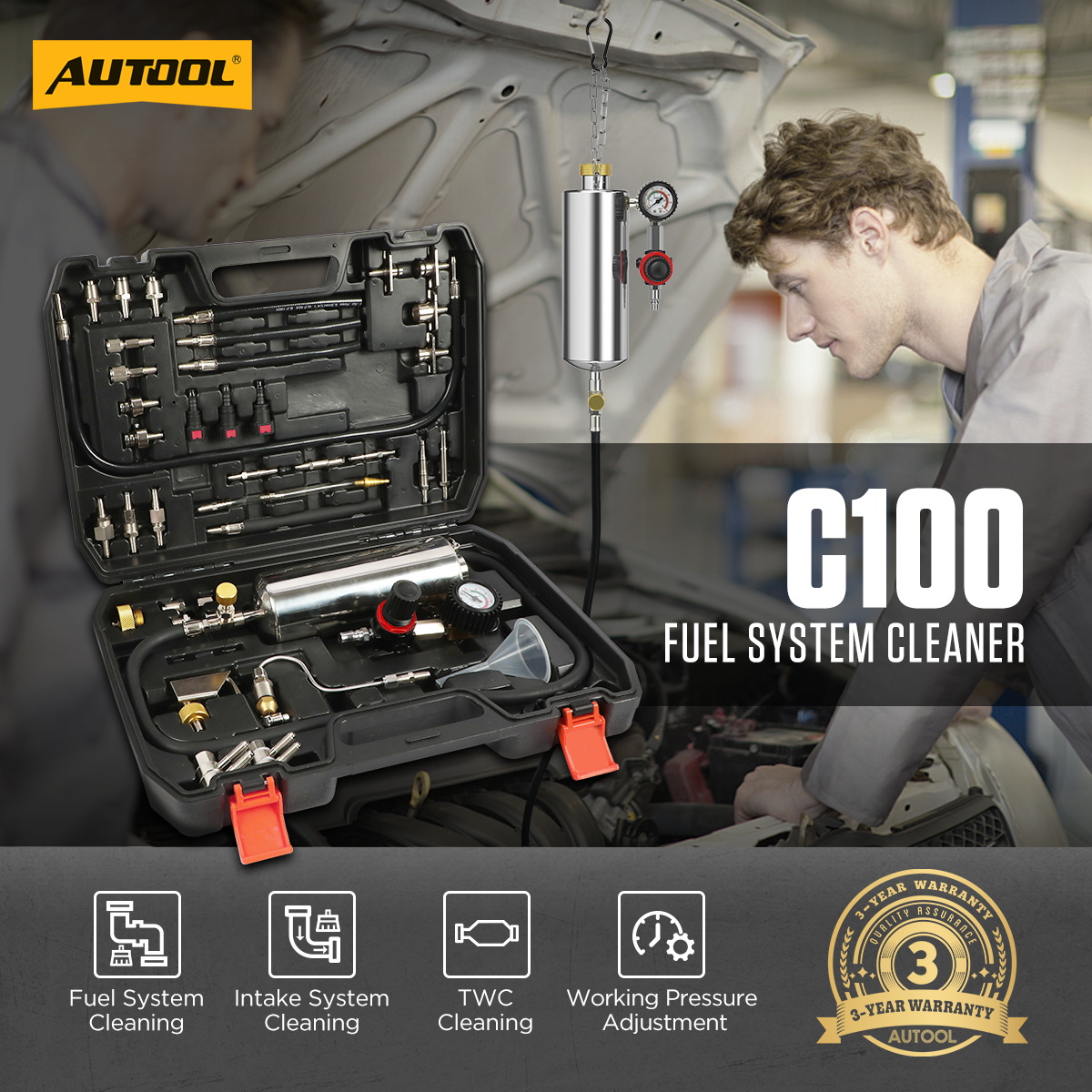
Clean supported petrol EFI circuits without removing the injector assembly, using regulated detergent delivery through the selected service path. The gauge, regulating valve and integrated vessel support vehicle-side control, while the hose, coupling, nozzle and adapter set covers varied petrol-car and light-truck connections. Dedicated setups also support compatible throttle, intake and manual-defined TWC-related procedures.
- On-Vehicle Petrol EFI Cleaning
- Adjustable Pressure Delivery
- Throttle / Intake Service Paths
- TWC-Related Joint Setup
- Hoses, Nozzles & Vehicle Adapters
Key Features
Adapters and Fluid Paths for Several On-Vehicle Tasks
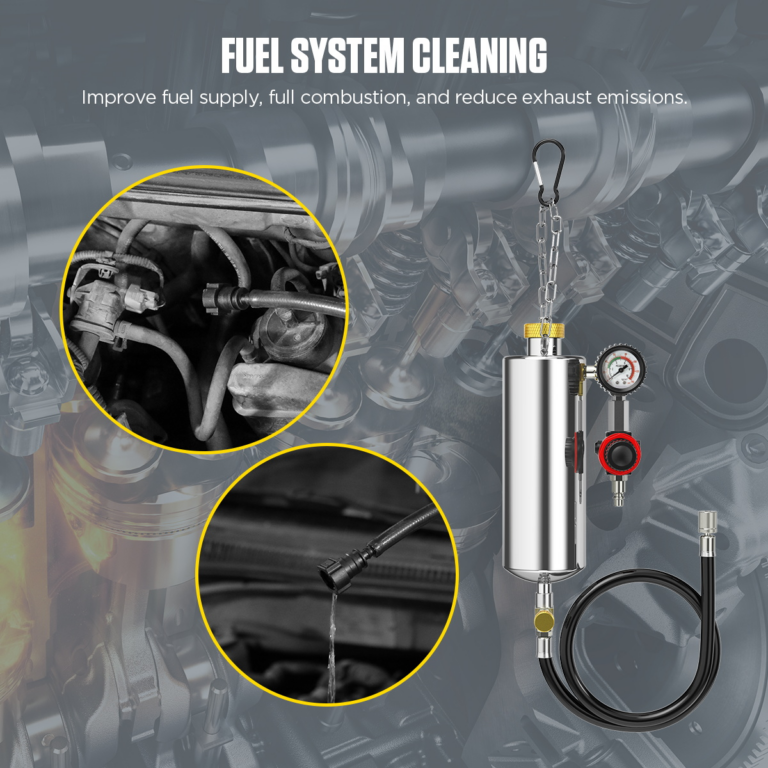
On-Vehicle Fuel-Circuit Flushing
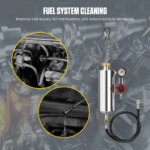
The C100 on-vehicle fuel injection cleaning kit routes detergent through supported petrol EFI injectors, fuel lines, throttle-related passages, and other fuel-system components without removing the injector assembly.
Throttle Cleaning Support
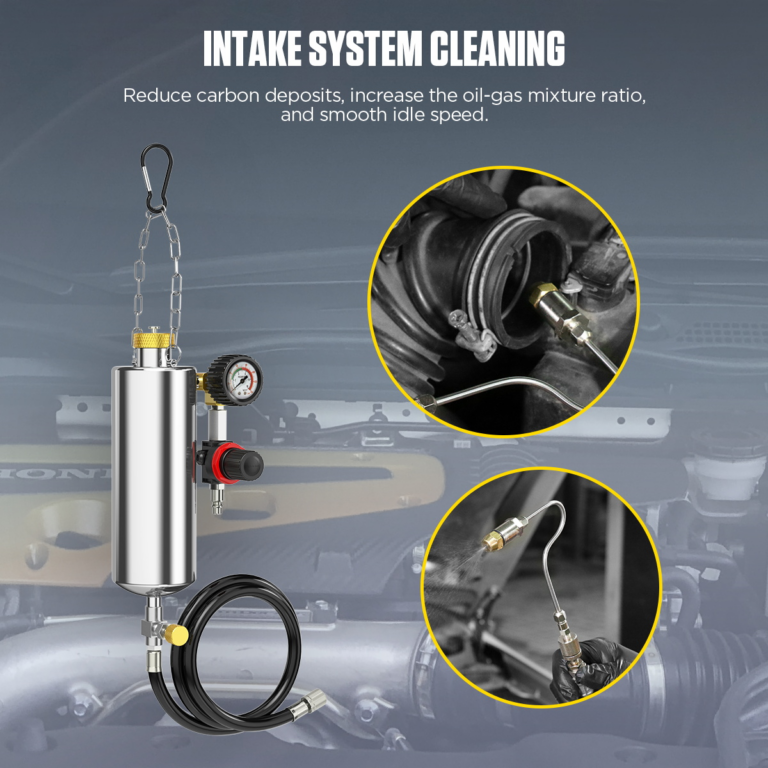
The included spray-nozzle setup supports the manual-defined low-pressure throttle procedure.
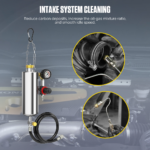
Intake-Manifold Procedure
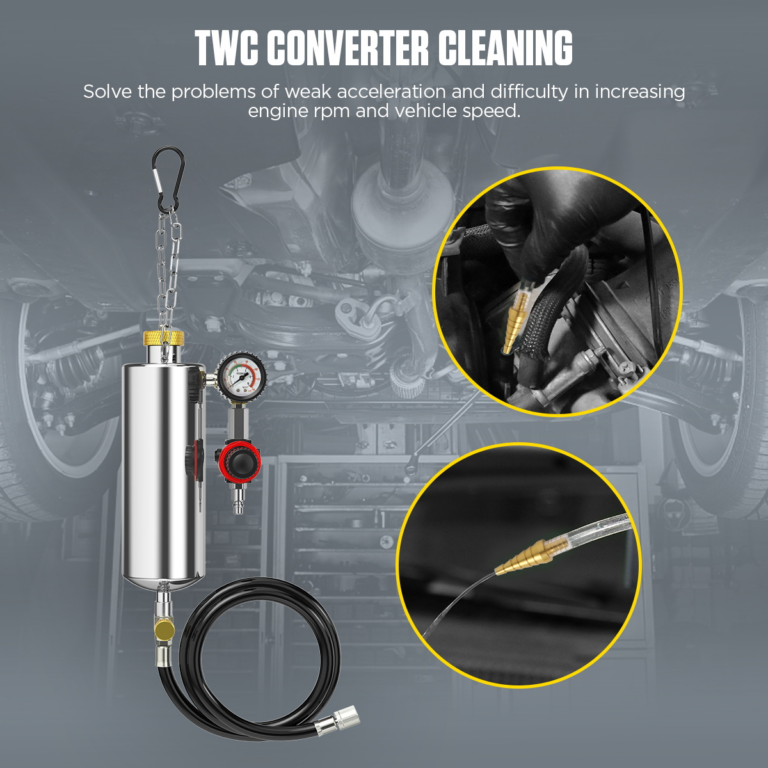
The TWC joint and intake-vacuum connection support the manual-defined gradual detergent-feed procedure.
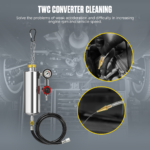
TWC-Related Cleaning Support
C100 includes joints for the TWC-related flushing workflow described in the manual; it does not guarantee an emissions result.
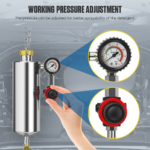
Adjustable Pressure
The pressure gauge and regulating valve set delivery pressure to support detergent sprayability and controlled cleaning through the selected service path.
Multi-Adapter Coverage
Hoses, couplings, plugs, clamps, nozzles, and vehicle adapters support many European, Asian, and US petrol cars and light trucks when fitment is confirmed.
Portable Integrated Vessel
The bottle body combines fluid storage, gauge, pressure regulation and controlled output for vehicle-side service.
3 Years Warranty Support
Main unit: 3-year warranty. Standard accessories: 1-year warranty. Warranty Policy.
How to Use
Identify, Isolate, Connect, Clean, and Restore
Select the Service Path
Confirm petrol-system compatibility and whether the task uses the fuel circuit, throttle nozzle or manual-defined TWC/intake connection.
Identify and Isolate Lines
Use vehicle service information to identify inlet and return routing, select the correct adapters and isolate the vehicle fuel supply as the approved procedure requires.
Connect the C100
Attach the cleaner outlet, return-side plug or alternate connection exactly as shown for the vehicle layout. Wrap opened connectors to control splash.
Add Detergent and Air
Add the correct task-specific detergent, connect regulated compressed air and set the confirmed pressure: 40–50 PSI for EFI or 1–5 PSI for throttle-style work.
Check for Leaks
Inspect every connection before starting the engine. Do not proceed if fuel or detergent is leaking.
Run the Approved Procedure
Start the engine only when required by the current manual and feed detergent gradually through the selected path. Follow the manual timing and engine-speed instructions rather than improvising.
For the manual-defined TWC path, the flushing process takes about 30–40 minutes, with engine speed raised at the intervals specified by the procedure.
Depressurize and Restore
Stop the engine, relieve bottle pressure, reconnect all original lines and perform a final leak check. Complete any throttle relearn specified for the vehicle.
Safety & Compatibility
Match Vehicle Procedure, Fluid, Pressure, and Adapter
Petrol-System Boundary
Use C100 for confirmed petrol EFI applications. Do not assume diesel, true high-pressure GDI testing or universal fuel-system compatibility.
External Air and Correct Pressure
Use regulated compressed air and the vehicle/procedure-specific setting; never apply a pressure merely because the gauge can display it.
Fuel and Detergent Leak Control
Stop the engine immediately if leakage is found. Do not resume until the connection has been made safe.
Fire and Splash Protection
Keep ignition sources away, control open-line splash with suitable absorbent material, have appropriate fire protection available and wear eye, hand and protective clothing.
Exhaust Ventilation
Route exhaust outdoors and secure the vehicle in neutral or park with the brake applied during an engine-running procedure.
Detergent Compatibility
Use only the detergent specified for the chosen cleaning path and follow its SDS, handling and disposal instructions.
Pressure Release
Relieve bottle and hose pressure before opening the vessel or disconnecting any fitting.
Throttle Relearn
After throttle cleaning, follow vehicle service information for throttle-position initialization or scan-tool relearn when required.
Wear Protective Clothing
Wear protective gloves and protective clothing when operating the cleaner.
Verify Leak-Free Connections
Check every connection point before starting the engine; there must be no leakage during cleaning.
Depressurize Before Disconnecting
Drain the pressure in the C100 bottle after flushing before disconnecting the cleaner.
Restore and Recheck Pipes
Restore all fuel system pipes after cleaning and confirm there is no leakage.
Protect and Store the Housing
Avoid rubbing the sheet-metal housing against rough surfaces. Store C100 dry and away from hot, humid, or poorly ventilated locations.
Compare Models
Compare On-Vehicle Cleaning Configurations
Model Guide
Choose one or more options. Fuel Circuit is selected by default.
| Choose For Your Task | Fuel Circuit | Throttle | TWC / Intake |
|---|---|---|---|
| Workflow & Inputs | |||
| Connection path | Approved petrol inlet/return arrangement | Spray nozzle at throttle area | Dedicated joint into approved intake-vacuum path |
| Procedure pressure | 40–50 PSI | 1–5 PSI | Follow current manual |
| Required inputs | External air, fuel-system detergent, matching adapters | External air, approved detergent, nozzle | External air, task-specific detergent, TWC joints |
| Allowed conclusion | Cleaning procedure completed | Cleaning procedure completed | Cleaning procedure completed |
Manual & Downloads
Use the Manual for Setup and Cleaning Paths
AUTOOL C100 User Manual
Open the PDF manual for C100 on-vehicle fuel and intake cleaning, adapter selection, detergent pressure control, safe connections, maintenance, and troubleshooting.
Package
What’s Included
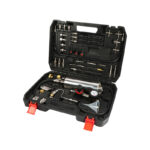
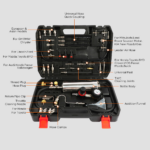
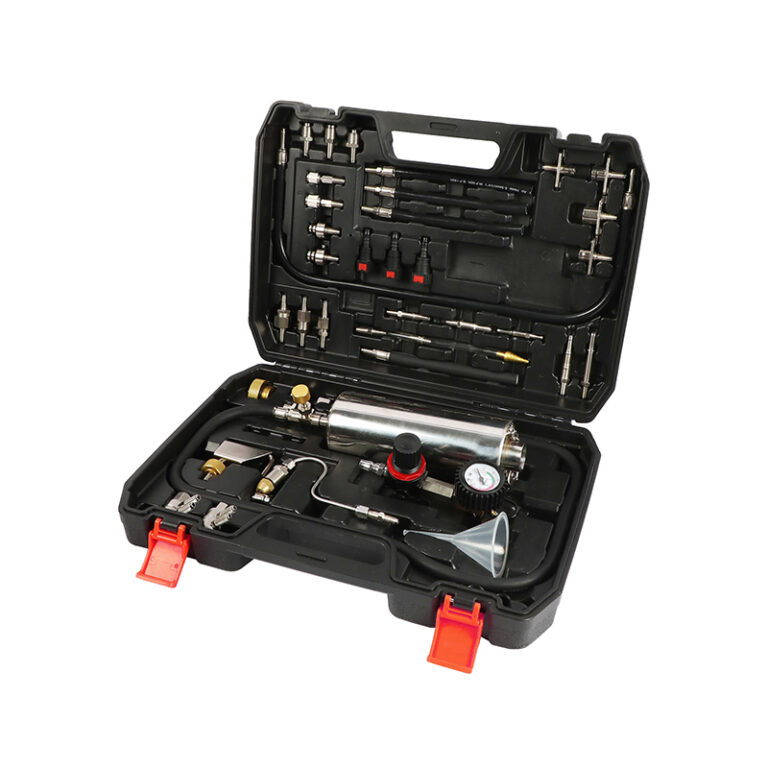
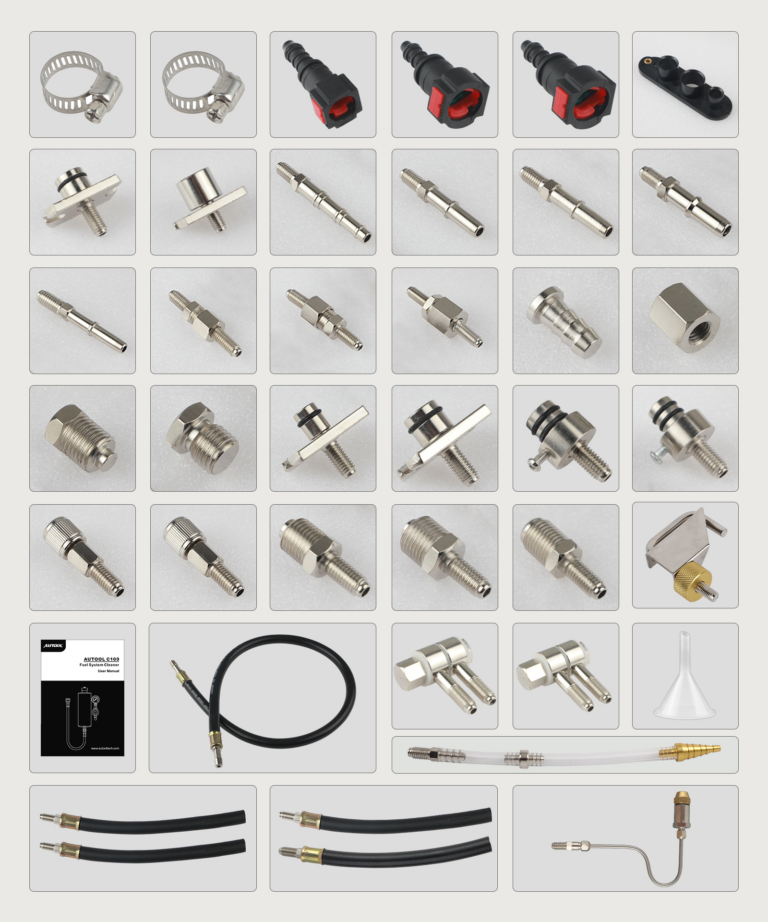
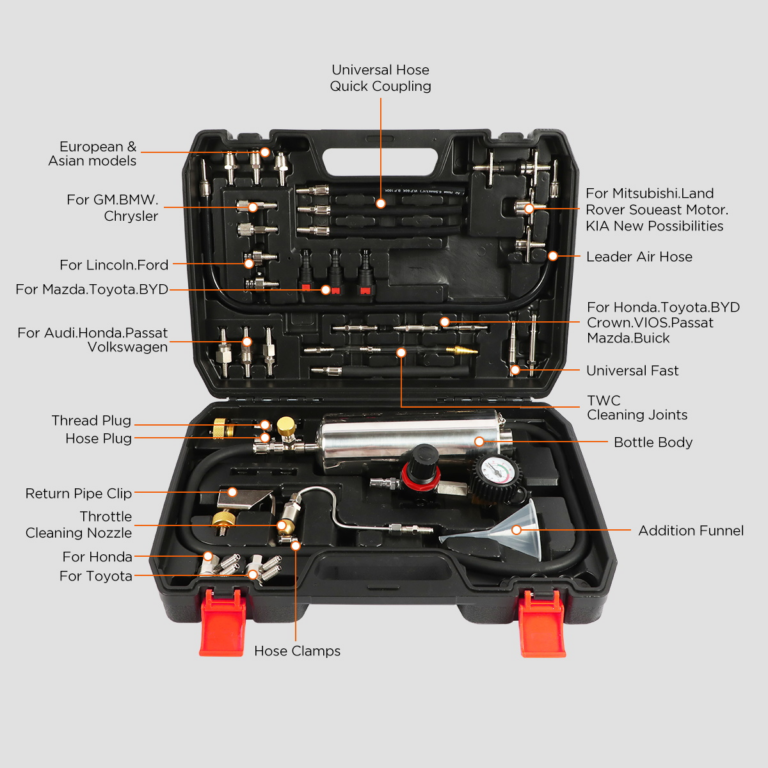
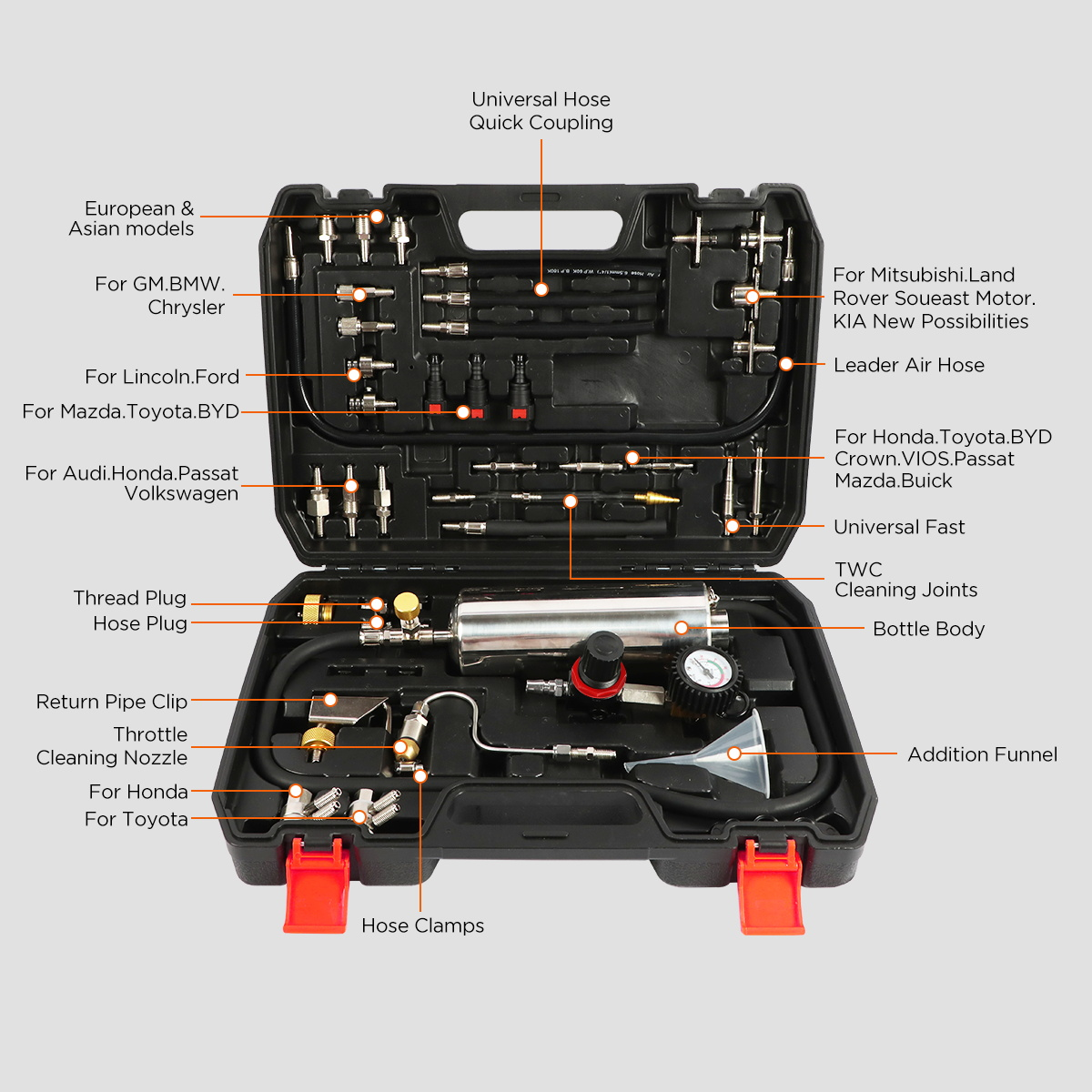
- C100 Cleaner AssemblyCleaner bottle body with pressure gauge and regulating-valve assembly.
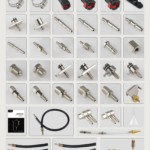
- Hoses and CouplingsUniversal hose quick coupling, leader air hose, universal fast connector, hose plug, thread plug, and related hose adapters.
- Vehicle AdaptersAdapters pictured for multiple European, Asian and US vehicle connection styles; exact fit remains vehicle-dependent.
- Cleaning AccessoriesThrottle-cleaning nozzle, TWC cleaning joints, addition funnel, return-pipe clip, and hose clamps.
- Final ShipmentConfirm the actual package revision and adapter appearance before ordering.
FAQs
System, Fluid, and Adapter Questions
Is C100 an off-vehicle injector test bench?
No. It is an on-vehicle cleaning kit and does not measure individual injector flow, spray or leakage.
Which vehicles can I service?
C100 is intended for supported petrol EFI cars and light trucks. Confirm the exact fuel-system layout and adapter; do not assume diesel compatibility.
Does The C100 Need An External Air Source?
Yes. AUTOOL C100 requires a suitable regulated external compressed-air source connected to the cleaner air port and adjusted for the target cleaning system.
What Pressure Should I Use For EFI Fuel System Cleaning?
The EFI procedure uses about 40–50 PSI, also described as about 0.3–0.4 MPa, while throttle-style work uses 1–5 PSI. Confirm the correct setting for the vehicle and task, and check for leakage before starting the engine.
What Should I Do If The Vehicle Has No Fuel Return Hose?
For a no-return setup, follow the manual and vehicle service information to disable the fuel pump and use the correct stopper or adapter for the fuel-system layout.
Can C100 clean the throttle and intake?
Yes, with the dedicated throttle nozzle or intake-vacuum procedure. Use the correct detergent, connection, low-pressure setting and current instructions.
Does TWC cleaning guarantee an emissions result?
No. C100 supports the cleaning procedure. Evaluate catalyst condition and emissions compliance with the applicable vehicle tests.
Why might a throttle relearn be needed?
The manual warns that throttle-position initialization may be required after cleaning to prevent a warning light or stored DTC. Follow vehicle service information.
What warranty is stated?
Main unit: 3-year warranty. Standard accessories: 1-year warranty. Warranty Policy.
Is AUTOOL C100 Suitable For Diesel Vehicles?
C100 is intended for the petrol / gasoline EFI applications described on this page. Ask AUTOOL to confirm suitability before using it on another fuel-system type.
What Pressure Should I Use For Throttle Or Carburetor Style Cleaning?
For throttle style cleaning, adjust the air source pressure to about 1-5 PSI. The manual also gives a carburetor fuel system reference of 0.07-0.35kgf/cm². Use low pressure and confirm the connection before opening the cleaner outlet.
How Do I Identify The Fuel Inlet Hose And Return Hose?
Generally, the inlet hose is larger and the return hose is smaller. A filter is often connected on the inlet hose side, while a buffer is often on the return side. Some hoses also have arrows showing fuel flow direction.
What Should I Check Before Starting The Engine?
Check every connection point and make sure there is no leakage. Keep a fire extinguisher nearby, lead exhaust outdoors, place the transmission in neutral, apply the brake, and stop the engine immediately if any fuel leak is found.
Do I Need To Initialize The Throttle After Cleaning?
The manual warns that the throttle position sensor must be initialized with an automotive scan tool after throttle cleaning. Otherwise, the fault indicator lamp may turn on and the PCM may record a DTC.
What Accessories Are Included With AUTOOL C100?
Use the current Packing List image to confirm the selected package.
- Main hardware: C100 body, pressure gauge, and regulating valve.
- Air/fluid connections: quick coupling, leader air hose, fast connector, thread plug, hose plug, and clamps.
- Cleaning adapters: vehicle adapters, TWC joints, throttle nozzle, funnel, and return-pipe clip.
How Long Is The Warranty?
Main unit: 3-year warranty. Standard accessories: 1-year warranty. Warranty Policy.
Matthew ✓ Verified Purchase –
It looks great for the price, but we'd have to check its functionality.
It looks great for the price, but we’d have to check its functionality.
Andrew ✓ Verified Purchase –
Very complete, just what I expected.
Very complete, just what I expected.
NicoleL uke ✓ Verified Purchase –
I do my own maintenance on my vehicles.
I do my own maintenance on my vehicles. 2 of which are direct injection and require extra maintenance to prevent carbon buildup on the intake valves. This allows the injection of chemicals to keep these buildups at a minimum. Nicely made also includes other tools for working with fuel injection and other parts of the injection systems. Reasonably priced for such a comprehensive tool for working with injection systems.