Uncategorized
AUTOOL Fuel Injector Tester: Are You Using the Right Test and Cleaning Fluid?

August 23, 2026
Share:
 autoolstore.com
Repair testing / 8 sub-categories
Diagnostic tools for leak tracing, visual inspection, battery health, circuits, pressure, spark, oil, and electrical readings.
Repair maintenance / 6 sub-categories
Service equipment for fluid exchange, A/C diagnostics, refrigerant recovery, oil handling, and cooling-system work.
Carbon cleaning / 3 sub-categories
Carbon-removal equipment for injectors, intake valves, components, and workshop cleaning jobs.
Wheel tire / 3 sub-categories
Equipment for alignment, lifting, tire repair, tire mounting, and service-bay workflows.
Tool storage / 1 sub-category
Storage products for keeping workshop tools, test equipment, and accessories organized.
EV charging / 1 sub-category
EV charging products for new-energy vehicle service, workshop use, and installation scenarios.
OBD diagnosis / 5 sub-categories
OBD-related testers, ECU programming power supplies, cable products, used-car inspection tools, and key frequency diagnostics.
Accessories / 8 sub-categories
Replacement parts, adapters, consumables, cables, and add-ons for major diagnostic and service equipment.
These are common questions for automotive technicians and DIY users. When a new fuel injector tester and cleaner starts showing pressure instability, leaking lines, inaccurate readings, or other issues after only a short period of use, the machine itself is often the first thing blamed.
But the problem may not be the equipment.The fluid you put into the machine can matter just as much. Test fluids and cleaning solutions are designed for different purposes. Using the wrong fluid repeatedly can affect hoses, seals, pumps, filters, and other internal components, potentially reducing both equipment life and testing accuracy. So, before running another test, let’s take a closer look at which fluids belong in a fuel injector tester—and which ones should stay out.
The answer is no. Cleaning solution should not be used for testing.Repeated use of an unsuitable fluid can damage internal components and, in some cases, may cause the machine to malfunction after only a few uses.
Many users confuse the roles of cleaning solution and test fluid, assuming that a solution capable of cleaning fuel injectors should also be suitable for pressure and circulation testing. In fact, the two are formulated for different purposes and have different application requirements.
Conventional injector cleaning solutions are designed to quickly remove carbon deposits, oil residue, and other contaminants. To achieve this cleaning performance, they may contain active solvents and other aggressive chemical ingredients. While these ingredients are effective for cleaning injector deposits, they may be harsh on the seals, hoses, pumps, and other internal components of a fuel injector tester.
A fuel injector tester and cleaner contains a range of components that come into contact with the circulating fluid, including rubber seals, silicone hoses, oil seals, diaphragms, and precision pumps. These components may be sensitive to aggressive chemicals, and prolonged exposure to unsuitable cleaning solutions can lead to several common issues:
Premature Wear of Seals and Hoses:Rubber components may swell, harden, crack, or deteriorate over time, potentially resulting in fluid leaks, pressure loss, or reduced sealing performance.
Reduced Pump Performance:Aggressive chemicals may affect pump plungers, seals, and other internal components, potentially causing unstable pressure, insufficient flow, and inconsistent test results.
Clogged Fluid Passages and Filters:Residue and dissolved contaminants can accumulate in narrow fluid passages and filters, restricting circulation and potentially causing error messages or abnormal machine operation.
Cleaning solution is designed to clean fuel injectors—not to replace test fluid. Repeatedly circulating an unsuitable cleaning solution through the testing system can accelerate component wear and affect long-term equipment performance. In some cases, improper fluid use can even cause a new machine to develop problems after only a few uses.
Some technicians use gasoline for testing because it closely resembles real-world operating conditions. However, gasoline should not be used for circulation testing in a fuel injector tester and cleaner unless specifically approved by the equipment manufacturer. The primary concern is not only potential component damage, but also the serious safety risks of circulating gasoline through powered equipment.
Significant Safety Risks
Gasoline is highly volatile and flammable. During operation, pumps and electrical components inside the equipment may generate heat or electrical sparks. Gasoline vapors can ignite when exposed to an ignition source, creating a serious fire or explosion hazard. For this reason, gasoline should not be used in a fuel injector tester and cleaner unless specifically approved by the equipment manufacturer.
Potential Damage to Internal Components
Gasoline contains various additives and may leave residues during repeated circulation. Over time, deposits can build up in pumps, fluid lines, sensors, and other precision components, potentially affecting fluid circulation and testing accuracy. Gasoline may also cause certain rubber components to swell or deteriorate, which can lead to leaks, pressure instability, or reduced sealing performance.
Inconsistent Test Results
Gasoline can vary in composition, viscosity, and other physical properties depending on its grade and source, making it unsuitable for standardized testing. These variations may affect measurements such as fuel delivery, spray pattern, and leakage, leading to inconsistent results and potentially affecting diagnostic accuracy.
To protect the equipment, maintain testing accuracy, and extend service life, the key is simple: use test fluid for testing and cleaning solution for cleaning. They serve different purposes and should not be mixed or used as substitutes for one another.
Dedicated Test Fluid: For Circulation, Pressure Testing, and Performance Checks
A suitable test fluid should be non-corrosive, viscosity-stable, and compatible with the machine’s internal components. A quality injector test fluid is formulated without aggressive solvents, helping protect hoses, pumps, seals, and other rubber and metal components during repeated circulation.
Stable fluid properties also help maintain consistent testing conditions for parameters such as fuel delivery, spray pattern, and sealing performance. This not only helps protect the equipment but also supports more reliable test results.
For testing, we recommend using alcohol with a concentration above 95% (isopropyl alcohol or ethanol) or a dedicated fuel injector test fluid, according to the equipment manufacturer’s specifications.
Dedicated Cleaning Solution: For Injector Cleaning Only
Cleaning solutions are formulated to remove carbon deposits, oil residue, and other contaminants from fuel injectors. Unlike test fluids, they are designed for short-term cleaning applications and should not be used for circulation or performance testing unless specifically approved by the equipment manufacturer.
For ultrasonic cleaning, use a professional injector cleaning solution or an ultrasonic cleaning solution compatible with the equipment and follow the manufacturer’s recommended concentration and operating procedure.
Tips for Using a Fuel Injector Tester and Cleaner:After completing injector testing, drain the used test fluid according to the equipment instructions. Removing residual fluid and contaminants from the system can help reduce buildup and protect internal components.
When using an ultrasonic cleaner, always add the recommended cleaning solution to the cleaning tank before starting the unit. Never operate the ultrasonic cleaner without sufficient liquid, as dry operation may damage the equipment. During cleaning, make sure the injector is properly immersed in the solution according to the equipment instructions to ensure effective cleaning.
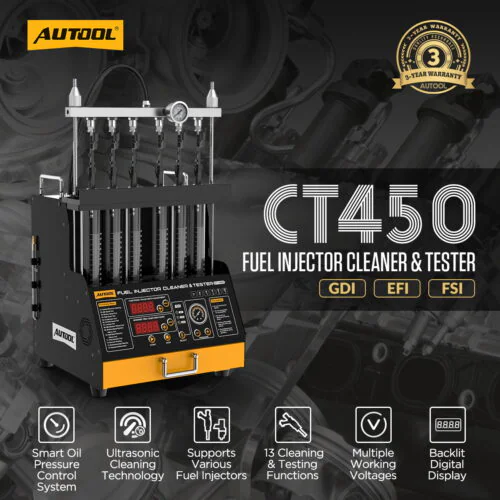
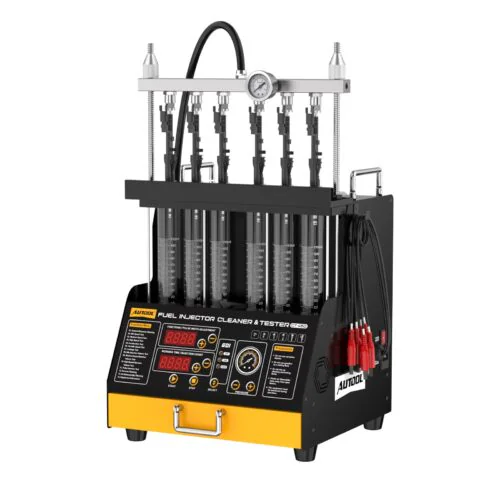
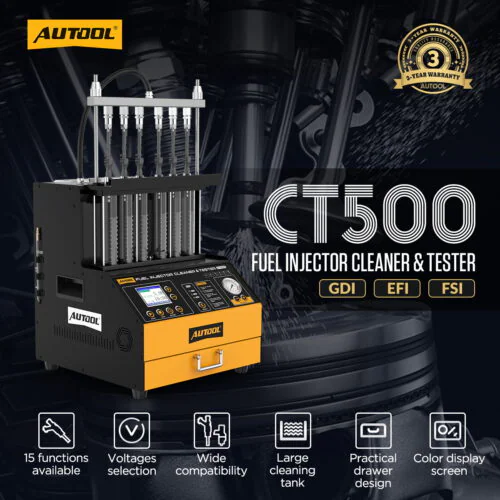
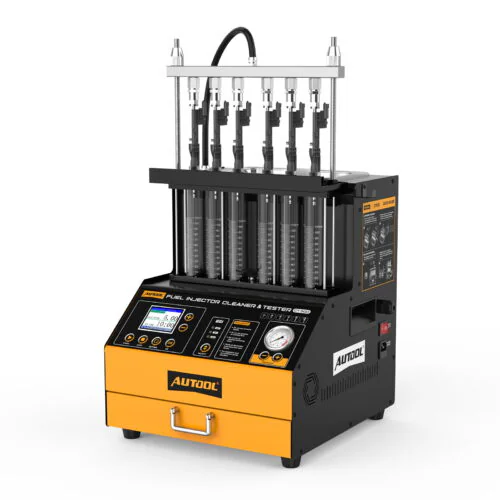
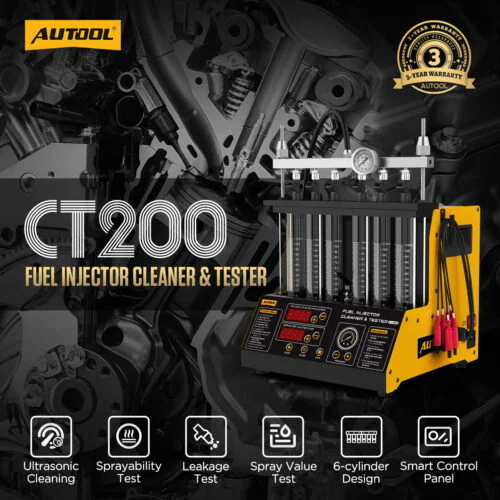
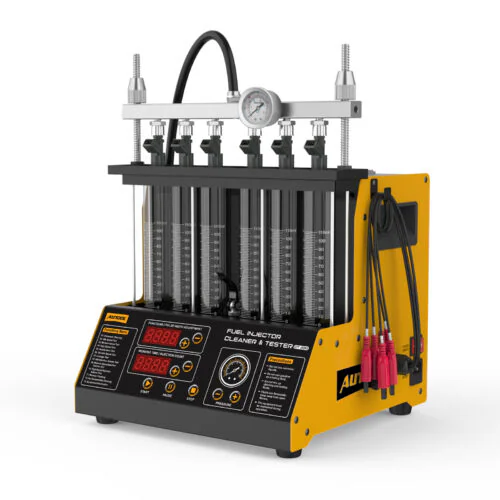
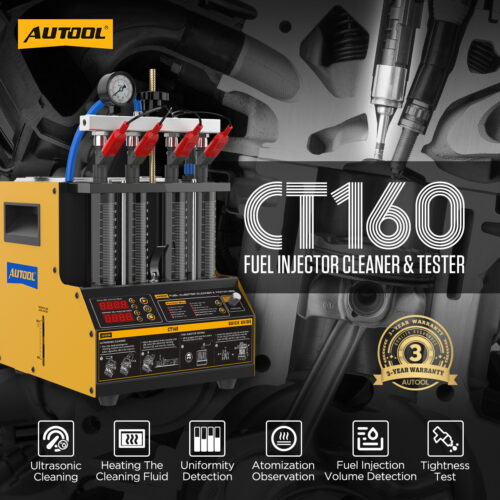
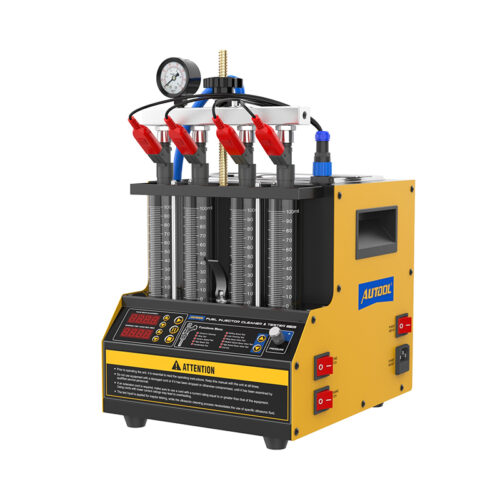
Equipment issues are not always caused by the machine itself. In many cases, improper fluid selection or operation can contribute to premature wear and performance issues. Using the right fluid helps maintain testing consistency, equipment performance, and operational safety, while proper maintenance can reduce unnecessary repair and replacement costs. Test with the right fluid, clean with the right solution, and follow the manufacturer’s recommendations to keep your fuel injector tester performing reliably over time.