Tech Trends
Sodium-ion battery: the new trend of the future of electric vehicles

July 19, 2021
Share:
 autoolstore.com
Lithium batteries used in electric vehicles are expensive, which is one of the reasons why electric vehicles are difficult to popularize. Now, battery technology is expected to achieve a breakthrough.
The future of electric vehicles may be able to use inexpensive and resource-saving sodium-ion batteries instead of lithium batteries.
Electric vehicle battery cost
Electric vehicles, especially those that use renewable energy to generate electricity, are seen as the future model that will help global climate protection. But for years car manufacturers have used rare and relatively expensive lithium in battery technology, slowing the pace of mass adoption of electric vehicles worldwide.
Although electric cars, commercial vehicles, and electric bicycles are in full swing, they are still limited in use. High prices, cumbersome charging facilities, and a battery production process that consumes large amounts of raw materials are hindering the rapid development of electric vehicles.
To make electric vehicles widely available, car manufacturers must introduce batteries that are more powerful, durable, sustainable, and affordable.
Material comparison
Sodium-ion batteries may be a viable option, and recent developments in sodium-ion batteries have been surprisingly progressive. In the foreseeable future, sodium-ion batteries may be able to replace lithium batteries used in electric vehicles, smartphones, or notebooks.
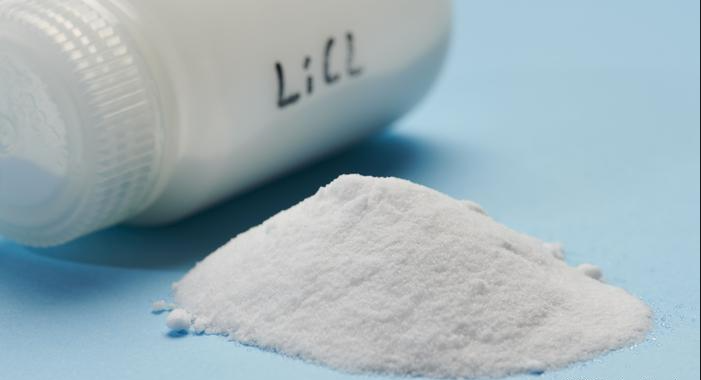
Lithium and sodium, two alkali metals, have very similar chemical properties. Although sodium has a lower energy density compared to the rarer lithium, sodium is easier to obtain and will be relatively inexpensive.
Prototype progress
The performance of sodium-ion batteries is still about 20 years behind that of lithium batteries. The reason is that researchers in the past decade or so only focused on developing the stronger performance of lithium.
Today, there are not only groundbreaking scientific publications but also very forward-looking prototypes. According to a report published in May, a sodium-ion battery developed in South Korea went through about 500 full charge cycles before its capacity dropped to 80 percent of its original capacity.
Another battery, developed by a U.S.-China research team, can complete about 450 recharges for the same battery capacity. A Chinese-made sodium-ion battery has a smaller capacity, but after 1200 12-minute fast charges, it still has 70% of its battery capacity.
It may not sound like much, but in practice these batteries may be able to withstand a higher number of recharges because they are not typically recharged after being drained in daily life. Completely discharging and recharging the battery in the experiment is more wear and tear on the battery.
The metal element lithium is more rare and expensive, but most current battery technology uses lithium batteries. The original figure shows the top countries in terms of lithium reserves in 2019.
In addition, sodium-ion technology does not require the use of scarce resources. Rare lithium salts are not needed to make cathodes, as table salt is sufficient. High-performance anodes can be made from lignite, wood, and other biomass. Cobalt or similar rare substances are not needed in the production process.
Graphene and sodium ions
Sodium has two drawbacks: it weighs three times more than lithium, so even though lithium batteries contain less than 5% of the total battery weight, a battery with sodium ions would still weigh more than a lithium battery.
In addition, the performance of sodium batteries is weaker. Since sodium ions carry 0.3 volts less than lithium batteries, there is an inevitable loss of about 10% energy density. Most importantly, the graphite anodes of current batteries do not allow enough sodium to reside.
According to a report published by a German-Russian working group led by the Helmholtz Centre for Scientific Research (HZDR) in Dresden, Germany, nanocarbon can help improve this problem. The report notes that the use of an ultra-thin carbon material, bilayer graphene, can store more sodium ions in the anode than graphite.
If the graphene electrodes can be installed in lithium batteries in the future, replacing today’s commonly used graphite anodes, it may be possible to increase battery capacity significantly.
Krasheninkov, a physicist at HZDR, compared it to putting a small ball between two sheets of paper: keep adding small balls between the paper, the paper will be pushed further apart, and the gap between the two sheets will increase.
Multilayer structure
If a multilayer structure for lithium batteries works, does it also apply to other alkali metals such as sodium? A team of workers from Dresden, Stuttgart, and Moscow hopes to find out using sophisticated supercomputer simulations.
Because the sodium-ion battery prototypes so far have not worked well because sodium can only barely enter the graphite anode, computer calculations show that sodium, just like lithium, can be embedded between graphene layers in a multilayer structure.
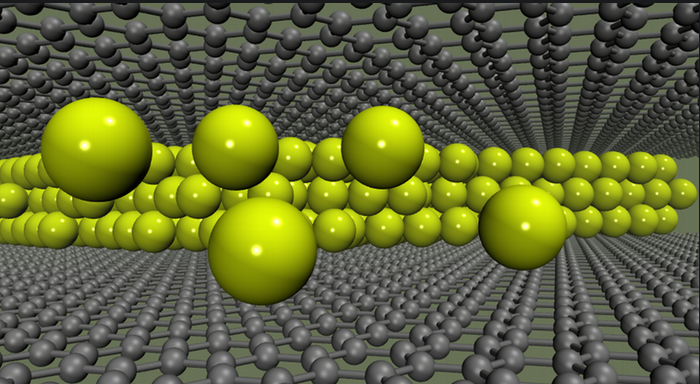
In the future, if graphene electrodes are installed in sodium-ion batteries instead of today’s graphite anodes, higher storage capacity may be achieved.
The results of these studies may provide a breakthrough in the development of inexpensive sodium batteries. Krasheninkov said the work is purely theoretical and does not advocate the development of a new generation of batteries in the foreseeable future based only on the study results, but it may provide interesting new ideas for engineers.
Future outlook
Happily, the sodium-ion battery is no longer just a theoretical concept. A breakthrough in related technologies appears to be close at hand.
The latest findings show that there are already practical, affordable and resource-efficient alternatives to expensive lithium batteries, and they may even improve their performance through multilayer structures.
It will certainly take some time before sodium-ion battery technology is ready for mass production and use in electric vehicles or cell phones. But once the time is ripe, there should not be much problem in switching the production line from lithium batteries to sodium-ion batteries because the technology is relatively similar.
Related Products
Rendered through WooCommerce product shortcode so the cards inherit the global product-card structure and Blocksy/WooCommerce styles.