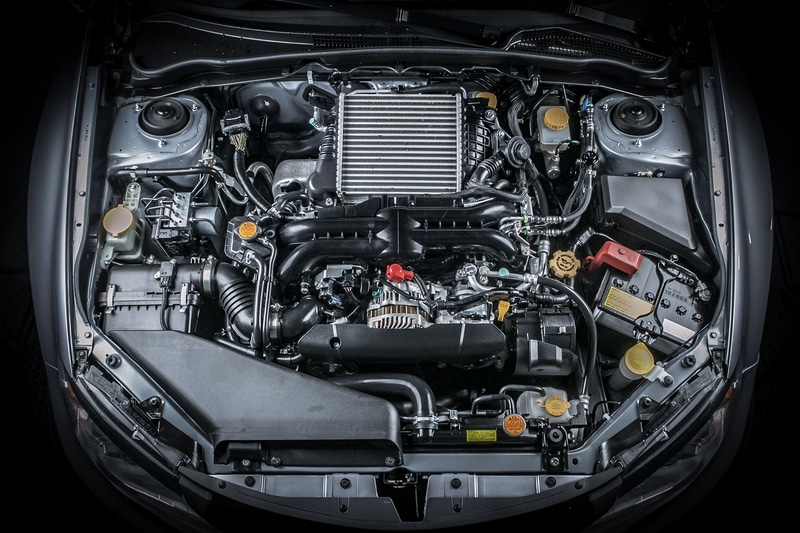
The automobile engine is often described as the heart or soul of the car because it determines power, fuel economy, stability, emissions, reliability, and service life. Although an engine is a complex system, its basic principles are consistent: it converts fuel energy into mechanical power that moves the vehicle.
This article explains the role of the automobile engine, common engine classifications, the four-stroke and two-stroke work cycles, the crank connecting rod mechanism, and the gas distribution mechanism. Understanding these basics helps car owners better understand how an engine works and why regular maintenance matters.
引擎角色
汽車引擎的作用是什麼?
1. 引擎將燃料能量轉換為機械功率
An automobile engine converts the heat energy of gasoline combustion into mechanical energy. Expanding combustion gas pushes the piston, and the engine then transfers that movement into rotating power for the vehicle.
Automobile engines can be classified in several ways:
A gasoline engine typically includes the crank linkage mechanism, gas distribution mechanism, and five main systems: fuel supply, lubrication, cooling, ignition, and starting. A diesel engine also has two main mechanisms, but it usually has four systems because it does not use a gasoline-style ignition system.

The working principle of an automobile engine involves converting thermal energy into mechanical energy through four processes:
攝取量空氣-燃油混合物進入汽缸。
壓縮混合物在氣缸內被壓縮。
動力衝程混合物點燃,燃燒氣體膨脹,活塞向下運動。
排氣燃燒產生的氣體從氣缸排出。
These four processes make up one work cycle in a four-stroke engine. In a four-stroke engine, the crankshaft rotates twice and the piston moves four times to complete one cycle. In a two-stroke engine, the crankshaft rotates once and the piston moves twice to complete one cycle.
Today, most automobiles use four-stroke engines because they offer better fuel efficiency, reliability, and durability. Four-stroke, water-cooled, in-line or V-type reciprocating engines are common in modern vehicles.
圖片來源: 動畫師 / Facebook影片
The crankshaft connecting rod set is a key engine component. It converts the gas force acting on the piston and connecting rod into torque, then drives the transmission, gas distribution mechanism, and other auxiliary devices. During operation, the crankshaft experiences bending and torsional alternating loads caused by gas forces, inertia, and moment changes.
Its main functions include:
完成工作週期該機制透過將燃料燃燒產生的熱能轉化為機械運動來支援引擎的能量轉換過程。
發射功率曲柄連桿將引擎的輸出動力傳遞到車輛的傳動系統,從而使車輛能夠行駛。
影響績效和效率曲柄連桿機構的結構和製造品質直接影響引擎的性能、效率、耐久性和可靠性。
瓦斯分配
氣體分配機制是如何運作的?
5. 氣體分配機構控制進氣閥和排氣閥
The gas distribution mechanism opens and closes the intake and exhaust valves at the correct time. This allows the air-fuel mixture to enter the cylinder and lets exhaust gases leave after combustion.
The crankshaft drives the camshaft through timing gears. The camshaft then moves rocker arms through tappets and push rods. When the cam apex passes the tappet, the valve closes under spring pressure.
The gas distribution mechanism includes valve transmission parts and valve groups, such as timing gears, tappets, push rods, rocker arms, valves, valve guides, springs, oil seals, and valve seats. Its timing is determined by the engine’s work cycle and cylinder ignition sequence.
During compression and power strokes, closed valves keep the combustion chamber sealed. Correctly timed valve opening and closing ensures normal engine operation.
結論
6. 了解引擎結構有助於更好地維護
There are many engine types on the market, but their basic principles are similar. Understanding the engine’s role, work cycle, crank connecting rod mechanism, and gas distribution mechanism helps car owners better understand the vehicle’s powertrain.
The original article also notes that future articles will continue to explain engine knowledge. If you have ideas or questions, you can discuss them in the comment section.

 autoolstore.com