AUTOOLautoolstore.com
Kilde: https://autoolstore.com/da/the-heart-of-the-car-the-basic-structure-of-the-engine-introduction/
Motorens grundprincipper
The automobile engine is often described as the heart or soul of the car because it determines power, fuel economy, stability, emissions, reliability, and service life. Although an engine is a complex system, its basic principles are consistent: it converts fuel energy into mechanical power that moves the vehicle. This article explains the role of the automobile engine, common engine classifications, the four-stroke and two-stroke work cycles, the crank connecting rod mechanism, and the gas distribution mechanism. Understanding these basics helps car owners better understand how an engine works and why regular maintenance matters.
Motorens rolle

Hvad gør bilmotoren?

1. Motoren omdanner brændstofenergi til mekanisk kraft

An automobile engine converts the heat energy of gasoline combustion into mechanical energy. Expanding combustion gas pushes the piston, and the engine then transfers that movement into rotating power for the vehicle. Automobile engines can be classified in several ways:
  • IndsugningssystemAlmindelige typer inkluderer naturligt aspirerede, turboladede, mekanisk kompressorladede og dobbeltkompressorladede motorer.
  • StempelbevægelseMotorer kan bruge frem- og tilbagegående stempler eller roterende stempler.
  • Antal cylindreMotorer kan være med én eller flere cylindre.
  • KølemetodeAlmindelige køledesign omfatter vandkølede og luftkølede systemer.
  • Antal slagForbrændingsmotorer kan bruge en firetakts- eller totaktscyklus.
Udover at levere kraft, hjælper motoren med at kontrollere acceleration, deceleration og bremseadfærd gennem køretøjets drivlinjesystemer. Det påvirker også acceleration, tophastighed, brændstoføkonomi, kuldioxidemissioner, nitrogenoxider, partikler, pålidelighed og holdbarhed.
Arbejdscyklus

Hvad er principperne og processerne bag en bilmotor?

2. Benzinmotorer bruger mekanismer og systemer til at fuldføre arbejdscyklussen


A gasoline engine typically includes the crank linkage mechanism, gas distribution mechanism, and five main systems: fuel supply, lubrication, cooling, ignition, and starting. A diesel engine also has two main mechanisms, but it usually has four systems because it does not use a gasoline-style ignition system. The working principle of an automobile engine involves converting thermal energy into mechanical energy through four processes:
  • IndtagLuft-brændstofblandingen kommer ind i cylinderen.
  • KompressionBlandingen komprimeres inde i cylinderen.
  • ArbejdsslagBlandingen antændes, forbrændingsgassen udvider sig, og stemplet presses nedad.
  • UdstødningForbrændingsgas udstødes fra cylinderen.
These four processes make up one work cycle in a four-stroke engine. In a four-stroke engine, the crankshaft rotates twice and the piston moves four times to complete one cycle. In a two-stroke engine, the crankshaft rotates once and the piston moves twice to complete one cycle. Today, most automobiles use four-stroke engines because they offer better fuel efficiency, reliability, and durability. Four-stroke, water-cooled, in-line or V-type reciprocating engines are common in modern vehicles.
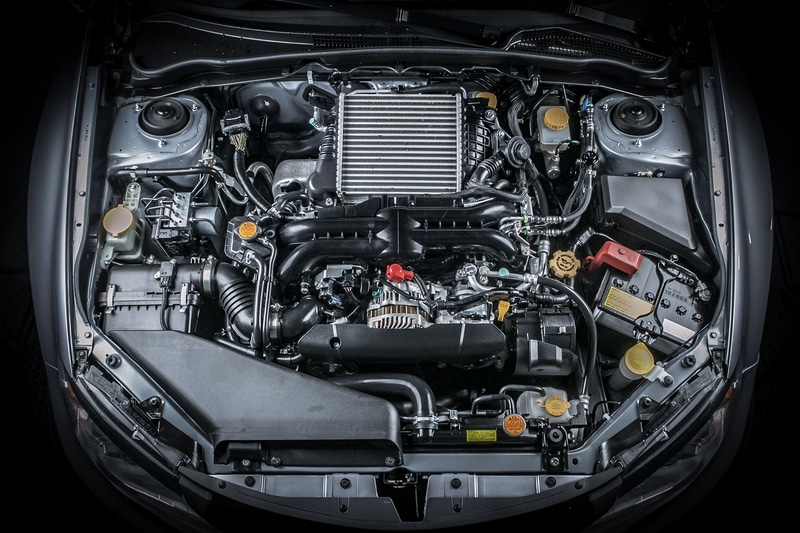
Illustration af bilmotorens struktur og arbejdscyklus
Billedkilde: Animagraffs / Facebook-video
Totaktscyklus

Hvordan fungerer en totakts benzinmotor?

3. En totakts benzinmotor fungerer gennem totaktsmotorer og gasudveksling

Driften af ​​en totakts benzinmotor kan opsummeres i tre faser: det første slag, det andet slag og gasudvekslingsprocessen.
  • Første slagStemplet bevæger sig opad fra det nederste stop. Motoren lukker de tre lufthuller, åbner indsugningsportene og lader den brændbare blanding komme ind i krumtaphuset. Når stemplet bevæger sig opad, komprimerer det blandingen til den næste forbrændingsproces.
  • Andet slagTændrøret antænder blandingen, gassen udvider sig, og stemplet presses nedad. Samtidig lukker indsugningsåbningen, og blandingen i krumtaphuset komprimeres til den næste gasudskiftning.
  • GasudvekslingNår stemplet nærmer sig det nederste stop, åbnes udstødningsporten, og udstødningsgassen forlader cylinderen. Gasudskiftningsåbningen tillader derefter den forkomprimerede, brændbare blanding at strømme ind i cylinderen og hjælpe med at udlede den resterende udstødningsgas.
Gasudvekslingsprocessen er central for totaktsmotorers arbejde, fordi den giver den næste kraftbase for forbrænding.
Krankstangskobling

Hvad er krumtapforbindelsesstangsmekanismen?

4. Krumtapstangsmekanismen omdanner stempelkraft til drejningsmoment

The crankshaft connecting rod set is a key engine component. It converts the gas force acting on the piston and connecting rod into torque, then drives the transmission, gas distribution mechanism, and other auxiliary devices. During operation, the crankshaft experiences bending and torsional alternating loads caused by gas forces, inertia, and moment changes. Its main functions include:
  • Færdiggør arbejdscyklussenMekanismen understøtter motorens energiomdannelsesproces ved at omdanne termisk energi fra brændstofforbrænding til mekanisk bevægelse.
  • SendeeffektKrumtapkoblingen overfører motorens effekt til køretøjets transmissionssystem, så køretøjet kan bevæge sig.
  • Påvirker ydeevne og effektivitetStrukturen og fremstillingskvaliteten af ​​krumtapstangsmekanismen påvirker direkte motorens ydeevne, effektivitet, holdbarhed og pålidelighed.
Gasdistribution

Hvordan fungerer gasfordelingsmekanismen?

5. Gasfordelingsmekanismen styrer indsugnings- og udstødningsventiler

The gas distribution mechanism opens and closes the intake and exhaust valves at the correct time. This allows the air-fuel mixture to enter the cylinder and lets exhaust gases leave after combustion. The crankshaft drives the camshaft through timing gears. The camshaft then moves rocker arms through tappets and push rods. When the cam apex passes the tappet, the valve closes under spring pressure. The gas distribution mechanism includes valve transmission parts and valve groups, such as timing gears, tappets, push rods, rocker arms, valves, valve guides, springs, oil seals, and valve seats. Its timing is determined by the engine’s work cycle and cylinder ignition sequence. During compression and power strokes, closed valves keep the combustion chamber sealed. Correctly timed valve opening and closing ensures normal engine operation.
Konklusion

6. Forståelse af motorstruktur hjælper med bedre vedligeholdelse

There are many engine types on the market, but their basic principles are similar. Understanding the engine’s role, work cycle, crank connecting rod mechanism, and gas distribution mechanism helps car owners better understand the vehicle’s powertrain. The original article also notes that future articles will continue to explain engine knowledge. If you have ideas or questions, you can discuss them in the comment section.

Relaterede produkter

Renderet via WooCommerce-produkts shortcode, så kortene arver den globale produktkortstruktur og Blocksy/WooCommerce-stilarter.

Skriv et svar

Din e-mailadresse vil ikke blive publiceret. Krævede felter er markeret med *

Choose your language

Choose your language

Prefer another language?

Continue
Language