Tips & Tutorials
How to Choose the Right Oil Extractor for Your Garage (30L–100L Guide)

March 12, 2026
Share:
 autoolstore.com
AUTOOL Oil Service Guide
Oil changing is one of the most common maintenance tasks in automotive repair. A pneumatic oil extractor helps reduce waiting time, improve repair efficiency, and make waste oil collection more organized.
For repair workshops, the right oil extractor capacity depends on workload, vehicle type, and daily service volume. This guide explains how pneumatic oil extractors work, how they compare with traditional gravity drainage, and how to choose from 30L to 100L capacity options.
A pneumatic oil extractor is a common piece of automotive repair equipment, primarily used to quickly extract waste engine oil and collect it in a storage tank.
Unlike the traditional method of draining oil through a drain plug, a pneumatic oil extractor uses compressed air to create negative pressure, directly sucking oil out from inside the engine. This reduces waiting time and makes the oil change process cleaner and more efficient.
In modern automotive repair shops, vacuum oil extraction equipment has become one of the most common tools for oil changes.
Useful for routine oil service and general workshop maintenance.
Helps shorten service time when many vehicles are handled each day.
Supports repeated oil service across similar vehicle groups.
Larger capacity units can support heavier service workloads.
Useful when oil collection and clean working conditions matter.
Traditional oil changes typically require waiting for oil to drain naturally. The standard process is to unscrew the drain plug, wait for the oil to drain, and then wait for the oil to dry. Depending on engine temperature and oil condition, this can take 15-30 minutes.
Vacuum oil extraction machines use negative pressure to suck up the oil, significantly reducing waiting time. For high-volume repair shops, saving even a few minutes per vehicle allows more vehicles to be processed each day and improves overall work efficiency.
Oil extraction machines also reduce oil dripping, creating a cleaner repair environment.
The principle of a pneumatic oil pump is straightforward. The equipment uses compressed air to create a negative-pressure environment inside the measuring cup and oil tank. This negative pressure draws waste engine oil from inside the engine into the equipment through the suction pipe.
The extracted oil is collected in the oil tank and then discharged into a waste oil recovery container through a draining device.
Vacuum extraction can reduce the waiting time compared with gravity draining.
A more contained extraction process reduces dripping and helps keep the service area cleaner.
The storage tank allows waste oil to be collected and transferred more easily.
Technicians can complete routine oil service with fewer interruptions.
In automotive repair, vacuum pumping and gravity drainage are two common oil change methods. The time difference becomes important when a shop handles many vehicles per day.
| Method | Time to Extract Approx. 5L of Oil | Workflow Notes |
|---|---|---|
| Gravity Drain | 15-30 minutes | Requires drain plug removal and natural draining time. |
| Vacuum Extraction | Approx. 3-5 minutes | No need to remove the drain plug, with reduced oil dripping and centralized waste oil collection. |
For repair shops with high workloads, these advantages can significantly improve workflow and repair efficiency.
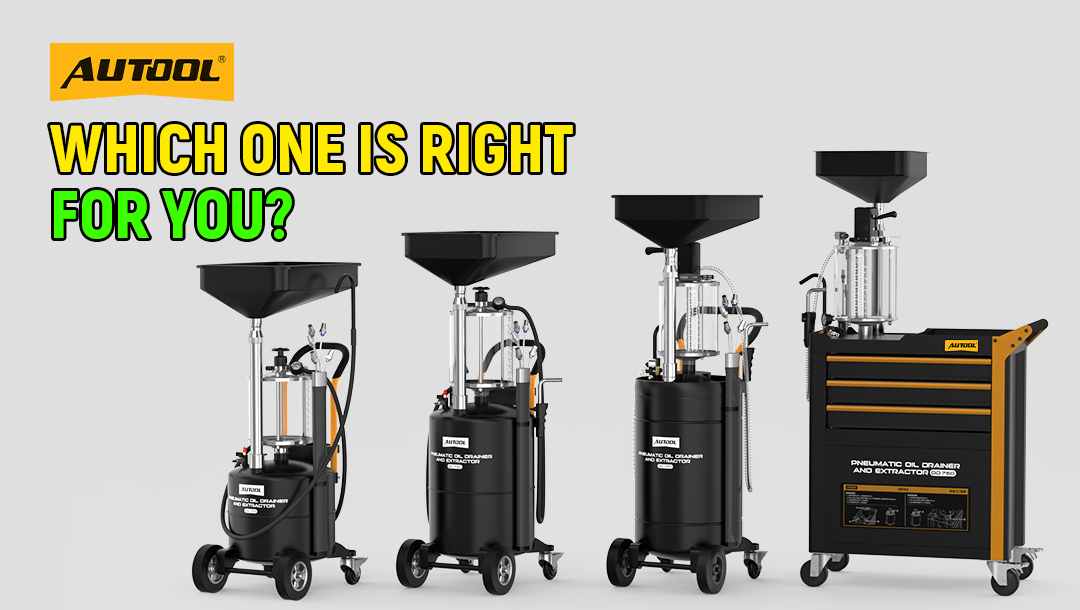
Pneumatic oil extractors usually come in capacity options such as 30L, 55L, 70L, 80L, and 100L. The right choice mainly depends on workshop workload.
| Application Scenario | Recommended Capacity | Why It Fits |
|---|---|---|
| Home or DIY Maintenance | 30L | Suitable for personal garages and occasional maintenance. |
| Small Repair Shop | 55L | Balances capacity and footprint for lower daily volume. |
| General Auto Service Workshop | 70L | A practical middle range for regular workshop use. |
| Busy Repair Workshop | 80L | Better for frequent oil changes and higher vehicle throughput. |
| Truck or Heavy Equipment Service | 100L | Higher capacity supports larger oil volume and heavier maintenance work. |
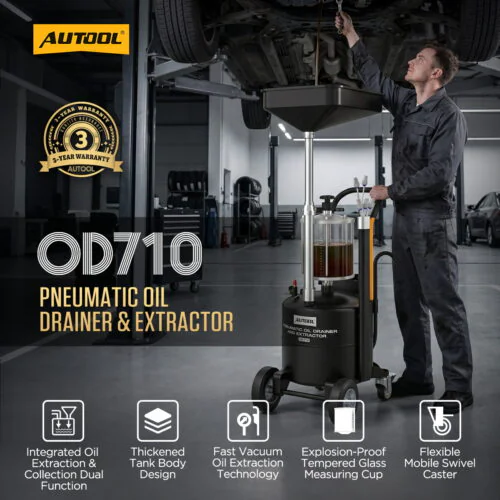
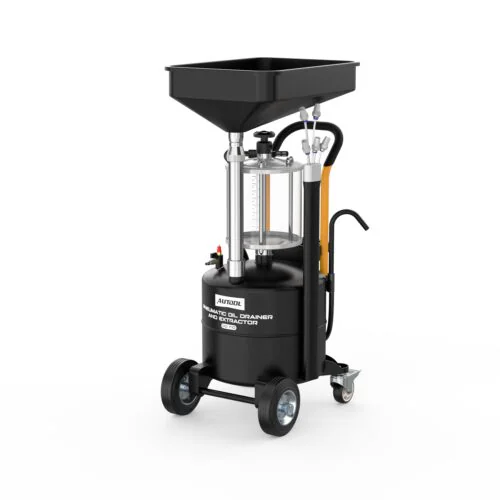
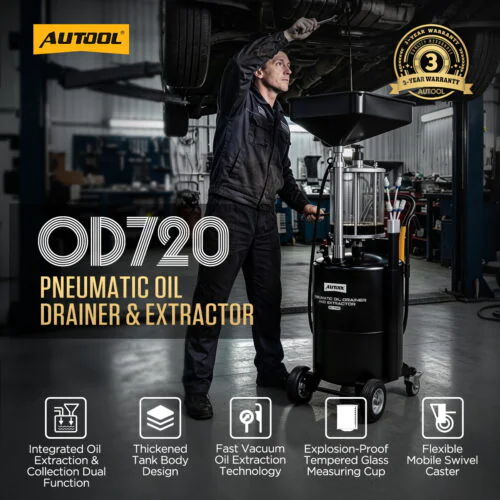
AUTOOL offers pneumatic oil drainers and extractors in several capacities for workshops of different sizes.
| Model | Capacity |
|---|---|
| 00710 | 30L |
| 00720 | 55L |
| 00750 | 56L |
| 00760 | 57-58L |
| 70L Model | 70L |
| 80L Model | 80L |
| 100L Model | 100L |
Helps technicians observe extracted oil volume and condition.
Supports centralized collection for workshop use.
Makes operation easier around different vehicles.
Improves compatibility with different service situations.
Make movement easier inside the workshop.
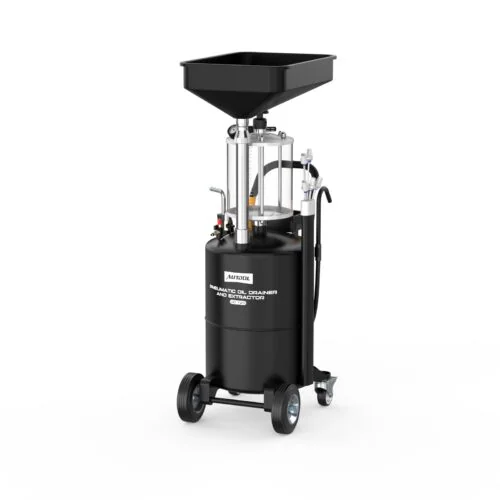
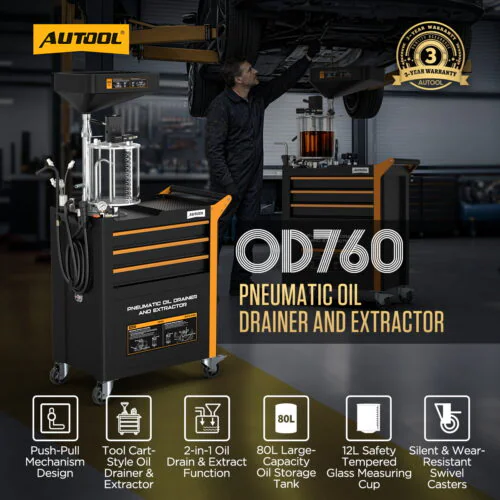
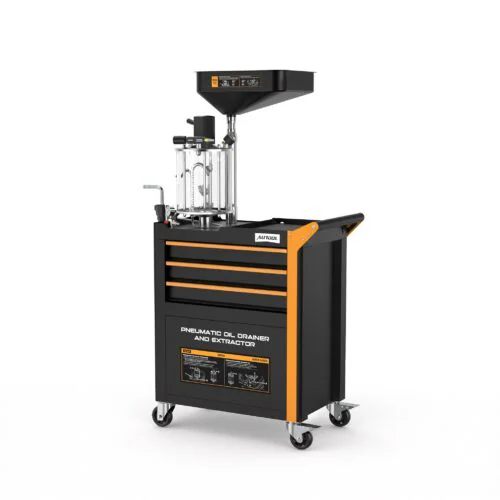
For repair workshops, an oil extraction device is not only about speed. It also improves the overall workflow.
Reduces waiting time for oil to dry and helps technicians complete service faster.
The extraction process is more contained, minimizing spills.
The storage tank allows centralized collection of waste oil.
Particularly suitable for quick service centers and busy repair workshops.
Most gasoline and diesel vehicles can use an oil extractor for oil changes, but it depends on the engine structure. Some vehicles are still recommended to drain oil through the drain plug.
Yes. Pneumatic oil extractors need to be connected to an air compressor and typically require 6-8 bar of air pressure.
It is generally recommended that oil temperature be between 40-80°C because this improves oil fluidity and extraction efficiency.
Smaller capacity models, such as 30L, are also suitable for personal garages or DIY maintenance.
By using a pneumatic oil extractor, workshops can reduce waiting time, improve repair efficiency, and make waste oil collection more organized. For repair workshops, this is equipment that can significantly enhance workflow efficiency.
The AUTOOL Oil Drainer and Extractor Series offers multiple capacity options from 30L to 100L, suitable for workshops of different sizes.
Contact AUTOOL for product information and capacity matching support. You can also visit autoolstore.com for AUTOOL product information.
Related Products