AUTOOL Blog, Tips & Tutorials
How to do a Brake Fluid Flush – Check it and change it yourself!

November 30, 2025
Share:
 autoolstore.com
Do you know how to change your car’s brake fluid yourself? This guide shows how to tell when it is time to replace brake fluid and how to use a brake fluid flush kit for a DIY replacement.
Brake fluid affects pedal feel, braking response, ABS operation, and overall driving safety. By following a safe inspection and replacement process, you can keep the brake system reliable while reducing unnecessary brake fluid change costs.
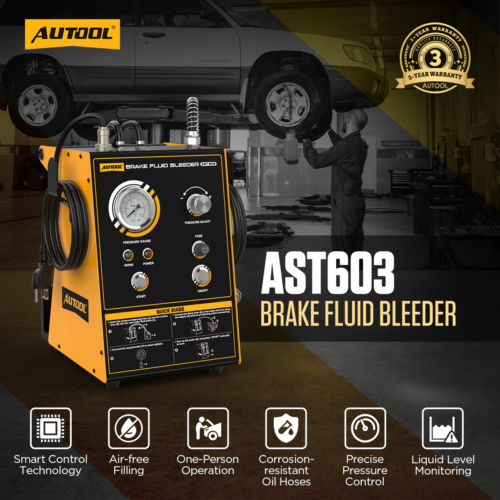
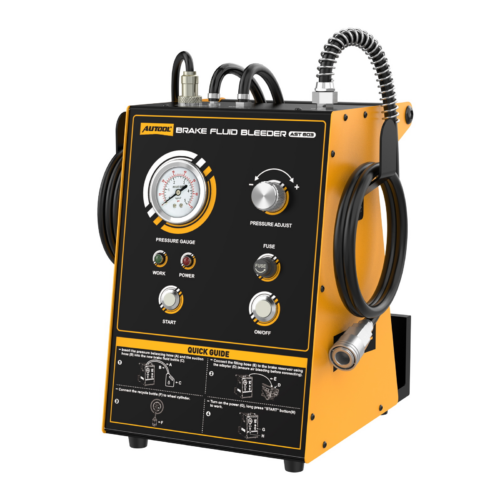
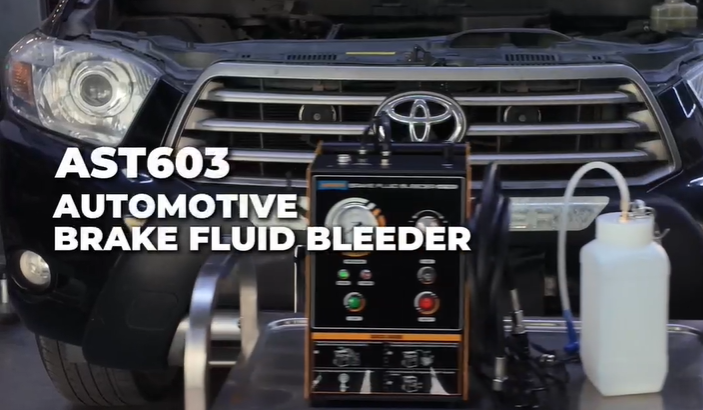
The guide covers what a brake fluid change is, how to recognize bad fluid, how to avoid air bubbles, how to use the AUTOOL AST603 Brake Fluid Exchange Machine, and the most common brake fluid change questions.
Brake system safety
A brake fluid change, also known as a brake fluid flush or brake bleeding, is the process of removing old, contaminated brake fluid from a vehicle’s hydraulic braking system and replacing it with fresh, clean fluid.
Over time, brake fluid absorbs moisture and air. This can cause the brake pedal to feel soft and increase stopping distances. In severe cases, old or contaminated fluid can damage brake lines or the ABS system. Regular brake fluid service keeps brakes responsive and reliable, which is essential for safe driving.
Warning signs
Brake fluid is not permanent. It absorbs moisture from the air and can be affected by heat and contaminants, which reduces performance. Look for these signs when deciding whether a brake fluid change is needed:
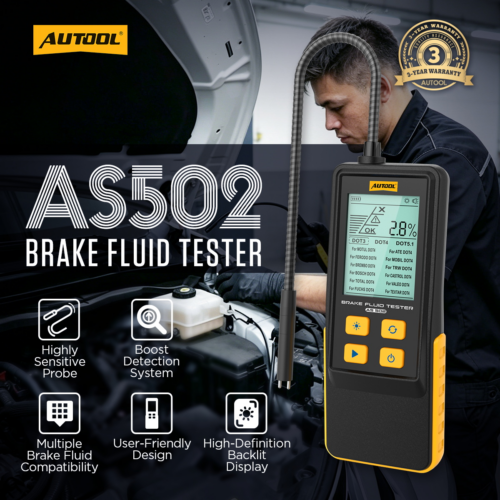
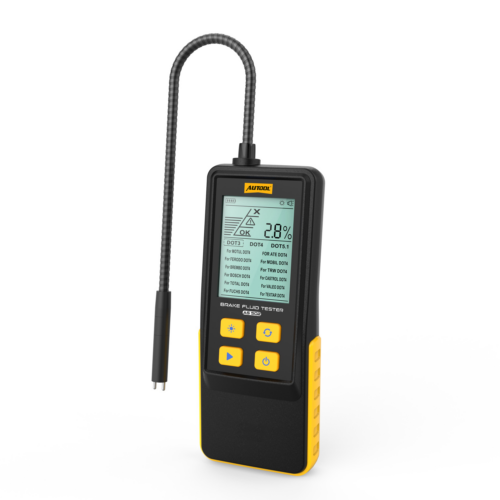
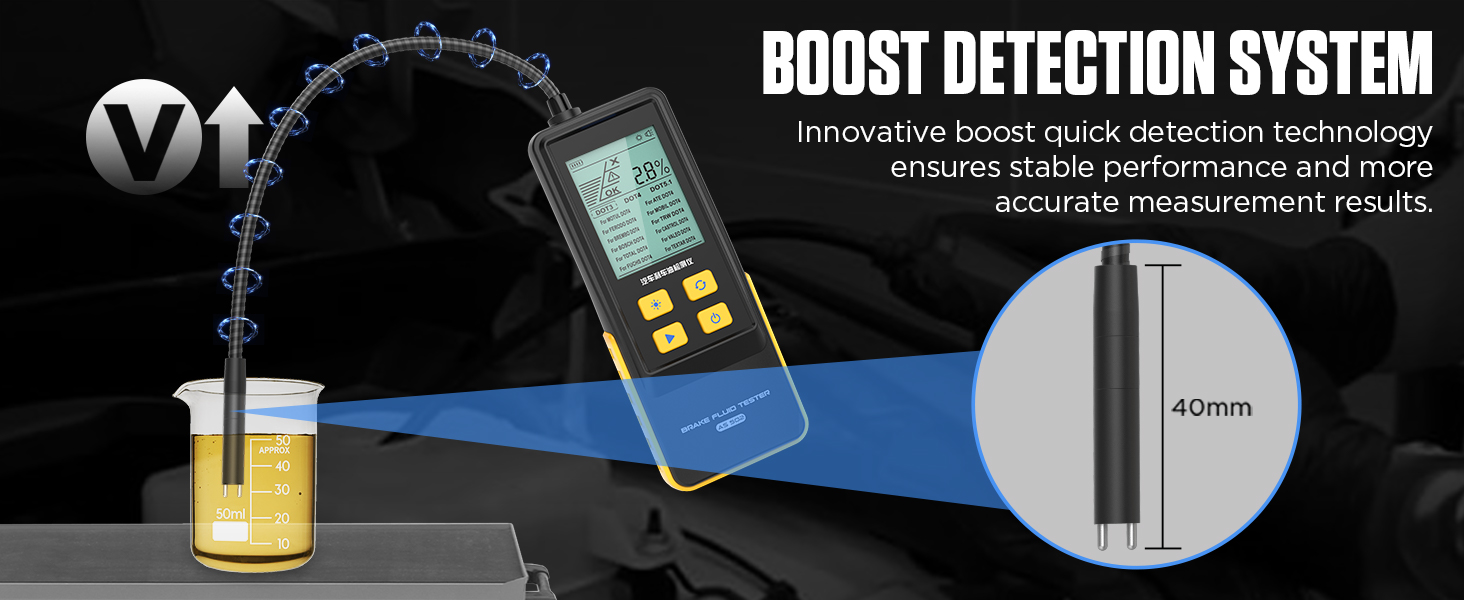
To quickly and accurately check whether brake fluid contains too much water, you can use the AUTOOL AS502 brake fluid tester. Compared with judging by color or pedal feel alone, testing water content is more precise and helps prevent reduced braking performance or damage to the brake system.
Avoiding air bubbles
When changing brake fluid, you can choose between the traditional manual method and a pulse brake fluid bleeder.
The traditional method usually involves two people: one adds new fluid while the other repeatedly presses the brake pedal to bleed the system. It is simple and requires fewer tools, but it can introduce air bubbles and may require multiple bleeding cycles. Incomplete bleeding may affect brake performance.
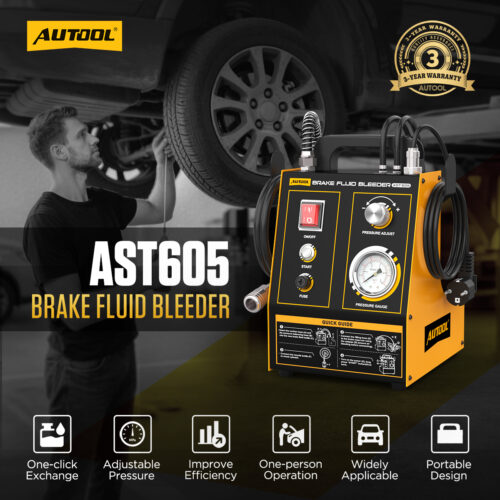
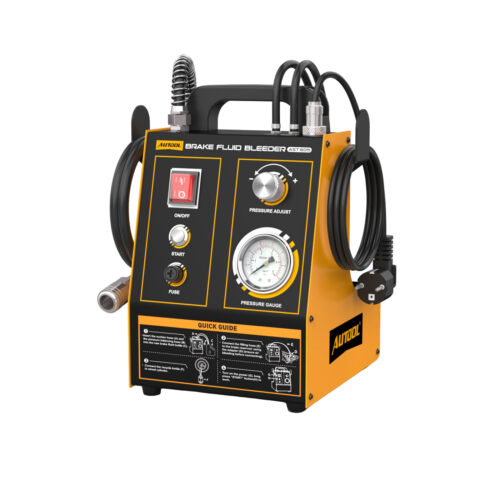
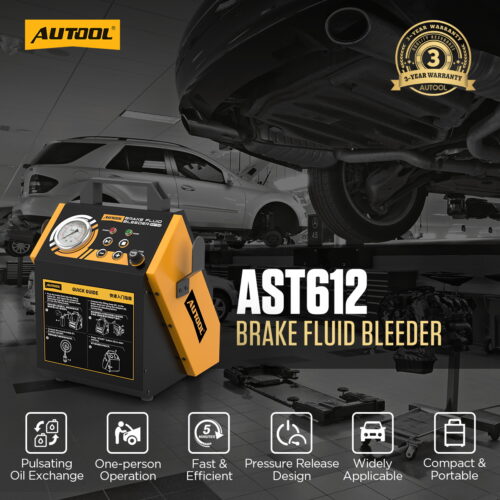
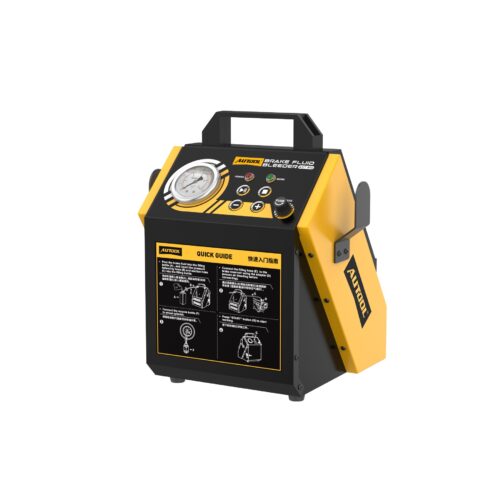
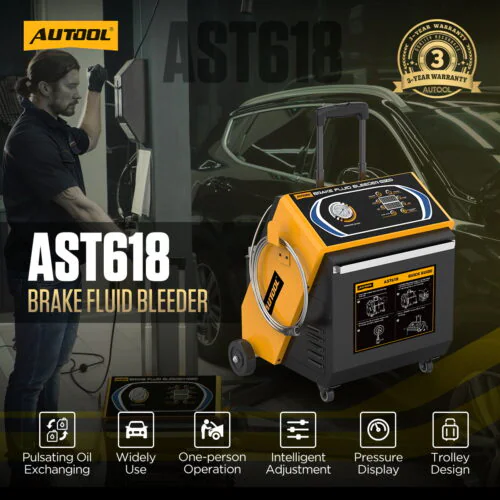
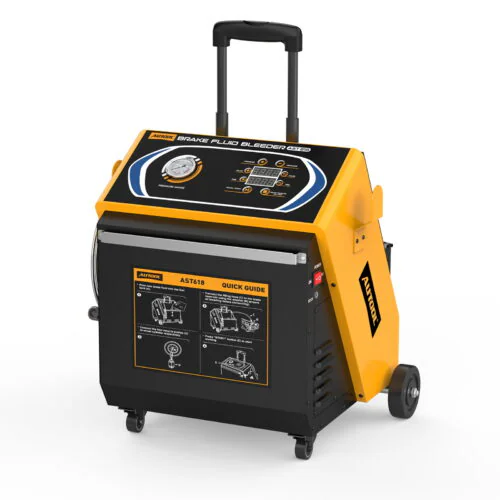
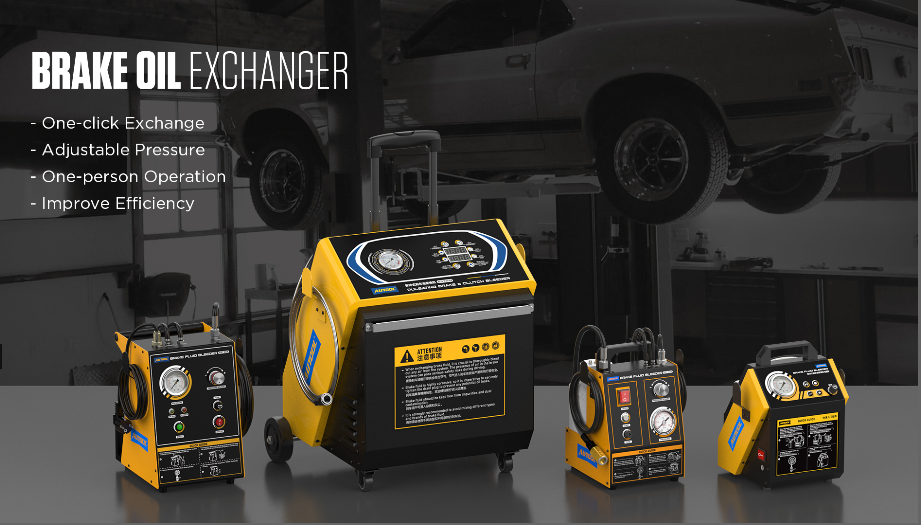
The pulsating brake fluid exchanger supports single-person operation. It uses pulse pressure to inject new fluid while expelling air and old fluid, which helps prevent air bubbles. The method is more efficient and is ideal for shops or users who replace brake fluid frequently.
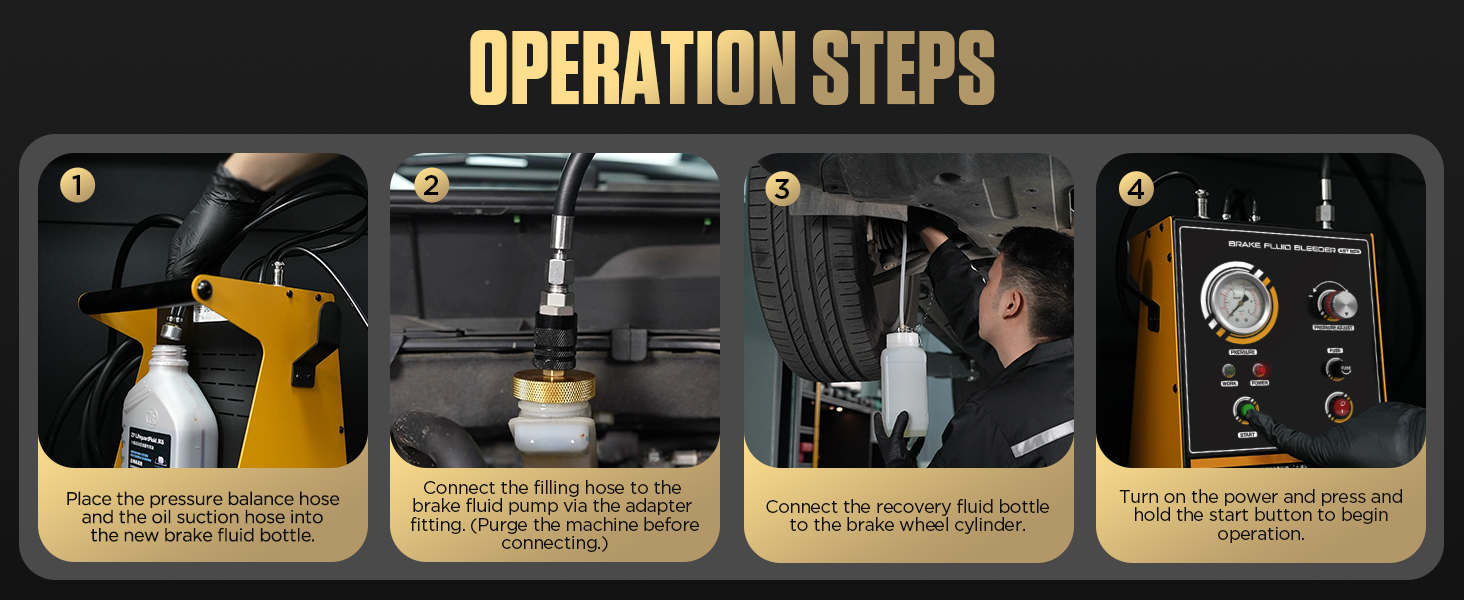
AST603 operation
Here are the basic steps for using the AUTOOL AST603 Brake Fluid Exchange Machine:
This process is clear and concise, making it easier to perform brake fluid replacement effectively.
Brake fluid change questions
Most vehicles require a brake fluid change every 2-3 years, but it is always best to follow your manufacturer’s recommendation. Some brands, such as BMW, have strict brake fluid change intervals to protect the ABS system.
This depends on your vehicle, but common types include DOT 3 and DOT 4. High-performance or European vehicles, including many BMW models, may require DOT 4 LV or DOT 5.1. Always check the owner’s manual or the reservoir cap before starting a brake fluid change.
Yes, you can perform a brake fluid change yourself if you have the right tools, such as a brake fluid exchanger. DIY brake flushing is doable, but if you are unsure or uncomfortable with hydraulic systems, it is safer to let a qualified mechanic handle it.
Old brake fluid absorbs moisture over time. This can lead to corrosion inside brake lines, damaged ABS pumps, reduced braking performance, and a soft or spongy brake pedal. Skipping brake fluid service can cost far more than the brake fluid change cost at a workshop.
Your brake fluid may need replacement if you notice dark, dirty, or cloudy fluid, a soft or inconsistent brake pedal, longer stopping distances, or an ABS warning light. A brake fluid tester can help confirm water content and fluid quality before a full brake fluid change.
Whether you choose the traditional manual method or a pulse brake bleeder tool, changing brake fluid correctly helps keep the brake system in optimal condition. Replacing brake fluid on time is a crucial step in driving safety.
Want to learn more? Contact us to enjoy a 10% discount for new customers and a 3-year warranty.
Related Products
Rendered through WooCommerce product shortcode so the cards inherit the same product-card structure used by the reference post.