Uncategorized
2026 How to Choose the Best Tire Changer Machine?

August 3, 2026
Share:
 autoolstore.com
Repair testing / 8 sub-categories
Diagnostic tools for leak tracing, visual inspection, battery health, circuits, pressure, spark, oil, and electrical readings.
Repair maintenance / 6 sub-categories
Service equipment for fluid exchange, A/C diagnostics, refrigerant recovery, oil handling, and cooling-system work.
Carbon cleaning / 3 sub-categories
Carbon-removal equipment for injectors, intake valves, components, and workshop cleaning jobs.
Wheel tire / 3 sub-categories
Equipment for alignment, lifting, tire repair, tire mounting, and service-bay workflows.
Tool storage / 1 sub-category
Storage products for keeping workshop tools, test equipment, and accessories organized.
EV charging / 1 sub-category
EV charging products for new-energy vehicle service, workshop use, and installation scenarios.
OBD diagnosis / 5 sub-categories
OBD-related testers, ECU programming power supplies, cable products, used-car inspection tools, and key frequency diagnostics.
Accessories / 8 sub-categories
Replacement parts, adapters, consumables, cables, and add-ons for major diagnostic and service equipment.
For tire shops, auto repair garages, and even motorcycle repair shops, a tire changer is far more than just a standard piece of equipment; it directly impacts repair efficiency, the risk of rim damage, and the overall customer experience. While many buyers focus primarily on price and brand, the factors that truly determine the user experience are the machine’s structural design, its bead handling capabilities, and its long-term reliability.
So, how can you select the tire changer that is truly right for your needs?
Tire changers currently on the market can generally be categorized into three types: swing-arm, tilt-back, and leverless models.
This is the most common entry-level design; it is relatively affordable and simple to operate. It meets the daily maintenance needs for standard passenger vehicle tires, making it a preferred choice for many small repair shops. However, it can struggle when handling low-profile tires or high-end alloy wheels.
This type of tire changer is better suited for high-volume tire shops. These machines typically offer a larger working area and, when equipped with an assist arm, can easily handle SUV tires, large-diameter wheels, and stiff run-flat tires. Many independent tire shops in European and American markets opt for this design because it balances efficiency with stability.
These fully automatic tire changers offer a higher level of automation and provide superior protection for wheel rims during the mounting and demounting process; they are particularly well-suited for luxury vehicles, run-flat tires, and low-profile tires. High-end brands such as Hunter and John Bean have focused heavily on developing this type of equipment in recent years. However, they typically come with a significantly higher price tag, making them more suitable for premium repair centers or high-volume tire shops.
You can make your choice based on the specific needs and circumstances of your repair shop.
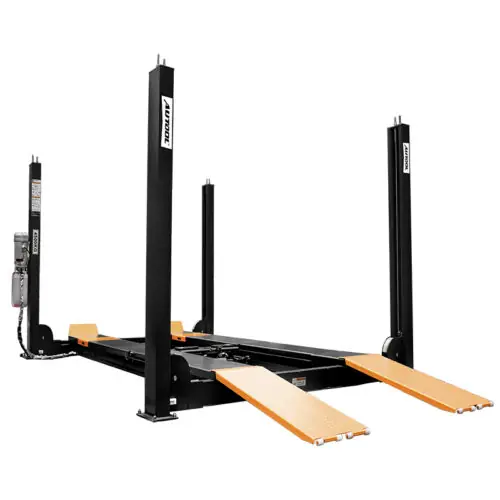
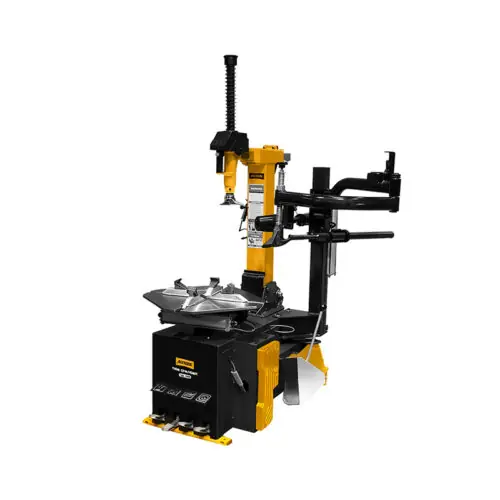
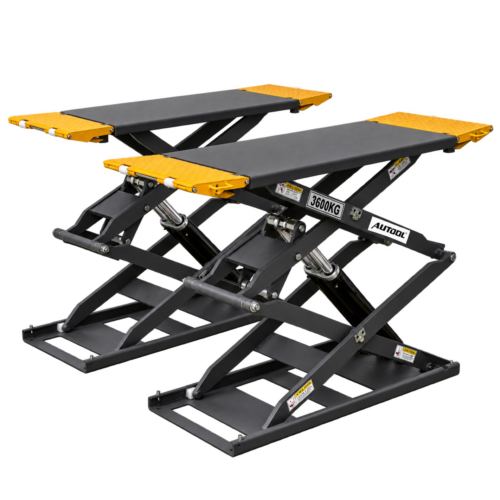
Many people aim to buy the “best equipment” right from the start, but in reality, the most important thing is choosing what suits your specific needs.
If your shop primarily services standard passenger cars and family SUVs, you do not necessarily need expensive, fully automated equipment. A reliable manual tire changer or a basic tilt-back tire changer is sufficient to handle most jobs.
However, if you frequently service vehicles with high-performance tires, run-flat tires, or large-diameter wheels, an assist arm becomes significantly more important. While many budget-friendly tire changers can get the job done, they often struggle with stiff tires and carry a higher risk of scratching the rims. In the long run, this not only hampers efficiency but also increases the risk of customer complaints.
For tire shops with high daily workloads, equipment efficiency is crucial. A tire changer must not only be capable of removing tires but must also perform the task quickly and reliably; otherwise, the difference in efficiency becomes stark during peak service periods.
Lorem ipsum dolor sat amet,consectetur adipiscing elit。 Ut elittellus,luctus nec ullamcorper mattis,pulvinar dapibus leo。
When evaluating a tire changer, many people prioritize motor power or rim size capacity; however, the factors that truly determine the user experience are the bead breaking system and the clamping system.
The tire bead is the most challenging part of the tire to handle. This is especially true for modern SUV and high-performance vehicle tires, which feature increasingly stiff sidewalls; if the bead-breaking mechanism lacks sufficient strength, the mounting and dismounting process becomes arduous. This disparity is even more pronounced when dealing with aged tires or run-flat tires.A high-quality tire changer typically delivers more consistent bead-breaking force and an optimized bead-breaking angle, both of which directly impact operational efficiency.
Low-quality clamps are prone to slipping and can even scratch the wheel rim. In contrast, high-quality equipment incorporates superior materials, advanced heat treatment processes, and protective design features. This is particularly critical when working with high-end rims.
Many tire changers look quite similar when first purchased, but differences in quality become apparent after a few years of actual use.
To cut costs, some low-priced models compromise on steel thickness, welding quality, and pneumatic systems. While issues may not be immediately obvious, frequent use often leads to problems such as turntable deformation, air leaks, or insufficient power.
Truly durable equipment is built with careful attention to these details. Factors such as the structural integrity of the turntable, the stability of the gearbox, and the reliability of the pneumatic system all significantly impact the long-term user experience.
Tire changers are pieces of machinery subject to frequent use; over time, maintenance of components such as pneumatic cylinders, seals, clamping mechanisms, or air systems becomes inevitable.
Many buyers focus solely on price, only to discover—once problems arise—that:
• Spare parts are unavailable
• Technical support is lacking
• Repair turnaround times are excessively long
These issues often prove more troublesome than the equipment itself.
Therefore, before purchasing, be sure to verify:
Whether there is a reliable supply of spare parts, whether the manufacturer offers remote technical support, and whether future repairs will be convenient.
This is especially critical for overseas purchases, where the after-sales support system is even more important than the price.
For instance, AUTOOL’s new tire changers come with a 3-year warranty; for any non-accidental damage during the warranty period, customers can contact the official website for after-sales service:
Selecting the best tire changer involves more than just comparing prices or brands.
What truly matters is:
Whether the equipment suits your business model, can reliably handle the types of tires you service most often, and maintains efficiency and reliability over the long term.
For general repair shops, stability and durability often outweigh high-end automation; conversely, for premium tire shops or luxury vehicle service centers, rim protection and operational efficiency are the top priorities.
From a long-term business perspective, a reliable tire changer backed by excellent after-sales support is a far better investment than a unit chosen solely for its low price.