LANGUAGE & CURRENCY
Uncategorized
One Transmission Fluid Exchanger: The Difference That Sets Your Shop Apart

August 25, 2026
Share:
 autoolstore.com
Repair testing / 8 sub-categories
Diagnostic tools for leak tracing, visual inspection, battery health, circuits, pressure, spark, oil, and electrical readings.
Repair maintenance / 6 sub-categories
Service equipment for fluid exchange, A/C diagnostics, refrigerant recovery, oil handling, and cooling-system work.
Carbon cleaning / 3 sub-categories
Carbon-removal equipment for injectors, intake valves, components, and workshop cleaning jobs.
Wheel tire / 3 sub-categories
Equipment for alignment, lifting, tire repair, tire mounting, and service-bay workflows.
Tool storage / 1 sub-category
Storage products for keeping workshop tools, test equipment, and accessories organized.
EV charging / 1 sub-category
EV charging products for new-energy vehicle service, workshop use, and installation scenarios.
OBD diagnosis / 5 sub-categories
OBD-related testers, ECU programming power supplies, cable products, used-car inspection tools, and key frequency diagnostics.
Accessories / 8 sub-categories
Replacement parts, adapters, consumables, cables, and add-ons for major diagnostic and service equipment.
With the continuous evolution of passenger vehicles, automatic transmission models—including AT (Automatic Transmission, found in most gasoline sedans, SUVs, pickup trucks, and performance cars), CVT (Continuously Variable Transmission, common in Japanese family cars like Honda, Toyota, and Nissan), and wet DCT (Wet Dual Clutch Transmission, used in many gasoline/hybrid models from Volkswagen, Audi, Geely, Great Wall, and more)—have become the mainstream in the market. As a result, the demand for transmission maintenance continues to grow. Many repair shops still rely on traditional gravity draining for transmission service. However, they are gradually discovering that customers are bargaining harder, after-sales disputes are increasing, and high-end maintenance orders are continuously flowing to competitors.
In today’s increasingly competitive automotive repair industry, a transmission fluid exchanger is no longer an optional piece of equipment—it is an essential tool for shops to build differentiated services and achieve stable revenue growth. This article explores the real value that a transmission fluid exchange machine brings to a repair shop.
The most common method used by many small repair shops is gravity draining—simply loosening the oil pan bolt and letting the old fluid drain naturally. This approach appears to be cost-free, but its shortcomings are significant.
Gravity draining can only remove approximately 40%–50% of the old transmission fluid. A large amount of old fluid mixed with metal debris and sludge remains trapped in the torque converter, valve body passages, and cooling lines. When new fluid is added, it immediately mixes with the contaminated fluid, failing to achieve true deep maintenance.
Many vehicles experience shifting hesitation, acceleration slip, and low-speed shudder again shortly after gravity fluid changes. Customers tend to blame the shop’s workmanship, leading to disputes that damage the shop’s reputation.
Gravity draining has a low entry barrier, and widespread price competition among shops makes it difficult to charge a premium. Customers who care about maintenance quality will actively seek out shops equipped with fluid exchange machines, causing a long-term loss of high-value clients.
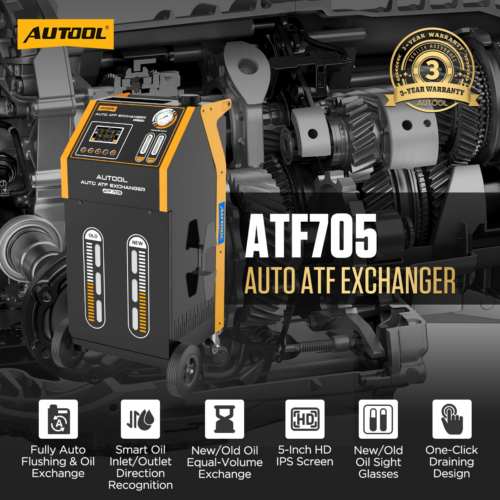
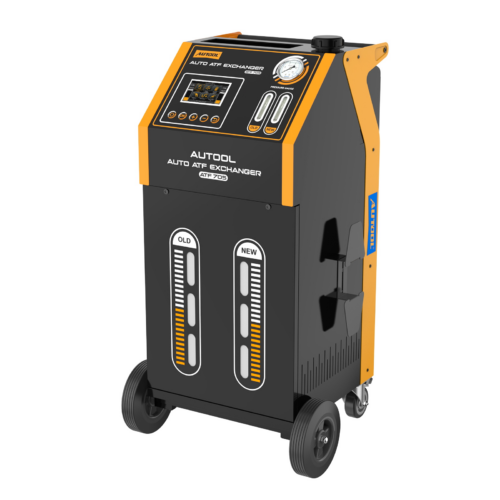
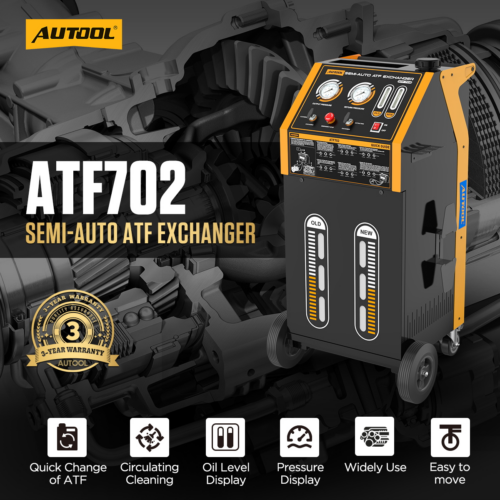
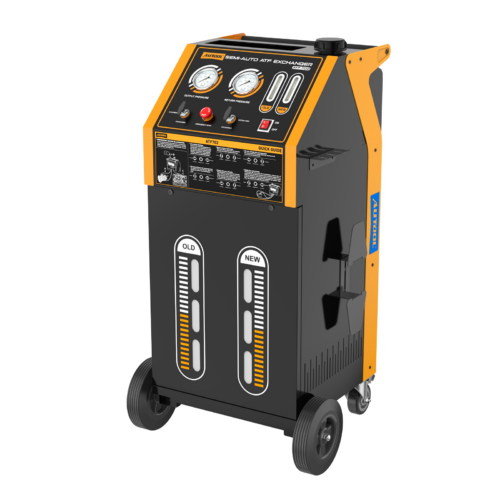
A transmission fluid exchanger uses an equal-volume circulation replacement principle, simultaneously adding fresh transmission fluid while extracting the old fluid—a clear departure from gravity draining.
Under standard operating procedures, the old fluid replacement rate can reach 75%–90%, effectively removing sludge and fine metal particles from the transmission, improving shifting smoothness, and delaying valve body wear.
During the service, the transparent tubing provides a clear visual contrast between old and new fluid. Without excessive explanation, customers can directly see the difference, making them more receptive to deep maintenance solutions and significantly reducing the difficulty of closing the sale.
Thoroughly replacing contaminated fluid effectively reduces the likelihood of recurring transmission faults. Better maintenance results mean fewer customer complaints, protecting the shop’s long-term reputation.
For repair shops, equipment investment ultimately translates into revenue growth. A transmission fluid exchanger is a typical sustainable profit-generating tool.
Shops can offer two service tiers: low-cost gravity draining as a lead-generation service, and deep circulation exchange as a premium profit service. This gives customers clear options while unlocking higher per-vehicle revenue.
Circulation exchange requires more transmission fluid, directly boosting oil sales. It also allows shops to bundle transmission filters, oil pan gaskets, and transmission cleaners into standardized maintenance packages.
Transmission maintenance is a periodic service. Customers who experience quality service will return according to maintenance intervals, building a stable base of repeat clients.
With auto repair shops everywhere, basic services such as oil changes and tire replacements are no longer enough to set a business apart.
Many small community repair shops do not have a transmission fluid exchanger and are limited to basic maintenance services. By adding a circulation fluid exchange machine, shops can position themselves as automatic transmission specialists and offer more professional transmission maintenance services.
This not only helps attract walk-in customers but also enables shops to take on overflow jobs from nearby repair businesses, serve more mid- to high-end vehicles, and build a stronger competitive advantage in the local market.
Gravity draining often requires multiple drain cycles and repeated waiting, taking up valuable technician time.
A transmission fluid exchanger enables standardized, one-person operation with automatic circulation, shortening service time per vehicle. Within the same working hours, shops can handle more transmission maintenance jobs, make better use of their workforce, and increase bay productivity.
The auto repair industry has moved beyond the era of “just getting the job done.” Professional equipment reflects a professional image.
Transmission maintenance is a service category with stable after-sales demand and continued market growth. Relying solely on gravity draining not only limits profit margins but can also drive away customers who value service quality.
A transmission fluid exchanger is more than a tool for improving maintenance quality and reducing after-sales risks. It is also a long-term investment that helps shops develop differentiated services and generate steady revenue growth.
For shops looking to capitalize on the growing demand for automatic transmission maintenance, investing in professional circulation fluid exchange equipment is a smart choice.