LANGUAGE & CURRENCY
Uncategorized
Is Your Car Battery About to Fail? Here’s How to Know Before It’s Too Late

September 3, 2026
Share:
 autoolstore.com
Repair testing / 8 sub-categories
Diagnostic tools for leak tracing, visual inspection, battery health, circuits, pressure, spark, oil, and electrical readings.
Repair maintenance / 6 sub-categories
Service equipment for fluid exchange, A/C diagnostics, refrigerant recovery, oil handling, and cooling-system work.
Carbon cleaning / 3 sub-categories
Carbon-removal equipment for injectors, intake valves, components, and workshop cleaning jobs.
Wheel tire / 3 sub-categories
Equipment for alignment, lifting, tire repair, tire mounting, and service-bay workflows.
Tool storage / 1 sub-category
Storage products for keeping workshop tools, test equipment, and accessories organized.
EV charging / 1 sub-category
EV charging products for new-energy vehicle service, workshop use, and installation scenarios.
OBD diagnosis / 5 sub-categories
OBD-related testers, ECU programming power supplies, cable products, used-car inspection tools, and key frequency diagnostics.
Accessories / 8 sub-categories
Replacement parts, adapters, consumables, cables, and add-ons for major diagnostic and service equipment.
Though small in size, your car battery is the heartbeat of your vehicle’s electrical system. Starting the engine, turning on the lights, unlocking the doors, and powering onboard electronics all depend on it.
When battery performance declines, the result can range from difficult starting to a vehicle that will not start at all. Understanding the basics of automotive batteries and checking battery health regularly can help prevent many unexpected breakdowns.
When the engine is off, the car battery supplies power to the vehicle’s security system, onboard computers, lights, and other electrical components. When starting the vehicle, the battery must deliver a large amount of current in a short time to power the starter motor. Once the engine is running, the alternator takes over the vehicle’s electrical supply and recharges the battery.
A car battery is therefore more than just a device that stores electricity. It also helps stabilize system voltage and buffer sudden changes in electrical load. When battery performance declines, both the starting system and onboard electronics can be affected.
Conventional lead-acid batteries use mature technology and are relatively affordable, making them widely used in traditional gasoline-powered vehicles. Some types require periodic inspection of the electrolyte level, and proper ventilation and corrosion prevention are important during use. Their main advantages are lower cost and easy replacement. However, their ability to withstand frequent charge and discharge cycles is relatively limited.
Maintenance-free batteries are also based on lead-acid technology but feature a more sealed design. Under normal operating conditions, they typically do not require electrolyte replenishment. They are convenient to use and generally have lower self-discharge rates, making them common in many passenger vehicles today.
However, “maintenance-free” does not mean “inspection-free.” Battery voltage, starting performance, and overall battery health can still decline over time.
Enhanced Flooded Batteries (EFB) offer better charge and discharge cycle performance and are commonly used in vehicles equipped with basic start-stop systems.
Compared with conventional batteries, EFB batteries can handle more frequent engine starts and discharge cycles. However, they generally cost more.
Absorbent Glass Mat (AGM) batteries use fiberglass separators to hold the electrolyte. They offer strong starting performance, good cycle life, and excellent vibration resistance. AGM batteries are commonly used in premium vehicles, start-stop vehicles, and cars with high electrical demands. When replacing an AGM battery, it is generally important to follow the vehicle manufacturer’s specifications. Replacing it with a lower-performance conventional battery may not meet the vehicle’s electrical requirements.
It’s also worth noting that most hybrid and electric vehicles have both a high-voltage traction battery and a low-voltage auxiliary battery. Even if the main battery is fully charged, a failing auxiliary battery can prevent the vehicle from powering up properly.
A typical car battery lasts around 3 to 5 years, but this is not a fixed rule. Driving habits and environmental conditions can significantly affect battery life.
Frequent short trips, long periods of vehicle storage, continued use of electrical accessories with the engine off, and driving in extremely hot or cold conditions can all accelerate battery aging. Additional devices that draw power continuously—such as dash cams or vehicle trackers—can also increase the load on the battery.
On the flip side, regular driving, minimizing ignition-off power usage, and routine charging system checks can help extend battery life. When deciding whether a battery needs replacement, don’t rely on age alone. Battery voltage, cold cranking performance, internal resistance, and overall battery health should also be considered.
Battery problems rarely appear out of nowhere. Keep an eye out for these common symptoms:
It’s important to note that a battery warning light does not always mean the battery itself has failed. The problem may also be related to the alternator, drive belt, or charging circuit and should be checked further.
The most obvious risk is an unexpected no-start condition. If it happens at night, during winter, in a parking garage, or while traveling, it can cause significant inconvenience.
An unstable battery voltage can also affect headlights, infotainment systems, sensors, and other electronic components. Modern vehicles rely heavily on electronics, and prolonged low-voltage conditions may trigger fault codes or cause certain systems to operate improperly.
If a battery becomes swollen, leaks electrolyte, or overheats severely, stop using it immediately. Leaking electrolyte is corrosive and may damage the battery tray, wiring, and surrounding components. In extreme situations, an internal short circuit or incorrect jump-starting procedure may also create risks such as smoke or fire.
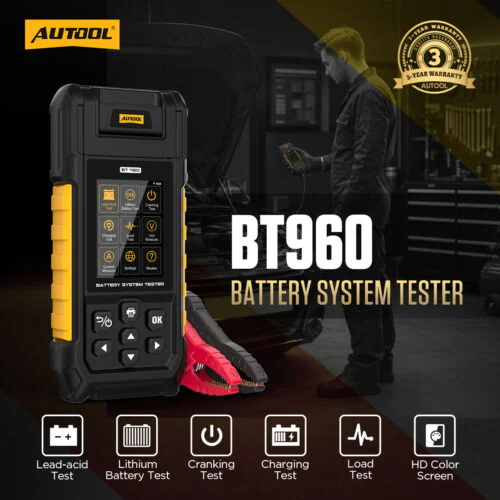
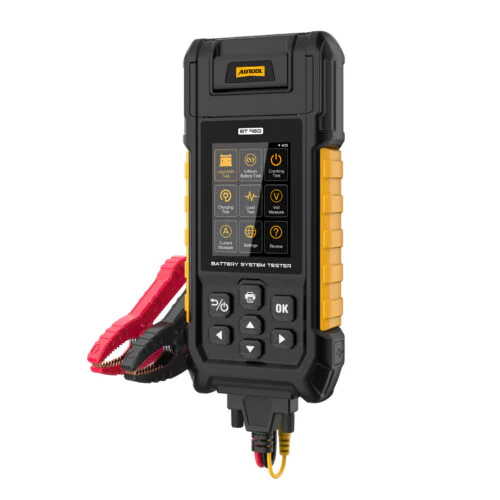
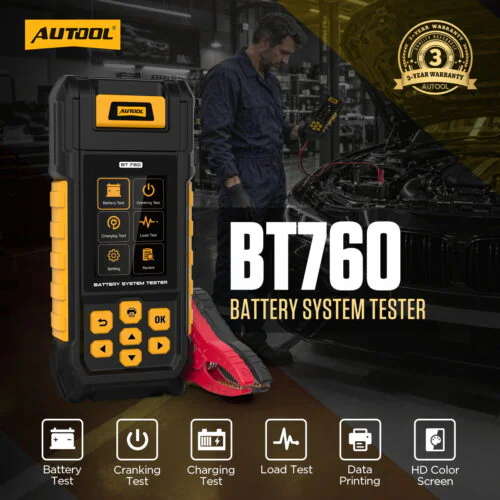
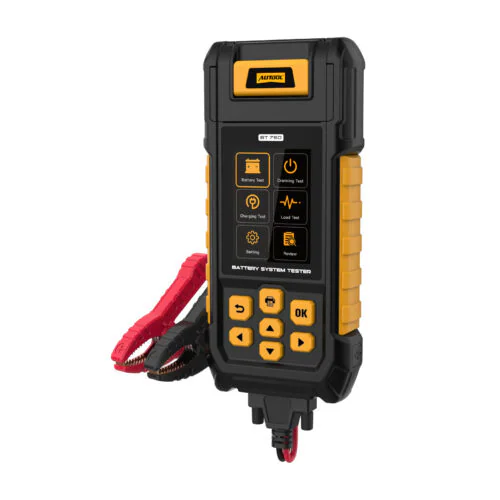
For vehicle owners, it is a good idea to perform a battery health check during routine maintenance, before seasonal temperature changes, or before a long trip. For repair shops, using a professional automotive battery tester can help technicians diagnose battery-related problems more accurately and reduce unnecessary parts replacement based solely on experience.
A car battery is a consumable component, but an unexpected breakdown is not unavoidable. Knowing the different battery types, recognizing early warning signs, and maintaining good driving habits can go a long way toward reducing the risk of sudden failure. Regular testing with a professional-grade battery tester provides early visibility into declining capacity, weak starting performance, and charging system issues—before they escalate into a no-start situation. Prevention is always better than a roadside emergency.