Uncategorized
Ultrasonic Cleaner Deep-Dive Review: How Powerful Is Its Cleaning Performance?

August 17, 2026
Share:
 autoolstore.com
Repair testing / 8 sub-categories
Diagnostic tools for leak tracing, visual inspection, battery health, circuits, pressure, spark, oil, and electrical readings.
Repair maintenance / 6 sub-categories
Service equipment for fluid exchange, A/C diagnostics, refrigerant recovery, oil handling, and cooling-system work.
Carbon cleaning / 3 sub-categories
Carbon-removal equipment for injectors, intake valves, components, and workshop cleaning jobs.
Wheel tire / 3 sub-categories
Equipment for alignment, lifting, tire repair, tire mounting, and service-bay workflows.
Tool storage / 1 sub-category
Storage products for keeping workshop tools, test equipment, and accessories organized.
EV charging / 1 sub-category
EV charging products for new-energy vehicle service, workshop use, and installation scenarios.
OBD diagnosis / 5 sub-categories
OBD-related testers, ECU programming power supplies, cable products, used-car inspection tools, and key frequency diagnostics.
Accessories / 8 sub-categories
Replacement parts, adapters, consumables, cables, and add-ons for major diagnostic and service equipment.
In the automotive repair industry, time is money, and efficiency directly impacts profitability. However, many repair shops are still stuck in the slow, labor-intensive process of manually cleaning automotive parts. Traditional cleaning methods for large components or precision parts not only consume valuable labor hours but also struggle to achieve the level of cleanliness required for professional repairs.
Today’s vehicle owners are becoming more knowledgeable and paying closer attention to the equipment, processes, and details behind professional automotive services. Reinstalling contaminated parts versus returning components with a clean, like-new finish creates a completely different impression in customers’ eyes.
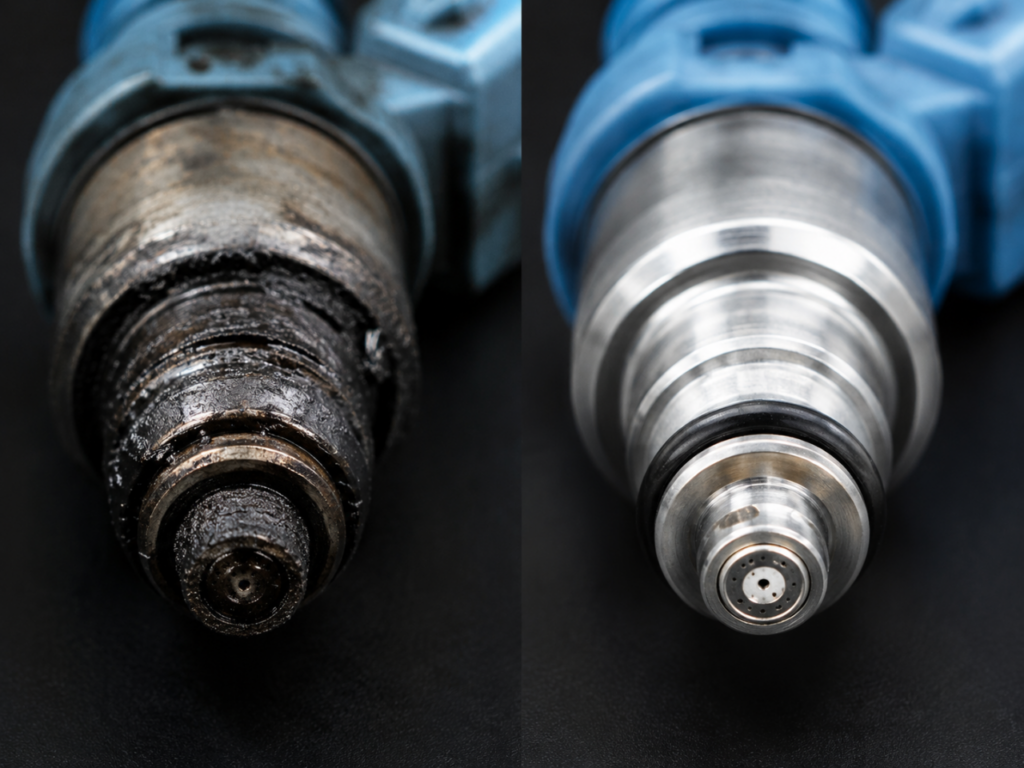
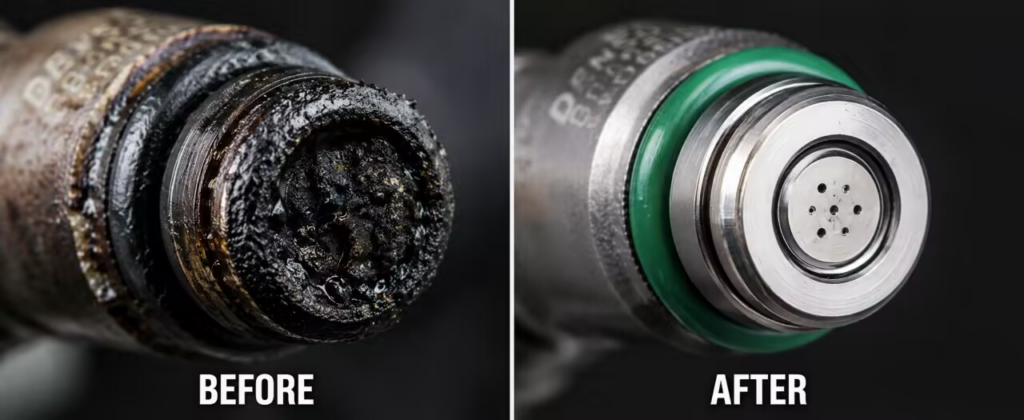
To improve efficiency and enhance workshop professionalism, more repair shops are adopting AUTOOL industrial-grade ultrasonic cleaners. In this article, we put AUTOOL ultrasonic cleaning performance to the test in real-world automotive repair scenarios. We’ll explore how it handles automotive hardware, valves, fuel injectors, and other challenging components.
With detailed before-and-after comparisons, you’ll discover whether an ultrasonic cleaning machine can help reduce labor costs, improve workflow efficiency, and strengthen your shop’s professional reputation.
To improve bay turnover and reduce labor costs, more shops are adopting AUTOOL industrial ultrasonic cleaners. In this review, we’re putting the cleaning power to the test across real automotive parts—hardware, valves, and fuel injectors. Stay tuned for plenty of side-by-side images. After seeing these results, you’ll know whether this machine can save you time, cut labor expenses, and help build a professional reputation for your shop.
The working principle behind ultrasonic cleaning is cavitation.
During operation, the machine generates tens of thousands of high-frequency vibrations per second inside the cleaning fluid, creating countless microscopic bubbles. These bubbles rapidly collapse near the surface of components, producing microscopic shockwaves that loosen and remove oil sludge, carbon deposits, and other contaminants.
This is a molecular-level cleaning process. It works like thousands of microscopic soft brushes cleaning simultaneously. Because there is no direct mechanical friction, ultrasonic cleaning does not change the dimensions of parts or scratch metal surfaces when used correctly.
While the technology itself is safe, mistakes during operation can certainly lead to problems. Here are the most common pitfalls:
Many automotive components, including carburetors, throttle bodies, and cylinder heads, are made from aluminum alloys.
If a strongly acidic or highly alkaline cleaning agent is used to speed up the cleaning process, ultrasonic cavitation can accelerate chemical reactions. This may cause aluminum surfaces to become discolored, oxidized, or develop corrosion pitting.
For aluminum components, always use a neutral or mildly alkaline ultrasonic cleaning fluid specifically formulated for aluminum parts.
Components such as piezoelectric injectors, electronic throttle bodies with integrated sensors, and ECU control modules contain sensitive electronic components and precision circuits.
The intense high-frequency vibration generated during ultrasonic cleaning may damage internal solder joints, circuits, or sensors.
General solenoid-type fuel injectors and purely mechanical components are usually suitable for ultrasonic cleaning.
However, assemblies containing sensitive electronic sensors, integrated circuits, or control modules should never be fully submerged in an ultrasonic cleaning machine.
Most ultrasonic cleaners include a heating function.
For automotive applications, the recommended cleaning temperature for removing oil and grease is generally between 50°C and 60°C. AUTOOL ultrasonic cleaners can heat cleaning fluid up to 60°C.
However, excessive temperatures (such as above 80°C) or overly long cleaning cycles may accelerate aging, deformation, or deterioration of rubber components, such as injector O-rings.
Best practice: For valuable components, remove rubber seals before cleaning and replace them separately if necessary. If seals remain installed, carefully control both temperature and cleaning duration. In most cases, 10–20 minutes is sufficient.
If a heavy component is placed directly on the bottom of the cleaning tank or remains stationary in one position under high ultrasonic power for an extended period, ultrasonic energy may become concentrated in a small area.
In rare cases, this can create minor cavitation pitting on softer metals such as copper or aluminum.
To achieve even cleaning performance, always use the supplied cleaning basket to suspend parts above the tank bottom and allow ultrasonic energy to distribute evenly.
1. Water-Based Cleaners: The Workshop Workhorse
Water-based ultrasonic cleaning fluids are the most widely used solution in automotive repair shops. These concentrated formulas are diluted with water before use, typically at a ratio of 1:10 to 1:20. They generally perform best when combined with heating at 50°C–60°C.
Metal Degreaser (Neutral / Mildly Alkaline)
Suitable for:
Features:
A gentle formula that effectively breaks down engine oil, grease, and contaminants while minimizing the risk of aluminum corrosion, discoloration, or surface damage.
2. Heavy-Duty Degreaser (Highly Alkaline)
Suitable for:
Features:
Provides powerful cleaning performance for removing heavy oil sludge and stubborn grease buildup. Do not use on aluminum or copper components.
3. Carbon Deposit Cleaners: Designed for Valves and Fuel Injectors
Besides oil sludge, hard carbon deposits are one of the most difficult contaminants to remove from automotive components.
Standard degreasers are often ineffective against carbon buildup. Specialized carbon cleaning fluids are required.
Suitable for:
Features:
Specially formulated ingredients soften and break down carbon structures.
Combined with ultrasonic vibration, these cleaners can remove hardened carbon deposits layer by layer, restoring the original metallic appearance and helping maintain component precision.
4. Water-Based Rust Removers and Metal Activators
Rusty fasteners, brake components, and long-stored metal parts are common challenges in automotive repair.
Suitable for:
Features:
Usually mildly acidic, these solutions use ultrasonic penetration to reach deep into gaps and loosen rust deposits.
After cleaning, applying rust protection is recommended because exposed iron surfaces can quickly develop surface rust again.
5. Solvent-Based Cleaners (Hydrocarbon / Petroleum Solutions)
Solvent-based cleaners are used directly without water dilution.
Examples include hydrocarbon cleaners, high-purity kerosene, and certain industrial alcohol solutions.
Suitable for:
Features:
Fast evaporation, excellent metal compatibility, and no water residue after cleaning.
⚠️ Safety Warning
Most solvent-based cleaning fluids are highly flammable. Never activate the heating function when using solvent-based cleaners. Always operate in a well-ventilated area. High-frequency ultrasonic vibration combined with heat can create a serious fire hazard.
The AUTOOL industrial-grade ultrasonic cleaner delivers cleaning performance that traditional manual cleaning methods cannot match in real automotive repair applications.
Through high-frequency cavitation technology, it provides molecular-level cleaning performance, effectively removing valve carbon deposits, injector contamination, throttle body sludge, and other stubborn automotive contaminants while maintaining component precision when used correctly.
For automotive repair shops, investing in an ultrasonic cleaning machine is more than simply upgrading a tool—it is a practical way to improve workflow efficiency, increase bay productivity, and reduce labor costs.
At the same time, returning customers’ vehicles with professionally cleaned components featuring a restored metallic finish demonstrates attention to detail and a commitment to quality service.
AUTOOL ultrasonic cleaners help repair professionals deliver cleaner results, improve customer confidence, and build a stronger professional reputation.