Uncategorized
What Types of Automotive Refrigerant Are Still Used in 2026?

August 15, 2026
Share:
 autoolstore.com
Repair testing / 8 sub-categories
Diagnostic tools for leak tracing, visual inspection, battery health, circuits, pressure, spark, oil, and electrical readings.
Repair maintenance / 6 sub-categories
Service equipment for fluid exchange, A/C diagnostics, refrigerant recovery, oil handling, and cooling-system work.
Carbon cleaning / 3 sub-categories
Carbon-removal equipment for injectors, intake valves, components, and workshop cleaning jobs.
Wheel tire / 3 sub-categories
Equipment for alignment, lifting, tire repair, tire mounting, and service-bay workflows.
Tool storage / 1 sub-category
Storage products for keeping workshop tools, test equipment, and accessories organized.
EV charging / 1 sub-category
EV charging products for new-energy vehicle service, workshop use, and installation scenarios.
OBD diagnosis / 5 sub-categories
OBD-related testers, ECU programming power supplies, cable products, used-car inspection tools, and key frequency diagnostics.
Accessories / 8 sub-categories
Replacement parts, adapters, consumables, cables, and add-ons for major diagnostic and service equipment.
As environmental regulations continue to tighten, automotive refrigerants have undergone several generational shifts. From the early days of R12 to the now-widespread R134a and R1234yf, each refrigerant brings different environmental credentials, cooling efficiency, and system requirements.
So what refrigerants are commonly used in cars today? How do they differ? And can they be mixed? This article covers everything you need to know.
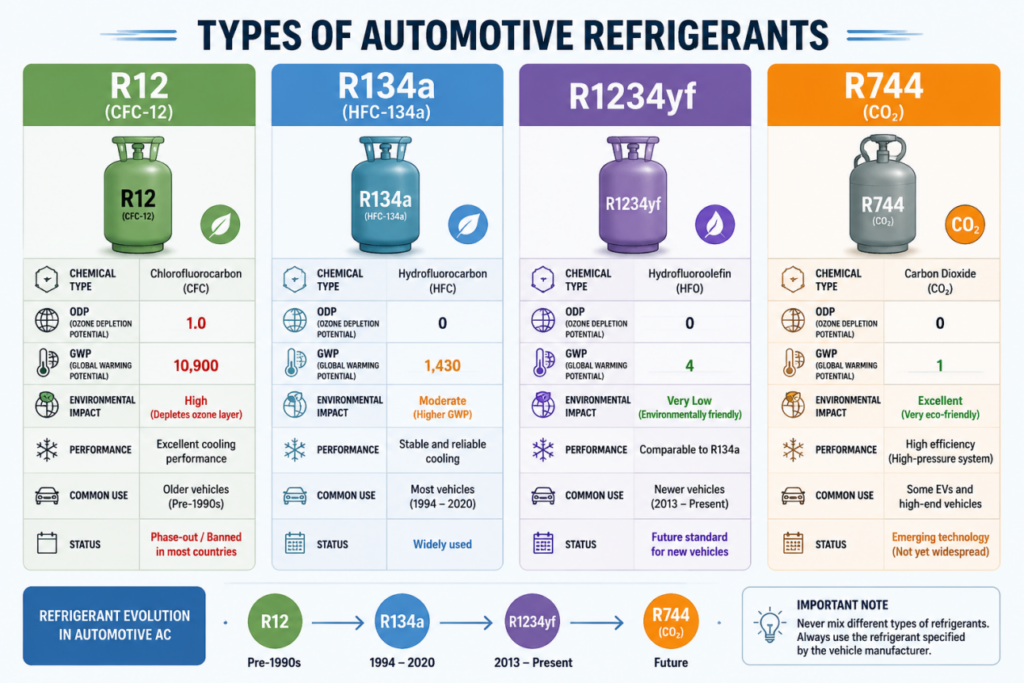
Looking at the evolution of automotive AC refrigerants, they can be broadly categorized as follows:
R12 was the first refrigerant widely adopted in automotive AC systems.
Its excellent cooling performance and stability made it the go-to choice throughout the 1980s and early 1990s.
However, research later revealed that R12 depletes the ozone layer, causing severe environmental damage. As a result, many countries have banned its production and use. Today, it is only found in a small number of classic and vintage vehicles.
R134a is one of the most successful replacements for R12.
From around 1994, most automakers began adopting R134a as their standard refrigerant.
Its advantages include:
Even today, millions of vehicles on the road still use R134a in their AC systems.
As environmental standards have become more stringent, R1234yf has emerged as the next-generation automotive refrigerant.
Its biggest advantage over R134a is its extremely low Global Warming Potential (GWP), making it far more environmentally friendly.
New vehicles produced in Europe, North America, and many Asian countries are already widely adopting R1234yf. In the coming years, it is expected to become the dominant refrigerant in the automotive AC industry.
R744 is simply carbon dioxide (CO₂).
In recent years, some EVs and high-end models have begun using CO₂-based AC systems.
Its key advantages include:
However, its operating pressure is significantly higher than traditional AC systems, requiring specialized equipment and technical expertise. For now, it remains a niche solution.
For vehicles currently on the road, two refrigerants dominate:
If your vehicle was built between 1995 and 2020, it most likely uses R134a.
With mature technology and low service costs, R134a remains the most widely used automotive refrigerant globally.
New vehicles produced in recent years are increasingly adopting R1234yf.
In markets like Europe and North America, stricter environmental regulations have accelerated the transition. Most new models there now come factory-filled with R1234yf.
For repair shops, the ability to handle both R134a and R1234yf has become essential. Professional-grade tools like the AUTOOL LM708 support both refrigerant types for seamless service.
The short answer: Absolutely not.
Different refrigerants have distinct chemical properties, operating pressures, and lubrication requirements.
Mixing them can lead to:
Take R134a and R1234yf, for example — while they may seem similar, their system designs, service port standards, and lubricant types are different. Mixing them not only degrades cooling performance but can also cause complete system failure.
Before topping up or replacing refrigerant, always confirm the OEM-specified refrigerant type for your vehicle.
If you’re unsure which refrigerant your vehicle requires, here are several ways to find out:
Most vehicles have an AC system label under the hood. This label usually specifies:
This is the simplest and most reliable method.
The vehicle manual typically includes refrigerant specifications and maintenance guidelines for the AC system.
Some automakers allow you to check vehicle configuration — including refrigerant type — using the VIN (Vehicle Identification Number).
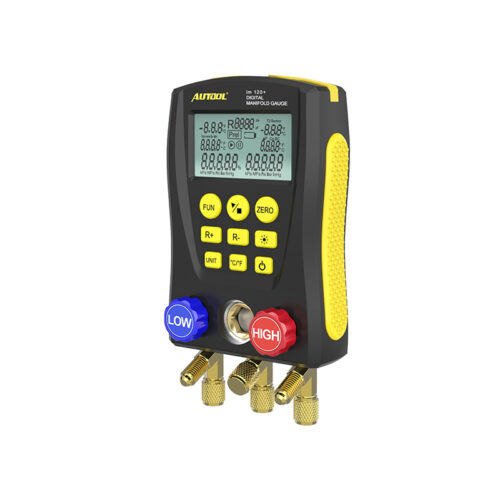
Service shops can use refrigerant analyzers or digital manifold gauge sets to read system operating parameters and help confirm the refrigerant type.

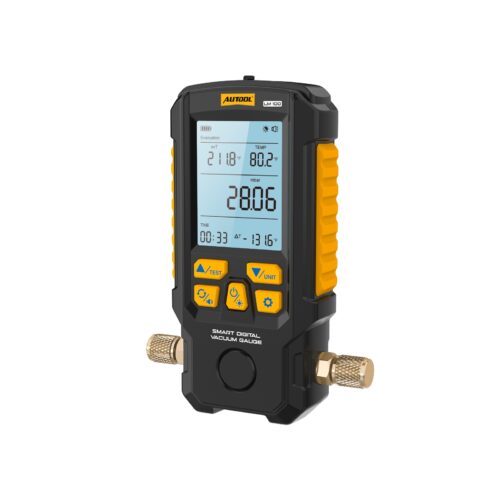

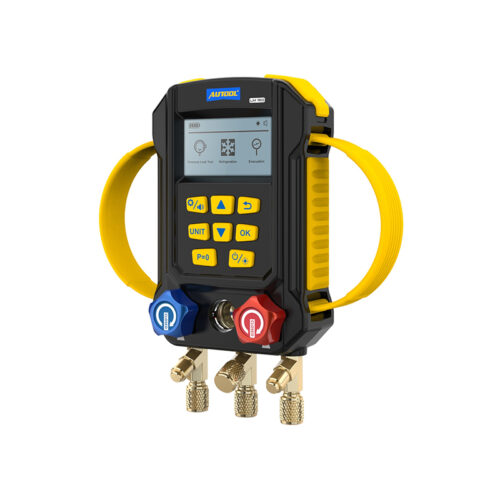

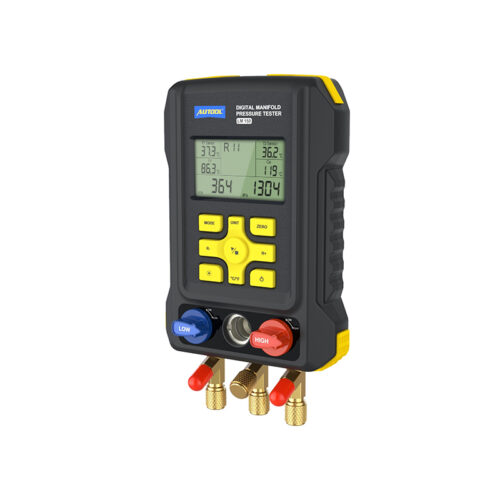

In theory, an automotive AC system is a sealed loop, and refrigerant doesn’t have a fixed replacement interval.
If the system has no leaks, the refrigerant can last for many years.
However, you should have the system inspected or recharged when you notice the following:
If the air from the vents is warmer than usual, it may indicate low refrigerant charge.
Abnormal refrigerant pressure can cause the compressor to cycle on and off repeatedly.
Replacing components like the condenser, evaporator, compressor, or hoses typically requires evacuating the system and recharging with fresh refrigerant.
Automotive refrigerants have evolved from R12 to R134a and now to R1234yf. Looking ahead, CO₂ (R744) is also expected to gain wider adoption. For now, R134a and R1234yf remain the most common refrigerants on the road.
One key takeaway: never mix different refrigerants. Doing so can damage the AC system and drive up repair costs. Always confirm the OEM-specified refrigerant type before topping up or replacing.
In our next blog, we’ll walk you through the refrigerant replacement process step by step — stay tuned!
Following significant repairs, it’s recommended to recharge with fresh refrigerant to ensure optimal performance.
Using a digital manifold gauge during service allows technicians to monitor high and low side pressures in real time, check vacuum levels, and analyze superheat and subcooling — ensuring accurate and reliable refrigerant charging.