LANGUAGE & CURRENCY
Uncategorized
Why Does Your Auto Repair Shop Need an Ultrasonic Cleaner?

August 27, 2026
Share:
 autoolstore.com
Repair testing / 8 sub-categories
Diagnostic tools for leak tracing, visual inspection, battery health, circuits, pressure, spark, oil, and electrical readings.
Repair maintenance / 6 sub-categories
Service equipment for fluid exchange, A/C diagnostics, refrigerant recovery, oil handling, and cooling-system work.
Carbon cleaning / 3 sub-categories
Carbon-removal equipment for injectors, intake valves, components, and workshop cleaning jobs.
Wheel tire / 3 sub-categories
Equipment for alignment, lifting, tire repair, tire mounting, and service-bay workflows.
Tool storage / 1 sub-category
Storage products for keeping workshop tools, test equipment, and accessories organized.
EV charging / 1 sub-category
EV charging products for new-energy vehicle service, workshop use, and installation scenarios.
OBD diagnosis / 5 sub-categories
OBD-related testers, ECU programming power supplies, cable products, used-car inspection tools, and key frequency diagnostics.
Accessories / 8 sub-categories
Replacement parts, adapters, consumables, cables, and add-ons for major diagnostic and service equipment.
Manual scrubbing and solvent soaking rely heavily on manual labor. Fine gaps and narrow oil passages require repeated, tedious work, making it slow to clean a single set of parts. This delays job completion times and continuously drains manpower, adding to shop overhead as labor costs rise.
Sludge, carbon deposits, and rust easily get trapped in dead angles like threads, blind holes, and oil passages. These contaminants are hard to see with the naked eye and even harder to reach with conventional tools. Remaining impurities can cause oil line blockages or engine malfunctions, leading to costly re-work and damaging your shop’s reputation.
Hard-bristled brushes can scratch delicate precision surfaces. Soaking parts in gasoline or diesel is a high-risk operation due to flammability and explosion hazards, posing a threat to shop personnel and property. Using strong acids can corrode rubber seals, shorten part lifespans, and release harmful gases that endanger worker health.
Traditional cleaning causes splashing oil, pungent odors, and slippery floors. This not only makes the workshop look messy but also fails to meet modern environmental and workplace safety inspection standards.
No constant supervision is needed. Simply load the parts, add the ultrasonic cleaning solution, and set the timer for automatic cleaning. This hands-off approach frees your technicians to work on other repair tasks instead of wasting hours scrubbing parts by hand.
Powered by the ultrasonic cavitation effect, sound energy penetrates every gap, micro-hole, and oil passage to strip away stubborn grime, carbon deposits, and rust without missing a spot. When customers see greasy components transformed to look brand new, it immediately reinforces your shop’s professionalism.
Ultrasonic cleaning generates millions of microscopic bubbles that collapse instantly, creating micro-shockwaves. When paired with specialized cleaning solutions, it will not scratch metal surfaces or corrode rubber and seals like manual scrubbing. It can be safely used on engine components, fuel injectors, brake parts, and delicate hardware.
Eliminate hazardous, flammable solvents and corrosive acids from your shop floor. The closed tank design prevents oil splashing, and used cleaning fluid can be collected for proper disposal. This keeps your shop clean, safe, compliant, and professional-looking.
A one-time equipment investment offers long-term service with low consumable costs. The more frequently you use it, the more you save on labor and materials, leading to a fast return on investment (ROI). It is truly a piece of equipment that pays for itself over time.
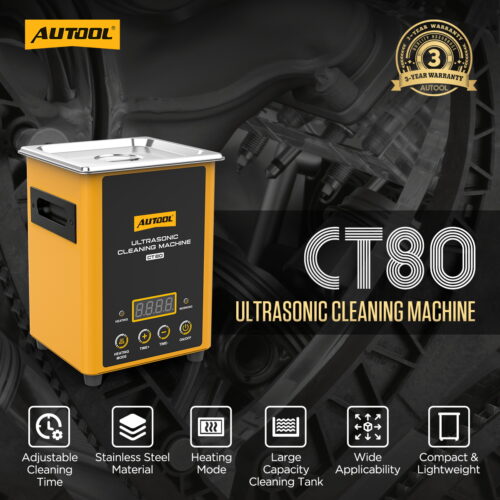
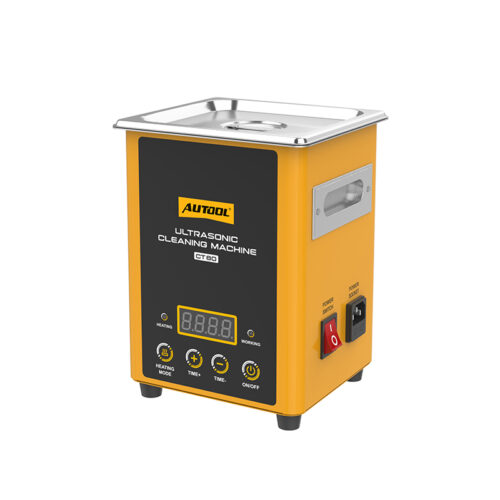
A compact tabletop unit designed for precision small-part maintenance. Ideal for detailed repair stations, detailing shops, and specialized fuel injector maintenance.
Suitable Auto Parts:
A small tabletop unit offering more working volume than the 1.6L model while maintaining precision performance. Allows cleaning of slightly larger components or larger batches.
Suitable Auto Parts:
A medium tabletop cleaner suitable for general repair shops and standard repair stations. Offers ample space for medium-to-small parts with high cost-performance.
Suitable Auto Parts: