LANGUAGE & CURRENCY
Uncategorized
Why Gravity-Based ATF Changes Are Damaging Modern Multi-Speed and CVT Transmissions

September 8, 2026
Share:
 autoolstore.com
Repair testing / 8 sub-categories
Diagnostic tools for leak tracing, visual inspection, battery health, circuits, pressure, spark, oil, and electrical readings.
Repair maintenance / 6 sub-categories
Service equipment for fluid exchange, A/C diagnostics, refrigerant recovery, oil handling, and cooling-system work.
Carbon cleaning / 3 sub-categories
Carbon-removal equipment for injectors, intake valves, components, and workshop cleaning jobs.
Wheel tire / 3 sub-categories
Equipment for alignment, lifting, tire repair, tire mounting, and service-bay workflows.
Tool storage / 1 sub-category
Storage products for keeping workshop tools, test equipment, and accessories organized.
EV charging / 1 sub-category
EV charging products for new-energy vehicle service, workshop use, and installation scenarios.
OBD diagnosis / 5 sub-categories
OBD-related testers, ECU programming power supplies, cable products, used-car inspection tools, and key frequency diagnostics.
Accessories / 8 sub-categories
Replacement parts, adapters, consumables, cables, and add-ons for major diagnostic and service equipment.
Modern multi-speed automatic transmissions (6AT/8AT/10AT) and continuously variable transmissions (CVTs) rely on hydraulic control systems with micron-level precision. Yet as much as 60%–70% of the old ATF can remain trapped inside the torque converter, valve body, and cooling circuits—areas gravity drainage simply cannot fully reach.
Simply loosening the drain plug and letting the fluid drain isn’t a complete fluid change. It’s a partial replacement—and often a poor one at that, replacing less than 40% of the total fluid volume. This crude approach not only leaves wear particles and sludge behind, but the sudden change in fluid properties can also disrupt the transmission’s hydraulic and friction characteristics. The result may include harsh shifting, sticking solenoids, and even friction-element slipping after an automatic transmission oil change—problems that can quickly lead to costly repairs.
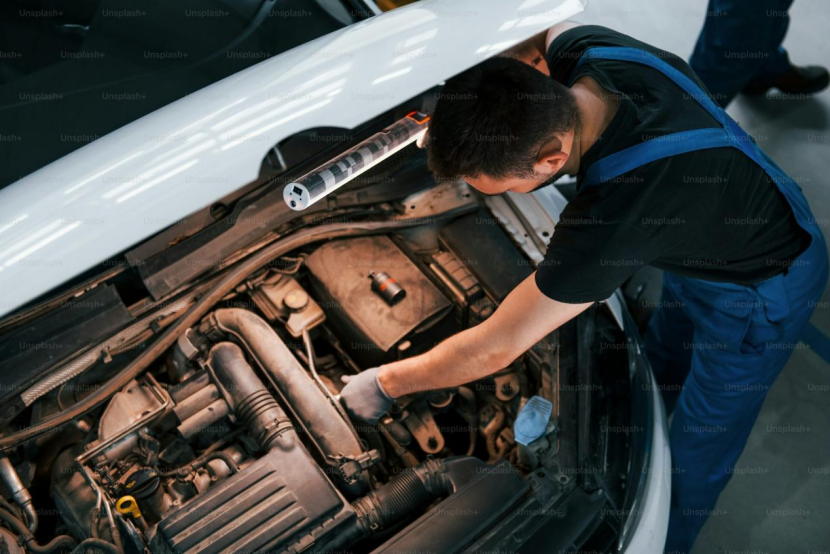
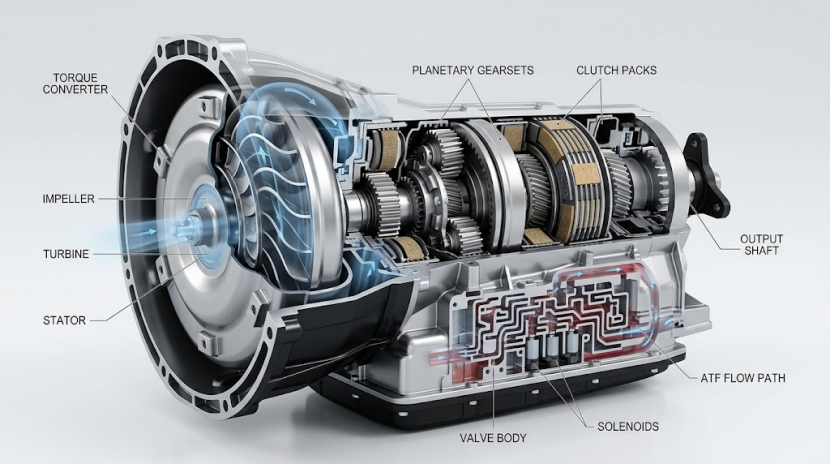
When the vehicle is shut off, complex internal passages and enclosed cavities can prevent a significant amount of ATF from naturally draining back into the transmission pan. A large portion of the ATF remains distributed throughout the torque converter, intricate valve body, and external transmission cooler lines, where gravity alone cannot fully remove it.
ATF exposed to prolonged high temperatures and shear stress gradually loses its protective additive performance, allowing oxidized deposits and varnish to form inside the valve body and its precision passages.
A CVT relies on specially formulated fluid to maintain precisely controlled friction characteristics and oil-film shear strength between the metal pulleys and steel belt. These properties are critical for stable power transmission and protection against abnormal wear.
The uncontrolled mixing of heavily degraded old fluid and fresh ATF during a gravity-based ATF oil change can alter viscosity and friction behavior, potentially weakening the protective lubricating film and increasing the risk of micro-slip, belt scoring, and abnormal wear.
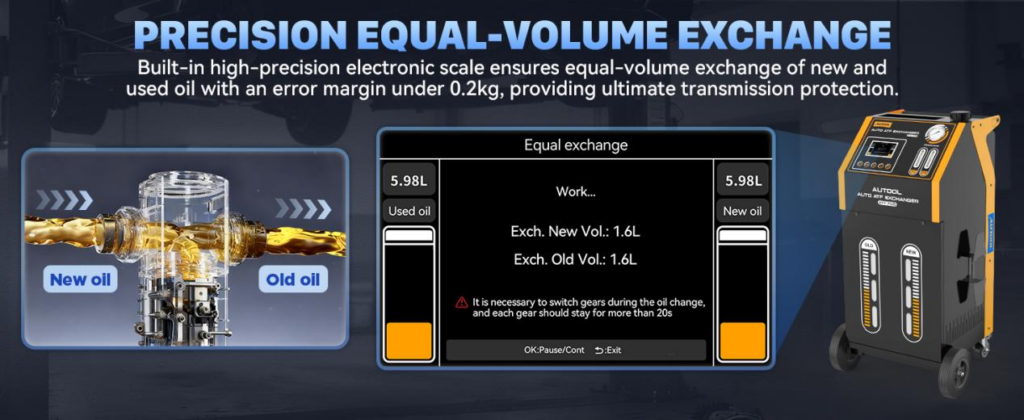
The key to reducing old-fluid residue in hydraulic dead zones is Dynamic Equal Exchange. With the engine idling and the transmission’s internal oil pump operating normally, the Automatic Transmission Fluid Exchanger is connected to the transmission’s external cooler circuit. The machine monitors the outgoing fluid flow and simultaneously supplies an equal volume of new fluid.
Using the vehicle’s own hydraulic circulation, fresh ATF progressively displaces old fluid throughout the transmission system. This allows the fluid within the torque converter, valve body, and cooling circuit to be progressively exchanged. Instead of relying solely on gravity, this method uses the transmission’s normal fluid circulation to achieve a more complete and controlled ATF replacement.
The AUTOOL ATF705 Automatic Transmission Fluid Exchanger integrates high-precision measurement, fluid-flow monitoring, and filtration into a standardized transmission service solution.

High-Precision Dual Electronic Scale Control: Built-in dual industrial-grade weighing sensors continuously monitor the amount of fresh fluid supplied and used fluid recovered. The system dynamically balances the incoming and outgoing fluid volumes, helping maintain exchange accuracy within ±0.05 L. This helps reduce the risk of:
Intelligent Fluid Flow Direction Detection: Technicians do not need to manually determine the transmission cooler line flow direction. After the hoses are connected, the system detects fluid flow and automatically adjusts the internal flow path as needed. This helps simplify setup and reduces the risk of incorrect hose connections during transmission service.
Pre-Exchange Cycle Cleaning: The ATF705 features a built-in high-density, pressure-resistant filter. Before the fluid exchange begins, Cycle Cleaning can be activated to circulate the transmission fluid through the filtration system. This helps remove larger metal particles and suspended contaminants before the main ATF exchange, reducing the possibility of contaminants continuing to circulate through the valve body during service.
Multiple Aluminum Quick-Connect Adapters: The system comes with a range of corrosion-resistant aluminum quick-connect adapters designed for mainstream transmission cooling line connections. Compatible applications include popular transmission systems from: Mercedes-Benz, BMW, Volkswagen, Audi, Japanese and Korean brands, and other mainstream vehicle applications. Including systems such as Mercedes-Benz 722.9/9G-Tronic, BMW ZF 8HP, and Volkswagen/Audi DSG transmissions.
Upgrading from traditional gravity draining to a data-driven, equal-volume fluid exchange can help reduce repeat service caused by incomplete fluid replacement while significantly increasing the revenue potential of each service bay.
Performance Indicator | Traditional Manual Gravity Drain | Basic Pneumatic Suction Unit | AUTOOL ATF705 Smart Exchange |
Fluid Exchange Rate | Only 30%–40% (heavy residual) | ~50% | 95%+ (complete system renewal) |
Fill/Drain Accuracy | Visual dipstick check (high error) | Rough scale estimation | Dual-scale closed-loop 1:1 dynamic balancing |
Solenoid Failure / Complaint Rate | High (sludge dislodgement) | Moderate | Near zero (smooth transition) |
Fluid Consumption per Vehicle | ~4L bottled oil | ~6L | 10–12L (full-circuit flushing volume) |
Gross Profit per Workstation | Minimal labor only ($10–20) | ~$20–35 | $50–100+ (fluid sales + premium service) |
Step 1: Rapid Line Integration
Select the correct vehicle-specific adapter and connect the ATF705 to the transmission cooler lines. Connect the fresh-fluid and used-fluid hoses, then power on the machine.
Step 2: Start Circulation Filtration
Activate the Cycle Cleaning function and allow the vehicle to idle for approximately 10–15 minutes. During circulation, transmission fluid passes through the machine’s filtration system, helping capture suspended contaminants and larger particles.
Step 3: One-Touch Equal-Volume Exchange
Set the target exchange volume—typically 1.2–1.5 times the total fluid capacity—then start the automatic exchange with one touch. The dual viewing windows provide a clear view of the fluid change, as dark, cloudy used fluid gradually gives way to clean, bright red fresh ATF.
Step 4: Precision Level Adjustment
Follow the vehicle manufacturer’s specified temperature and fluid-level procedure. Use the machine’s fluid addition and extraction functions for final adjustment, then disconnect the service hoses cleanly and securely.
Automatic transmission maintenance is ultimately about restoring the performance of a precision hydraulic control system. Replacing inefficient traditional gravity draining with a dynamically controlled circulation system featuring closed-loop weighing is a key step for modern automotive workshops to ensure service quality, reduce the risk of costly transmission repair claims, and increase the value of transmission maintenance services.
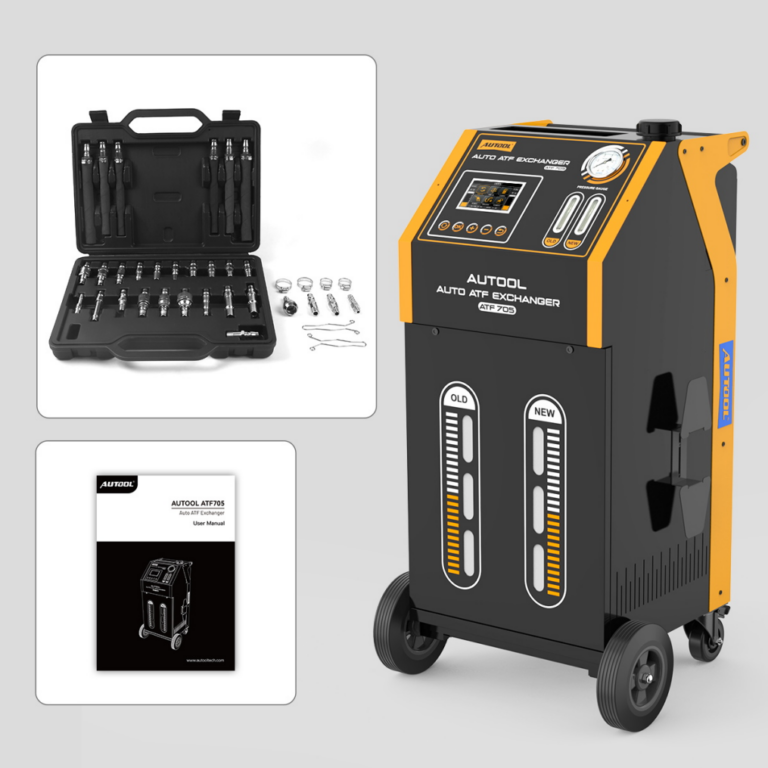
Get the complete technical specifications and workshop configuration options for the AUTOOL ATF705 Automatic Transmission Fluid Exchanger: