
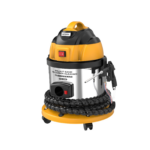

AUTOOL HTS558 Walnut Blasting Machine
Original price was: US$479.00.US$359.00Current price is: US$359.00.
- Walnut Blast + 1200 W Recovery
- Five Intake Adapters
- Built-In Dust Filtration
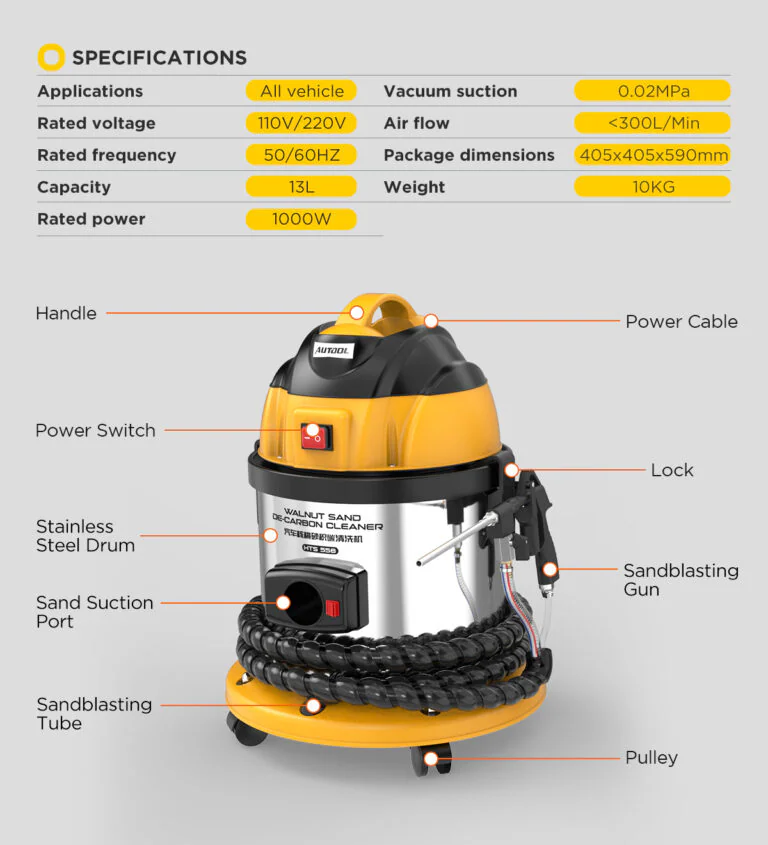
- Compact Mobile Body
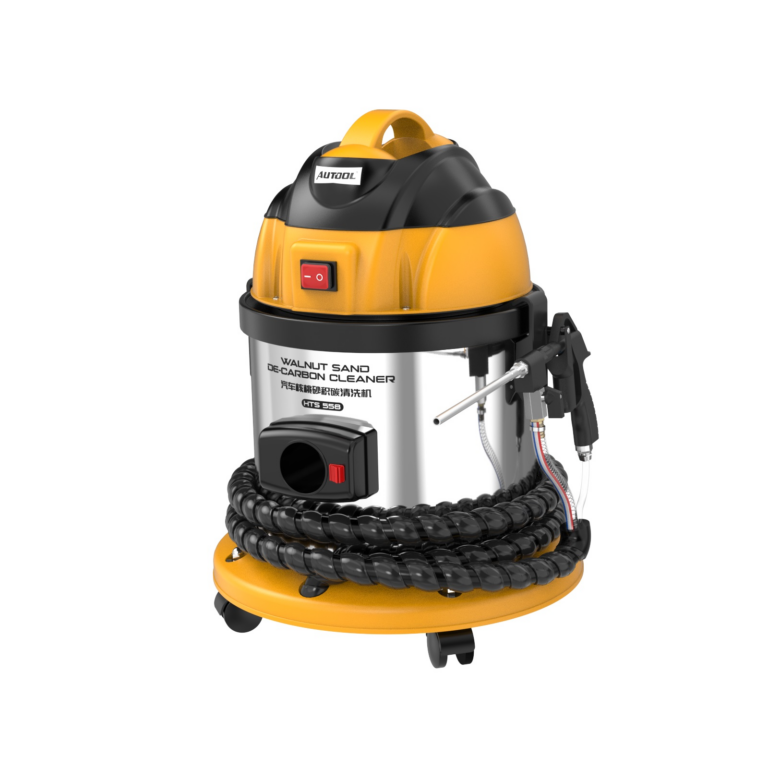
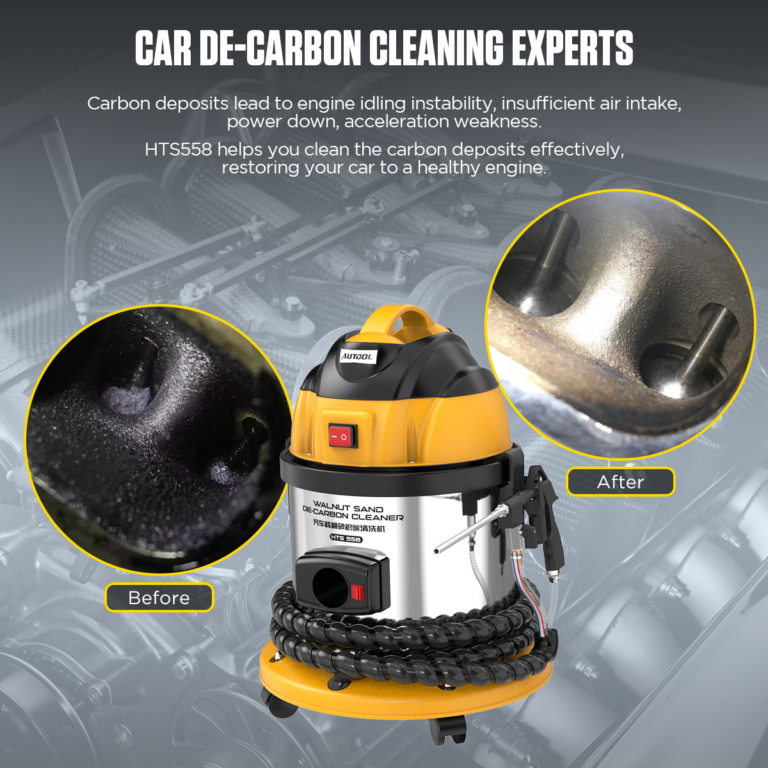
- Walnut Blast + 1200 W Recovery: Remove accessible deposits from supported intake-manifold areas and valve backs while the 1200 W vacuum system collects loosened media and residue; an external compressor supplies blast air.
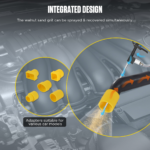
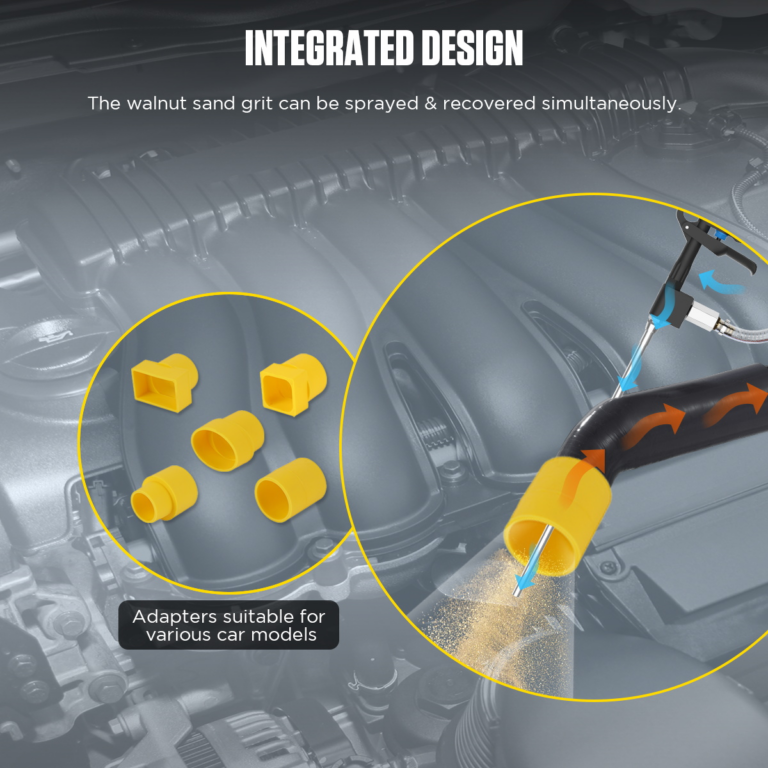
- Five Intake Adapters: Five adapter types accommodate varied intake-port shapes, with the selected profile matched to the specific engine and port.
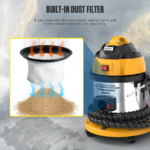
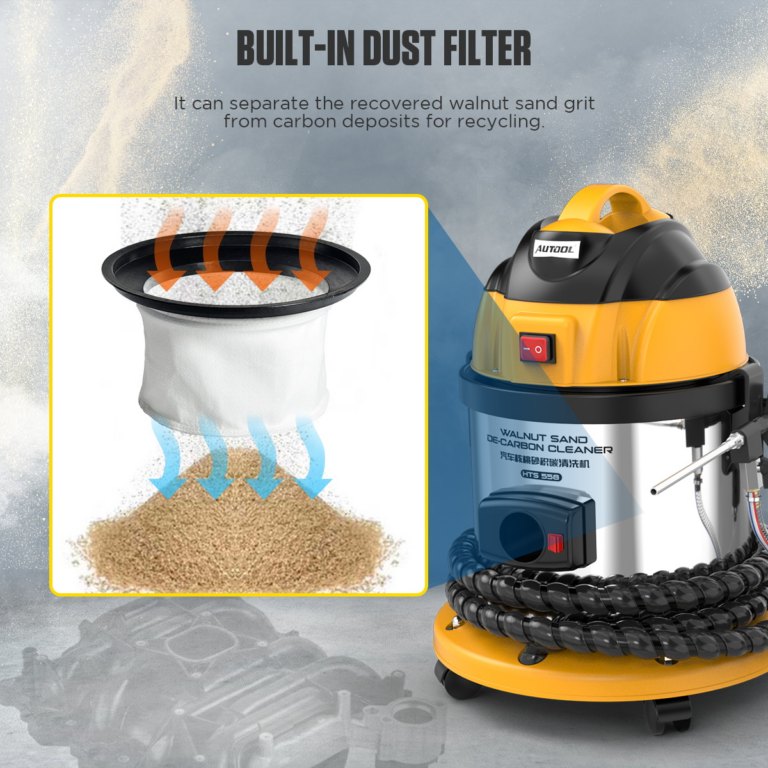
- Built-In Dust Filtration: The built-in filter separates collected walnut abrasive from carbon residue during recovery.
- Compact Mobile Body: A 13 L body and 360° swivel casters simplify movement around the service bay.
- Walnut Blast + 1200 W Recovery: Remove accessible deposits from supported intake-manifold areas and valve backs while the 1200 W vacuum system collects loosened media and residue; an external compressor supplies blast air.
- Five Intake Adapters: Five adapter types accommodate varied intake-port shapes, with the selected profile matched to the specific engine and port.
- Built-In Dust Filtration: The built-in filter separates collected walnut abrasive from carbon residue during recovery.
- Compact Mobile Body: A 13 L body and 360° swivel casters simplify movement around the service bay.
- 3-Year Warranty Main unit 3 years · Accessories 1 year
- 90-Day Returns Eligible returns within 90 days
- Official Store Genuine products · Direct support
AUTOOL HTS558 · Compact Walnut Blaster with Recovery
Remove Intake Deposits with Compact Blast Recovery
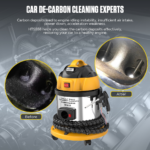
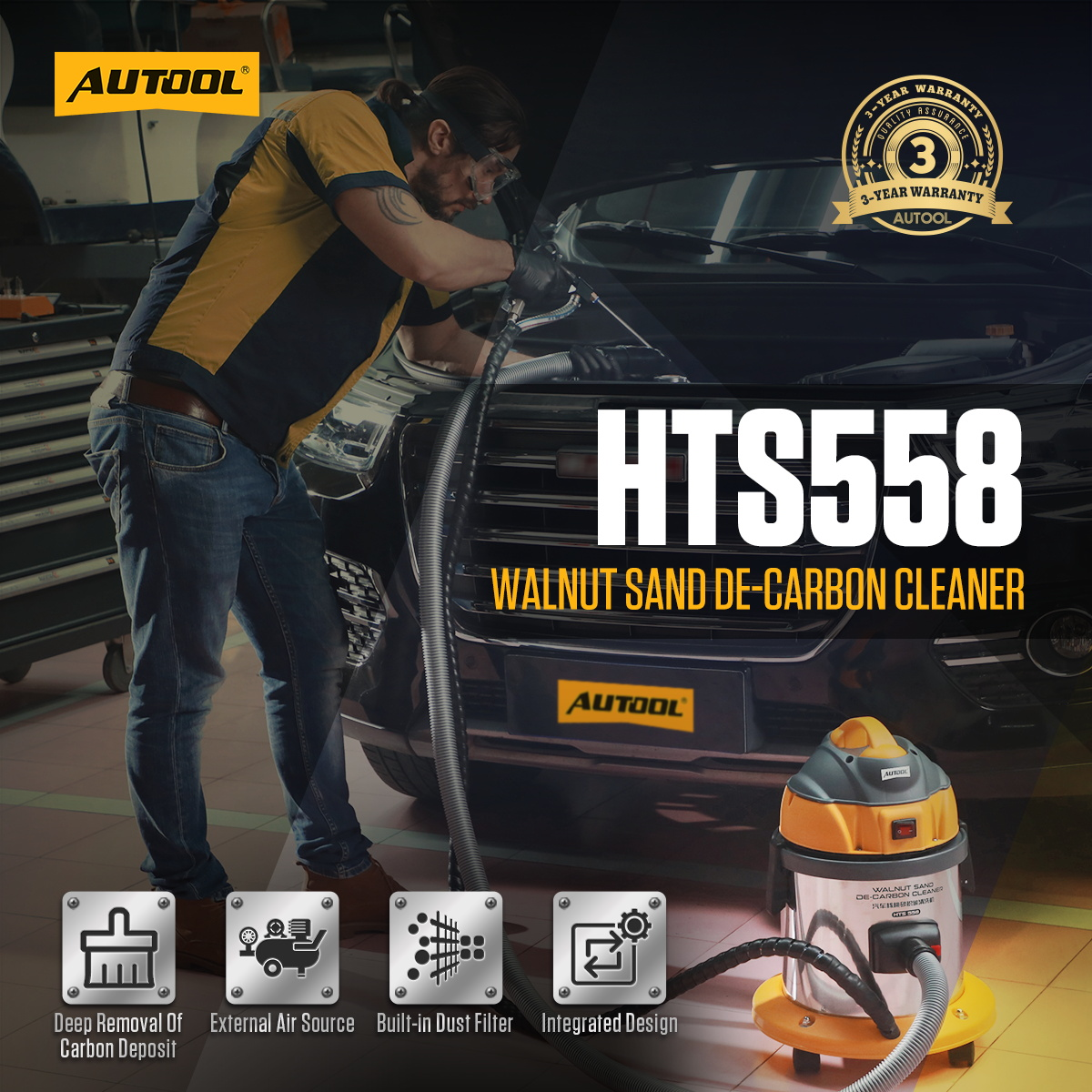
Remove accessible carbon from supported intake ports and valve backs with walnut blasting and simultaneous vacuum recovery. Five intake-adapter types and a compact 13 L body suit varied port shapes and service-bay movement, while the 1200 W system recovers and filters media and residue. Blasting uses dry 0.6–1.2 mm walnut abrasive and a suitable external compressor, both supplied separately.
- 5 Intake-Adapter Types
- Compact 13 L Body
- 1200 W Vacuum Recovery
- Simultaneous Blast & Recovery
- 360° Workshop Casters
Key Features
Five Adapters with Powered Recovery
Intake-Valve Carbon Cleaning
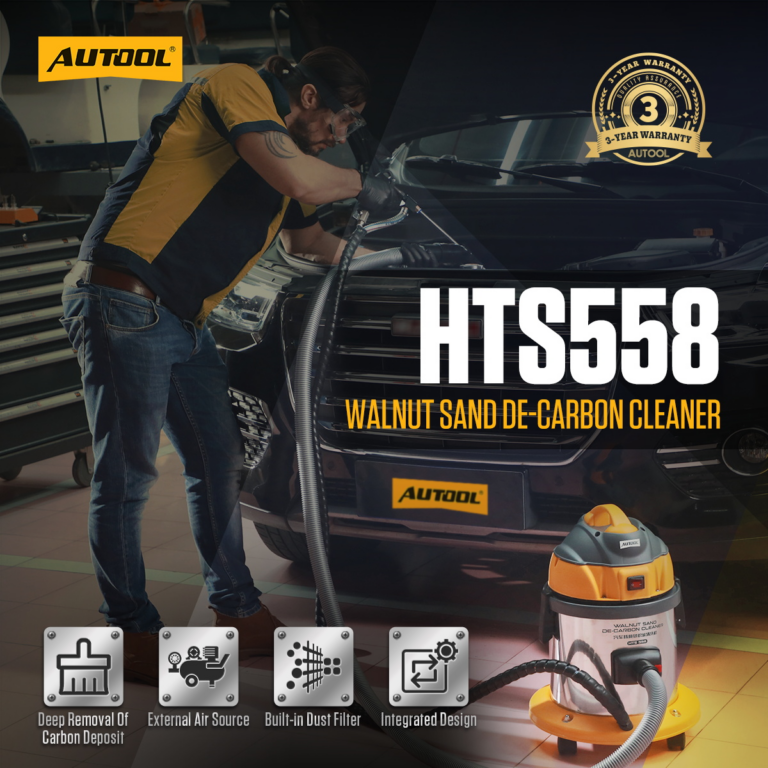
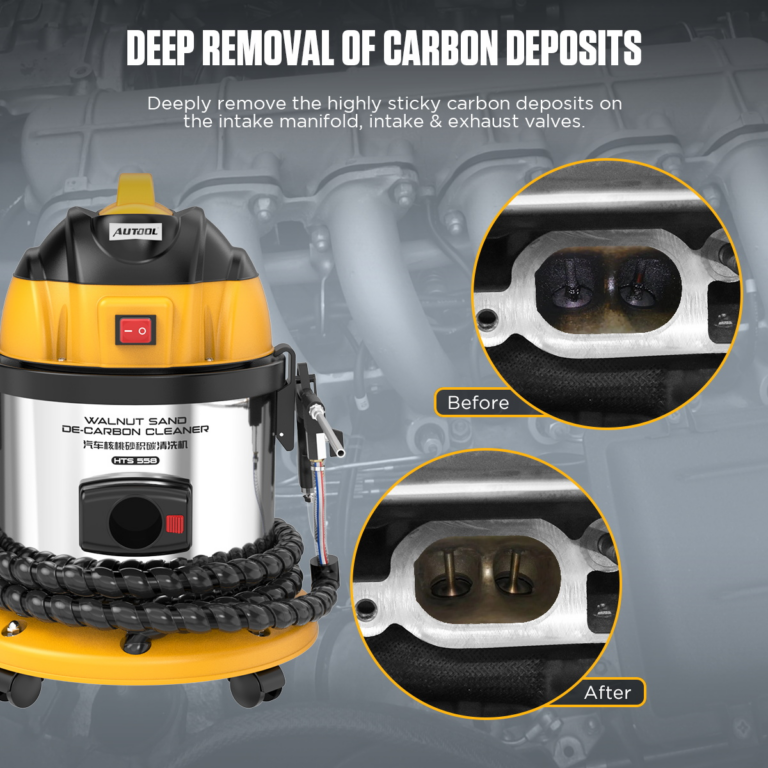
Use the walnut-blasting and vacuum-recovery system to remove accessible deposits from supported intake-manifold areas and valve backs, matching the adapters and cleaning process to the vehicle condition.
Integrated Vacuum Recovery
Collect walnut media and carbon residue while blasting, with integrated vacuum recovery and filtration. Suitable media may be reused 5–10 times under normal conditions only when the vehicle procedure permits; keep it dry and replace contaminated, clumped or poorly performing media.
Five Intake Adapters
Different profiles support varied port shapes, with engine-specific fit and seal checks required.
Dust Filtration
The built-in dust filter manages collected walnut abrasive and carbon residue during recovery; reuse depends on media condition, moisture, and the service procedure for the vehicle.
Compact Mobile Layout
A 13 L body and swivel casters support movement around the service bay.
External-Air Blasting
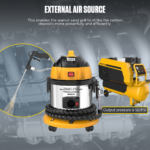
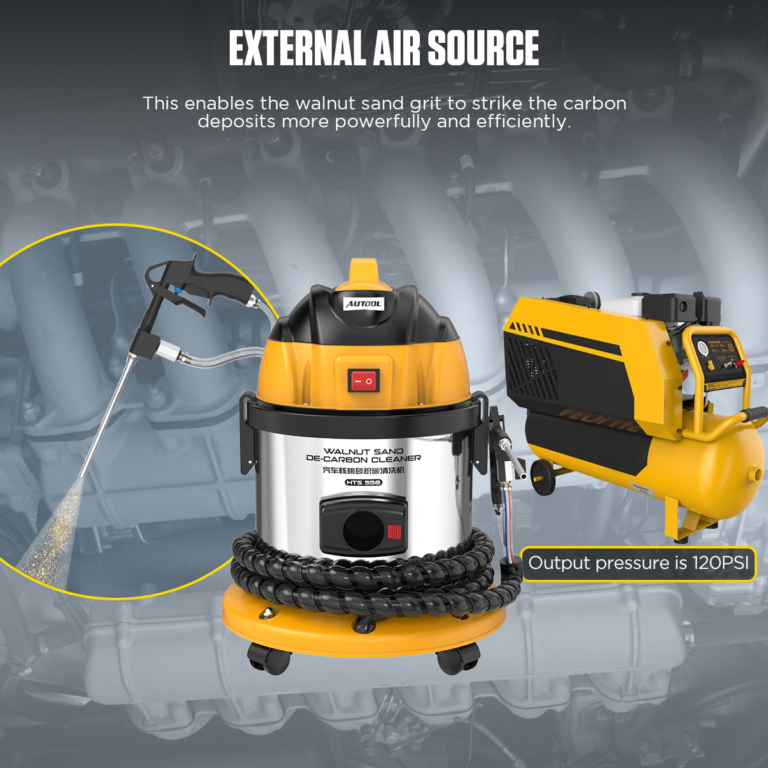
An external air compressor supplies the blasting force while the 1200 W unit handles vacuum recovery and filtration during carbon removal.
5 Intake Adapters For Different Port Shapes
The machine includes 5 types of adapters to support different intake port shapes and cleaning setups. Match the adapter to the specific engine and intake-port shape before cleaning.
360° Swivel Casters
The 360° caster design makes the walnut blasting machine easier to move around a garage or workshop.
3 Years Warranty Support
Main unit: 3-year warranty. Standard accessories: 1-year warranty. Warranty Policy.
How to Use
Seal, Blast, Recover, and Inspect One Port at a Time
Load Dry Walnut Media
Use compatible 0.6–1.2 mm abrasive and follow the HTS558 manual for the fill amount, generally about 2–4 kg.
Connect Spray and Recovery
Secure the gun/nozzle and recovery hose with the nozzle inside the suction path.
Prepare the Engine
Access the target port, close its intake valve and isolate other openings under the vehicle procedure.
Connect Air and Power
Use a suitable dry, filtered external compressor and the correct grounded power version.
Blast and Recover
Clean one supported port at a time and inspect progress before continuing.
The walnut blasting step takes approximately 1–3 minutes per intake port, depending on the amount of carbon buildup.
Final Recovery and Inspection
Use the integrated vacuum to recover remaining walnut media, then inspect with lighting or a borescope until no visible abrasive remains.
Reassemble and Check
Restore intake components and complete leak, diagnostic and functional checks required for the vehicle.
Safety & Compatibility
Close the Target Valve and Isolate Other Openings
Cleaning Scope
Use for supported intake pipes, intake manifolds and intake-valve backs, not injectors, throttle valves, cylinders or combustion chambers.
External Air
Confirm dynamic pressure/flow, dry air, hose and fittings; the compressor is not included.
Valve and Adapter
Close the target valve and confirm the chosen adapter seals the exact engine port.
Dust and Allergen PPE
Use eye/respiratory protection, ventilation and the walnut-media SDS.
Remove Residual Media
Never use engine startup as the residue-removal step; vacuum and inspect first.
External Compressor Required
HTS558 requires an external high-pressure air compressor. The compressor is not included.
Dry Filtered Air And Airflow
Use an external compressor; 6 bar or more is generally recommended. Use dry, filtered air with sufficient continuous airflow, and make sure the air tank, hose, quick-connect fittings, and compressor duty cycle are suitable for continuous blasting.
Walnut Abrasive
Use about 2–4 kg of compatible 0.6–1.2 mm walnut-shell abrasive. Walnut abrasive is not included.
Adapter Fit And Sealing
The five supplied adapter types cover multiple intake-port shapes, but the adapter still needs to match the specific engine and port geometry. Before cleaning, confirm that the selected adapter fits the engine intake port and forms a secure seal.
Valve Closure And Port Isolation
Start blasting only after confirming that the target intake valve is fully closed. Clean one intake port at a time and isolate other intake openings as required by the service procedure for the specific vehicle.
Walnut Abrasive Reuse
Reuse walnut abrasive only when the service procedure for the specific vehicle permits it and the recovered media condition remains suitable for reuse.
Mechanical Cleaning and Chemical Cleaner Guidance
HTS558 is designed for mechanical removal of intake carbon deposits. Chemical cleaners vary by product and application, and no cleaning method guarantees a specific performance improvement.
Compare Models
Choose a Walnut Blasting System
Model Guide
Choose one or more models. HTS558 is selected by default.
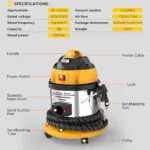
| Product name | HTS558 | HTS559 | HTS518 | HTS678 | HTS728 |
|---|---|---|---|---|---|
| Cleaning Method & Fit | |||||
| Working Principle | Walnut Shell Blasting | Walnut Shell Blasting | Walnut Shell Blasting | Walnut Shell Blasting | Walnut Shell Blasting |
| Walnut Shell Abrasive Size | 0.6 ~ 1.2mm | 0.6 ~ 1.2mm | 0.6 ~ 1.2mm | 0.6 ~ 1.2mm | 0.4 ~0.6mm |
| Engine Combustion Chamber Cleaning | × | × | × | × | ✓ |
| Power & Air Requirements | |||||
| Input Voltage | Regional 110 V or 220 V version; confirm nameplate. | Regional 110 V or 220 V version; confirm nameplate. | Regional 110 V or 220 V version; confirm nameplate. | Regional 110 V or 220 V version; confirm nameplate. | Regional 110 V or 220 V version; confirm nameplate. |
| Rated Frequency | 50/60HZ | 50/60HZ | 50/60HZ | 50/60HZ | 50/60HZ |
| Rated Power | 1200W | 1400W | 1400W | 1500W | 1400W |
| Vacuum Suction | 0.02MPa | 0.02MPa | 0.02MPa | 0.02MPa | Not stated |
| External Air Supply | Not stated | Not stated | Not stated | Not stated | >0.7 MPa |
| Airflow | <300L/min (<0.3 m³/min) | <300L/min (<0.3 m³/min) | <300L/min (<0.3 m³/min) | <300L/min (<0.3 m³/min) | >400L/min (>0.4m³/min) |
| External Air Compressor | Required (not included) | ✓ | ✓ | ✓ | ✓ |
| Capacity, Configuration & Mobility | |||||
| Main Unit Capacity | 13L | 30L | 30L | 10L | 10L |
| Product Weight | 10kg | 12kg | 23.5kg | 52kg | 50kg |
| Configured Connectors | 5 Types | 5 Types | 23 Types | 23 Types | 5 Types |
| Storage Box | × | × | ✓ | ✓ | × |
| 360° Swivel Caster | ✓ | ✓ | ✓ | ✓ | ✓ |
| Three – Section Telescoping Handle Design | × | × | ✓ | ✓ | × |
| Controls & Filtration | |||||
| Pressure Gauge | × | × | × | ✓ | ✓ |
| Pressure Settings | × | × | × | Pressure Regulation Knob | Pressure Regulation Knob |
| Mode Switch | × | × | High/Low Mode Low – Speed Mode | Standard Mode Expert Mode | Recovery Mode Filling Mode |
| Built – in Dust Filter | ✓ | ✓ | ✓ | ✓ | ✓ |
| HEPA Filter (High Efficiency Particulate Air Filter) | × | × | × | ✓ | ✓ |
Manual & Downloads
HTS558 Manual & Setup Help
AUTOOL HTS558 User Manual
Open the PDF manual for HTS558 walnut blasting, intake-adapter fit, media recovery, external-air setup, cleaning preparation, operating safety, maintenance, and troubleshooting.
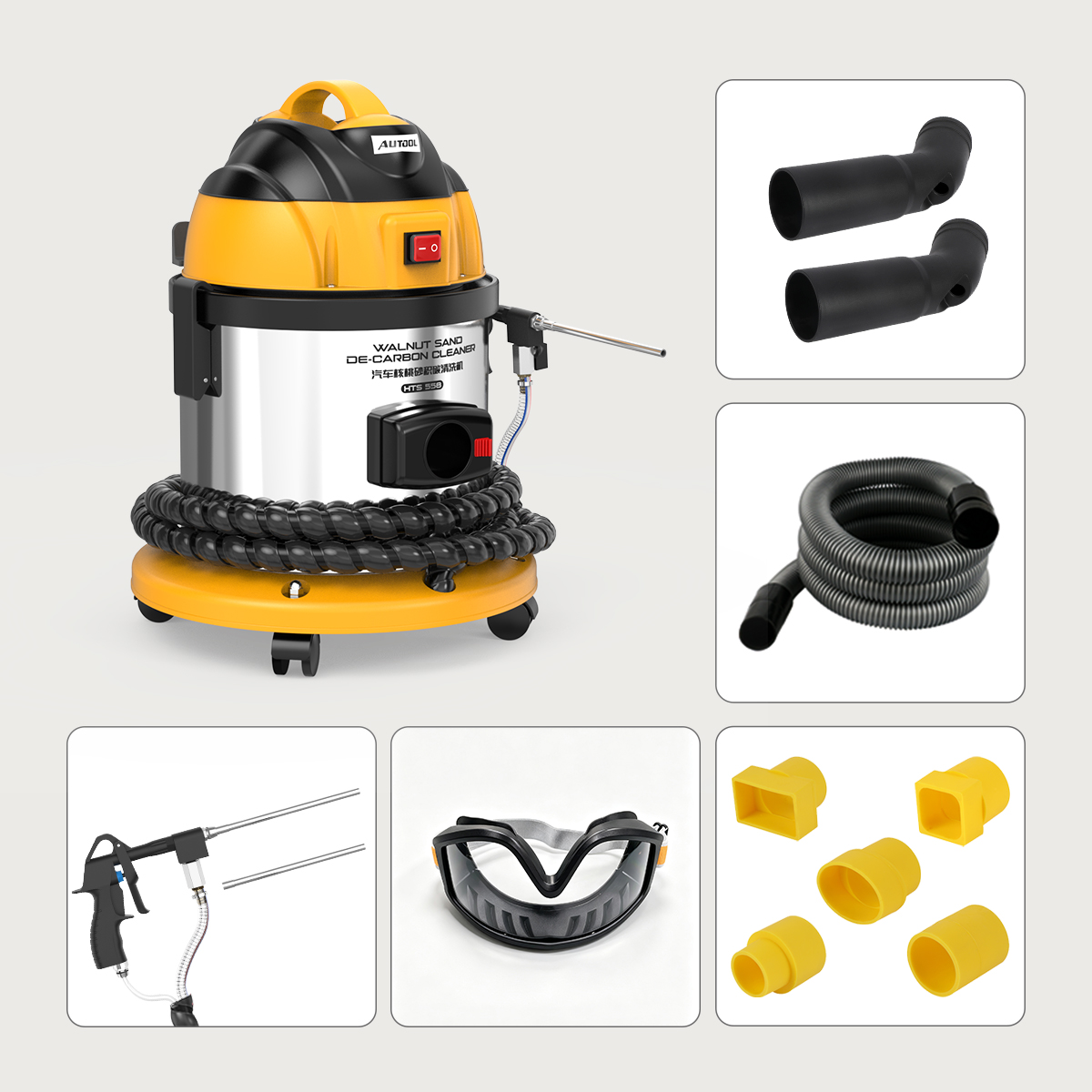
Package
What’s Included
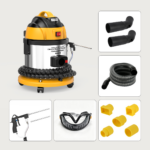
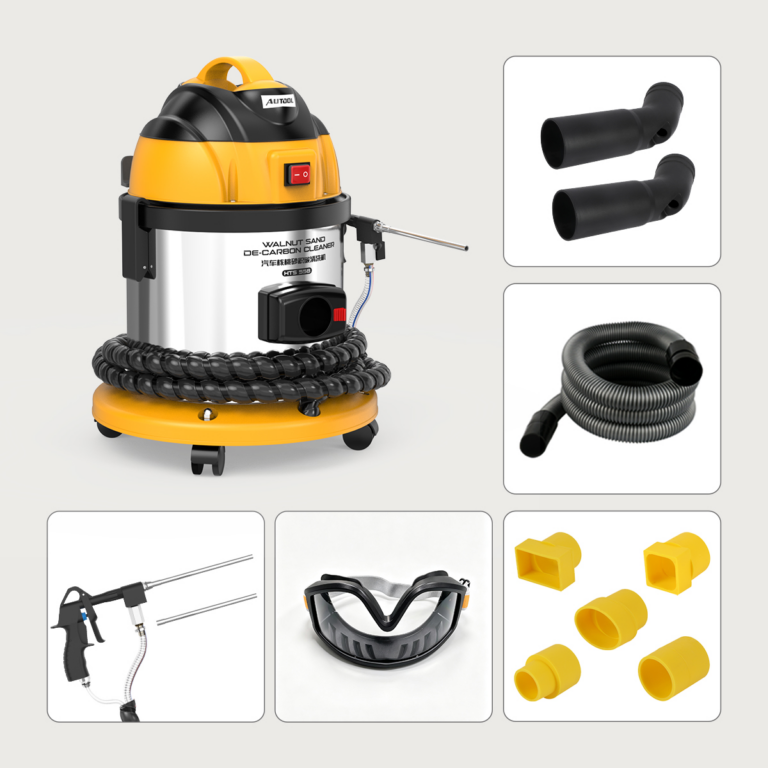
- HTS558 Main UnitCompact walnut blaster with recovery and filtration.
- Blasting and Recovery PartsSpray gun/nozzle rods and recovery hose.
- AdaptersFive yellow intake adapters and black rubber adapters.
- Safety GogglesIncluded.
- Not IncludedWalnut abrasive and external high-pressure air compressor.
FAQs
Walnut Blaster Setup Questions
What areas can HTS558 clean?
Supported intake pipes, intake-manifold areas and the backs of intake valves; it is not specified for injectors, throttle valves, cylinders or combustion chambers.
What Is Walnut Sand?
Walnut abrasive, often called walnut sand, is crushed and screened walnut shell. Use dry, compatible 0.6–1.2 mm media with HTS558; follow its Safety Data Sheet and use appropriate PPE because the media can create dust and present allergen concerns.
Is an air compressor included?
No. A suitable dry, filtered external compressor is required.
Are the five adapters universal?
No. Confirm the engine, port shape and seal.
Can recovered media always be reused?
No. Follow the exact vehicle procedure and use only media that remains dry and uncontaminated.
Does visible cleaning prove the fault is fixed?
No. Complete the vehicle diagnosis, reassembly, leak checks and functional verification.
How Does HTS558 Clean Intake-Valve Carbon?
HTS558 uses walnut blasting on supported intake-manifold and intake-valve surfaces to loosen carbon deposits, while integrated vacuum recovery collects spent media and residue. Follow the service procedure for the specific vehicle and confirm the target intake valve is closed before blasting.
What Walnut Shell Abrasive Size Should I Use?
Use 0.6–1.2 mm walnut-shell abrasive for HTS558.
Can Walnut Abrasive Be Reused?
Reuse walnut abrasive only when the service procedure for the specific vehicle permits it and the recovered media remains suitable for reuse.
Is Walnut Abrasive Included In The HTS558 Package?
No. Walnut abrasive and the external high-pressure air compressor are not included. Prepare compatible 0.6–1.2 mm media and an appropriate external compressor before cleaning.
What External Air Compressor Is Required?
Use an external compressor that meets the HTS558 pressure and continuous-airflow needs; 6 bar or more is generally recommended. Use dry, filtered air with sufficient continuous airflow, and make sure the air tank, hose, quick-connect fittings, and pressure settings suit the vehicle and workshop setup.
Can HTS558 Remove Carbon Buildup on Intake Valves?
HTS558 can remove carbon buildup from supported intake-valve and intake-port surfaces when inspection confirms deposits and the service procedure for the specific vehicle supports walnut blasting. Confirm access, adapter sealing, valve position, and residual-media recovery before completing the service.
How Does The HTS558 Walnut Blasting Machine Work?
After the target intake valve is closed, an external compressor drives walnut abrasive through the spray gun while HTS558 vacuum recovery collects media and carbon residue for filtration. Follow the vehicle-specific access, isolation, cleanup, and residual-check procedure.
How Much Walnut Abrasive Should I Add?
Add about 2–4 kg of compatible 0.6–1.2 mm walnut abrasive, seat the dust guard correctly, and close the cover securely before operation.
Can HTS558 Clean Injectors, Throttle Valves, Or Cylinders?
No. HTS558 is designed to clean the intake pipe, intake manifold, and the backs of the intake valves—not injectors, throttle valves, cylinders, or combustion chambers.
Is Walnut Blasting Safe For Engines?
Walnut blasting can be used for intake and valve carbon cleaning when the correct vehicle-specific procedure, media, adapter, valve-closure, isolation, dust-control, protective-equipment, and residual-recovery steps are followed.
What Are The Main Risks During Walnut Blasting?
Key risks include incorrect valve position, poor adapter sealing, inadequate recovery, residual media, wet or clumped abrasive, dust or allergen exposure, and incorrect reassembly. Use dry, filtered air and appropriate PPE, confirm adapter fit, perform a final vacuum and borescope inspection, and follow the service procedure for the specific vehicle.
How Often Should I Use A Walnut Blaster For Intake Cleaning?
There is no universal fixed mileage interval. Determine cleaning timing from inspection, diagnosis, vehicle condition, and the service guidance for the specific vehicle; clean only when deposits are confirmed and the service procedure supports mechanical cleaning.
Where Can I Compare HTS558, HTS559, HTS518, HTS678, And HTS728?
Use the AUTOOL Walnut Blaster Model Comparison table above to compare rated power, capacity, adapters, filters, modes, pressure controls, and combustion-chamber capability across HTS558, HTS559, HTS518, HTS678, and HTS728.
Are Replacement Parts And Walnut Media Available?
Replacement parts and walnut blasting media are available from AUTOOL. Use parts and media that match the HTS558 specifications, and check regional availability before purchase.
Christian M. –
Strahlgerät HS558
Funktioniert super, eine gebogene Lanze wäre noch optimal.
Caleb ✓ Verified Purchase –
The AUTOOL HTS558 works great for intake manifold and valve cleaning.
The AUTOOL HTS558 works great for intake manifold and valve cleaning. It removes carbon buildup effectively without harming the engine. The 5 adapters cover most models, the external air source delivers strong cleaning power, and the built-in filter allows walnut sand reuse. The 360° casters make it mobile and easy to operate. Really practical tool for the garage!
Dawn Surrey ✓ Verified Purchase –
Alles Top.
Alles Top. Danke für die Schnelle Lieferung. Top. Unten kann man vorher und nachher sehen.