Nicht kategorisiert
Druck bei der Einspritzdüsenreinigungsmaschine: Weniger ist mehr

9. August 2025
Aktie:
 autoolstore.com
Kraftstoffeinspritzdüsen spielen eine entscheidende Rolle für die Leistung eines Autos. Ein Saugmotor arbeitet mit einem Einspritzdruck von etwa 2,5–3,5 bar, während GDI-Systeme 120–200 bar oder mehr erreichen können.
Die meisten Einspritzdüsenreinigungsgeräte arbeiten jedoch mit deutlich niedrigeren Drücken, oft beginnend bei etwa 8 bar. Auf den ersten Blick mag dies zu niedrig erscheinen, insbesondere wenn man annimmt, dass die Angleichung an den tatsächlichen Motordruck immer eine bessere Reinigung bedeutet.
In der Praxis bedeutet höherer Druck nicht zwangsläufig eine bessere Reinigungsleistung. Die Reinigung von Kraftstoffeinspritzdüsen hängt vom richtigen Druck, der korrekten Impulssimulation, der chemischen Auflösung, dem Spülen mit Flüssigkeit und der sicheren Handhabung der empfindlichen Düsenkomponenten ab.
Funktionsprinzipien und Reinigungsanforderungen von Kraftstoffeinspritzdüsen
Kraftstoffeinspritzdüsen werden oft als die Präzisionszünder des Kraftstoffsystems eines Motors bezeichnet. Sie fördern den Kraftstoff in präzisen Zeitabständen und Mengen in den Brennraum oder Ansaugkanal. Im Inneren der Einspritzdüse befinden sich ein Magnetventil, ein Nadelventil und winzige Sprühdüsen, deren Druck, Sprühwinkel und Tropfengröße sorgfältig gesteuert werden müssen.
Der Betriebsdruck der MPI liegt typischerweise zwischen 2,5 und 3,5 bar bzw. etwa 36–50 psi. Der Kraftstoff wird im Ansaugkrümmer zerstäubt, wo er sich mit Luft vermischt, bevor er in den Zylinder gelangt.
Der Betriebsdruck von GDI-Systemen kann 50–200+ bar erreichen, während einige Diesel-Direkteinspritzsysteme sogar über 2.000 bar arbeiten. Bei diesen Systemen wird der Kraftstoff direkt in den Brennraum eingespritzt, weshalb die Einspritzdüsen extremen Drücken und Temperaturen standhalten müssen.
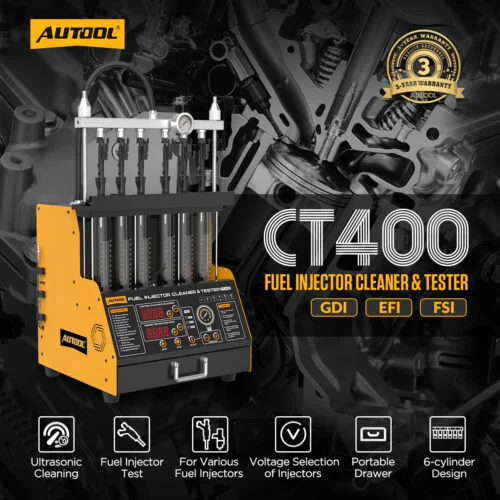
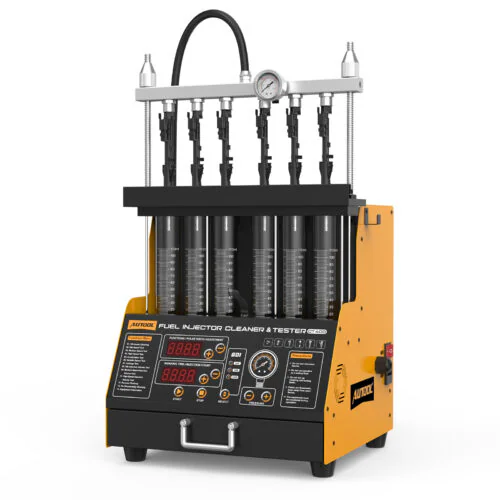
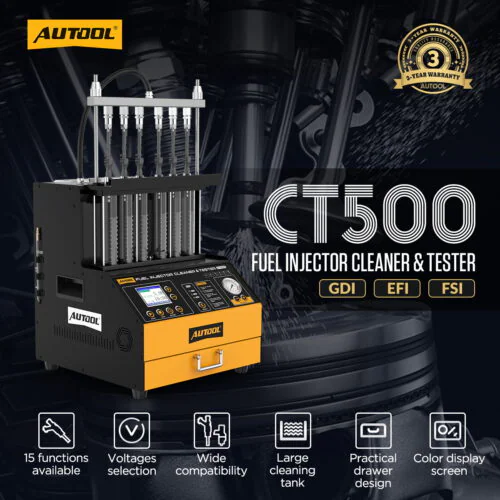
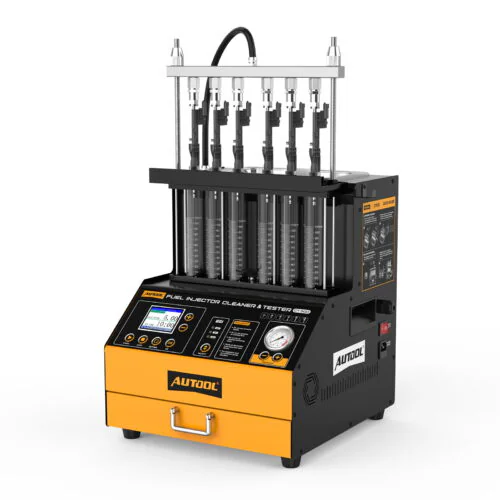
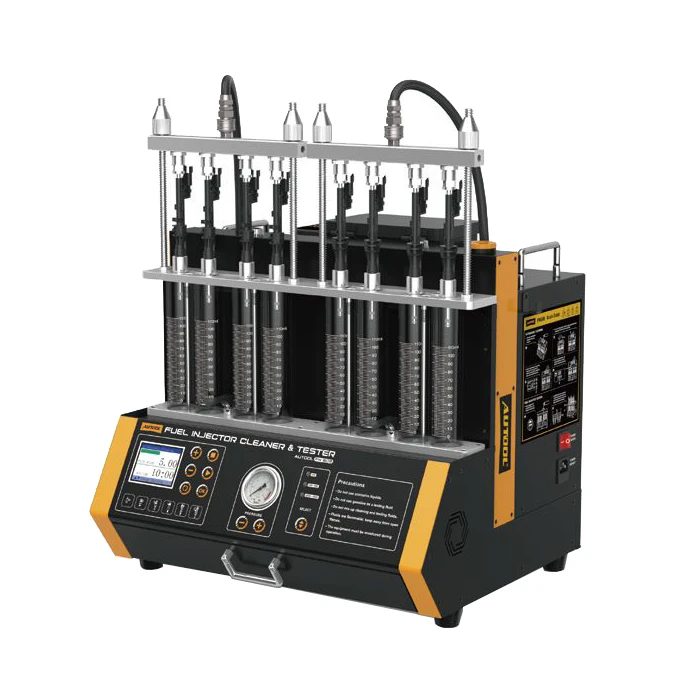
Die Hauptaufgabe einer Einspritzdüsenreinigungsmaschine unterscheidet sich von der eigentlichen Funktion der Einspritzdüse im Motor. Die Maschine bewirkt, dass die Einspritzdüse Reinigungsflüssigkeit so versprüht, wie es im realen Betrieb der Fall ist, während sich die Einspritzdüse außerhalb des Motors befindet. Dadurch werden Ablagerungen wie Kohlenstoffablagerungen, Lack und verharzte Kraftstoffrückstände aus den Spritzlöchern und internen Kanälen gespült.
Hierfür ist es nicht notwendig, den vollen Betriebsdruck des Motors einzustellen. Die Reinigung erfolgt durch chemische Auflösung und FlüssigkeitsspülungNicht rohe Gewalt. Die meisten Reinigungsmaschinen verwenden ein elektronisches Steuermodul, um Einspritzimpulse zu simulieren, während eine Kraftstoff- oder Flüssigkeitspumpe Reinigungsflüssigkeit mit einem festgelegten Druck fördert.
Warum ein niedrigerer Druck tatsächlich sinnvoller ist
Im Inneren einer Einspritzdüse befinden sich Gummidichtungen, Feinfilter und Nadelventilfedern. Ein Betrieb über dem Auslegungsdruck kann zu Verformungen, Rissen oder vorzeitigem Verschleiß führen.
Eine Reinigungsmaschine, die für einen Arbeitsdruck von 200 bar ausgelegt ist, würde stärkere Bauteile und höhere Herstellungskosten erfordern, was sie für Werkstätten und Verbraucher weniger erschwinglich machen würde.
Die Hochdruckreinigung birgt Risiken wie Rückspritzen von Flüssigkeit und Schlauchplatzen. Niederdrucksysteme sind sicherer in der Anwendung und benutzerfreundlicher, insbesondere für Laien.
Bei MPI-Einspritzdüsen reichen etwa 3 bar aus, um den Kraftstoffdruck im Motor zu simulieren und die Anforderungen an die Prüfung von Spritzbild und Durchflussrate zu erfüllen.
Bei niedrigeren Drücken sind die Sprühpartikel stabiler und bleiben länger mit der Düse und den Innenflächen in Kontakt, was die chemische Auflösung fördert. Bei höheren Drücken kann die zerstäubte Flüssigkeit schnell verdunsten und die Reinigungseffizienz verringern.
Mögliche Nachteile der Verwendung eines zu niedrigen Drucks
Niedrigerer Druck bietet wichtige Vorteile, aber zu niedriger Druck kann Probleme bei der Reinigung und Prüfung der Einspritzdüsen verursachen.
Praktische Tipps und Bedienungsanleitungen
Für Standard-Kraftstoffeinspritzsysteme werden 2,5–3 bar empfohlen. Bei GDI-Systemen stellt ein Druck von 8 bar einen praktikablen Kompromiss dar, da er hoch genug ist, um den Öffnungsdruck der Einspritzdüse (typischerweise 4–6 bar) zu überwinden und gleichzeitig die Risiken eines zu hohen Einspritzdrucks zu vermeiden.
Bei hartnäckigen Verstopfungen zunächst Ultraschallvibrationen anwenden, um Kohlenstoffablagerungen zu lösen, und anschließend mit einem Sprühspülverfahren nachspülen.
Normalerweise reichen 10–15 Minuten aus. Längere Einwirkzeit kann dazu führen, dass die Dichtungen zu lange eingeweicht werden und die Alterung beschleunigt wird.
Vermeiden Sie stark korrosive oder nicht kraftstoffbasierte Lösungsmittel, da diese die Metallteile und Dichtungen der Einspritzdüsen beschädigen können.
Bei den meisten Kraftstoffeinspritzdüsen reicht ein niedriger Druck von etwa 3 bar aus, um eine effektive Reinigung zu erreichen und gleichzeitig die Motorbetriebsbedingungen sicher zu simulieren.
Höherer Druck führt nicht zwangsläufig zu besseren Ergebnissen. In manchen Fällen kann er sogar zu Bauteilschäden, Sicherheitsrisiken und Verschwendung von Reinigungsflüssigkeit führen. Entscheidend ist vielmehr, den richtigen Druck anzuwenden, die korrekten Reinigungsverfahren einzuhalten und die Maschine mit der passenden Reinigungsflüssigkeit auszustatten, anstatt blindlings höheren Druckwerten hinterherzujagen.
Ähnliche Produkte
Die Darstellung erfolgt über den WooCommerce-Produkt-Shortcode, sodass die Karten die gleiche Produktkartenstruktur wie das Referenz-Beitragslayout übernehmen.