Tippek és oktatóanyagok
Hogyan válasszuk ki a megfelelő olajelszívót a garázsunkba (30L–100L-es útmutató)

március 12, 2026
Részesedés:
 autoolstore.com
AUTOOL Olajszerviz útmutató
Az olajcsere az egyik leggyakoribb karbantartási feladat az autójavításban. A pneumatikus olajleszívó segít csökkenteni a várakozási időt, javítani a javítás hatékonyságát és szervezettebbé tenni a fáradt olaj begyűjtését.
Javítóműhelyek esetében az olajleszívó megfelelő kapacitása a munkaterheléstől, a jármű típusától és a napi szervizmennyiségtől függ. Ez az útmutató elmagyarázza, hogyan működnek a pneumatikus olajleszívók, hogyan viszonyulnak a hagyományos gravitációs vízelvezetéshez, és hogyan választhatunk a 30 literes és 100 literes kapacitású opciók közül.
A pneumatikus olajlehúzó egy gyakori autójavító berendezés, amelyet elsősorban a hulladék motorolaj gyors kinyerésére és tárolótartályba gyűjtésére használnak.
A hagyományos olajleeresztő csavaron keresztüli leeresztési módszerrel ellentétben a pneumatikus olajleszívó sűrített levegőt használ negatív nyomás létrehozására, közvetlenül a motor belsejéből szívva ki az olajat. Ez csökkenti a várakozási időt, és tisztábbá és hatékonyabbá teszi az olajcsere folyamatát.
A modern autójavító műhelyekben a vákuumos olajkiszívó berendezések az olajcsere egyik leggyakoribb eszközévé váltak.
Hasznos a rendszeres olajcsere és az általános műhelykarbantartás során.
Segít lerövidíteni a szervizidőt, amikor naponta sok járművet kezelnek.
Támogatja az ismételt olajcsere-szolgáltatást hasonló járműcsoportok között.
A nagyobb kapacitású egységek nagyobb szervizterhelést is elbírnak.
Hasznos, ha az olajgyűjtés és a tiszta munkakörülmények fontosak.
A hagyományos olajcserék során jellemzően meg kell várni, amíg az olaj természetes módon lefolyik. A szokásos eljárás a leeresztő csavar kicsavarása, az olaj lefolyásának megvárása, majd az olaj megszáradása. A motor hőmérsékletétől és az olaj állapotától függően ez 15-30 percig is eltarthat.
A vákuumos olajkitermelő gépek negatív nyomást használnak az olaj felszívására, jelentősen csökkentve a várakozási időt. A nagy forgalmú javítóműhelyek számára akár néhány percnyi megtakarítás járművenként lehetővé teszi, hogy naponta több járművet dolgozzanak fel, és javítsák az általános munkahatékonyságot.
Az olajkitermelő gépek csökkentik az olajcseppenést is, tisztább javítási környezetet teremtve.
A pneumatikus olajszivattyú elve egyszerű. A berendezés sűrített levegővel negatív nyomást hoz létre a mérőpohárban és az olajtartályban. Ez a negatív nyomás a szívócsövön keresztül a motor belsejéből a berendezésbe szívja a fáradt motorolajat.
A kivont olajat az olajtartályban gyűjtik össze, majd egy leeresztő berendezésen keresztül egy hulladékolaj-gyűjtő tartályba ürítik.
A vákuumos elszívás csökkentheti a várakozási időt a gravitációs elszíváshoz képest.
A zártabb elszívási folyamat csökkenti a csöpögést és segít tisztábban tartani a kiszolgáló területet.
A tárolótartály lehetővé teszi a hulladékolaj könnyebb összegyűjtését és szállítását.
A szerelők kevesebb megszakítással elvégezhetik a szokásos olajozási munkálatokat.
Az autójavításban a vákuumszivattyúzás és a gravitációs leeresztés két gyakori olajcsere-módszer. Az időeltolódás fontossá válik, ha egy műhely naponta sok járművet kezel.
| Módszer | Kb. 5 liter olaj kinyerésének ideje | Munkafolyamat-jegyzetek |
|---|---|---|
| Gravitációs lefolyó | 15-30 perc | Leeresztőcsavar eltávolítását és természetes leeresztési időt igényel. |
| Vákuum extrakció | Kb. 3-5 perc | Nem kell eltávolítani a leeresztő csavart, csökkentett olajcseppenéssel és központosított fáradtolaj-gyűjtéssel. |
A nagy munkaterhelésű javítóműhelyek számára ezek az előnyök jelentősen javíthatják a munkafolyamatot és a javítási hatékonyságot.
A pneumatikus olajleszívók általában 30 literes, 55 literes, 70 literes, 80 literes és 100 literes kapacitásban kaphatók. A megfelelő választás főként a műhely munkaterhelésétől függ.
| Alkalmazási forgatókönyv | Ajánlott kapacitás | Miért illik? |
|---|---|---|
| Otthoni vagy barkácsoláshoz szükséges karbantartás | 30L | Alkalmas személyes garázsokhoz és alkalmi karbantartáshoz. |
| Kis javítóműhely | 55L | Kiegyensúlyozza a kapacitást és az alapterületet az alacsonyabb napi mennyiség érdekében. |
| Általános Autószerviz Műhely | 70L | Praktikus középső tartomány rendszeres műhelyi használatra. |
| Forgalmas javítóműhely | 80L | Jobb gyakori olajcserékhez és nagyobb járműáteresztő képességhez. |
| Teherautó vagy nehézgép szerviz | 100L | A nagyobb kapacitás nagyobb olajmennyiséget és nehezebb karbantartási munkákat tesz lehetővé. |
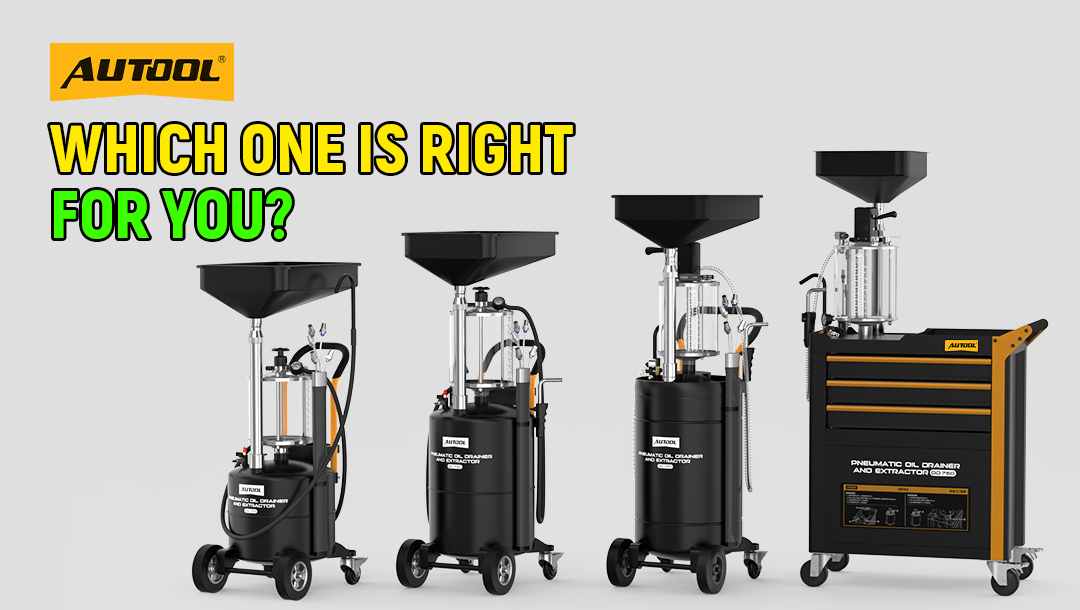
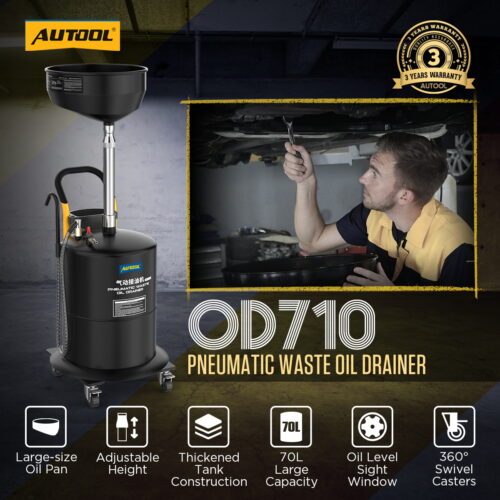
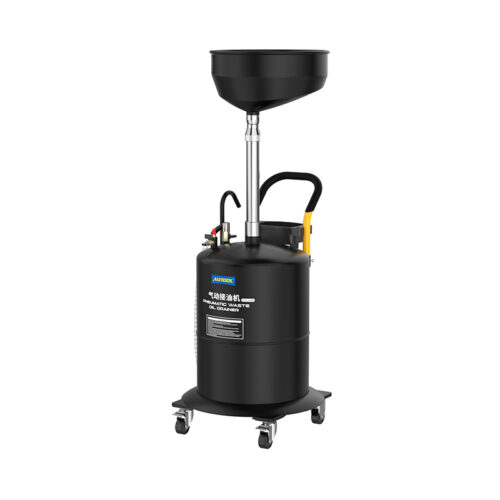
AUTOOL különböző méretű műhelyek számára kínál pneumatikus olajleeresztőket és -kivonókat többféle kapacitásban.
| Modell | Kapacitás |
|---|---|
| 00710 | 30L |
| 00720 | 55L |
| 00750 | 56L |
| 00760 | 57-58L |
| 70L-es modell | 70L |
| 80L-es modell | 80L |
| 100 literes modell | 100L |
Segít a technikusoknak megfigyelni a kinyert olaj mennyiségét és állapotát.
Támogatja a központosított gyűjtést műhelyi használatra.
Megkönnyíti a kezelést különböző járművek körül.
Javítja a kompatibilitást a különböző szolgáltatási helyzetekkel.
Könnyítse meg a mozgást a műhelyben.
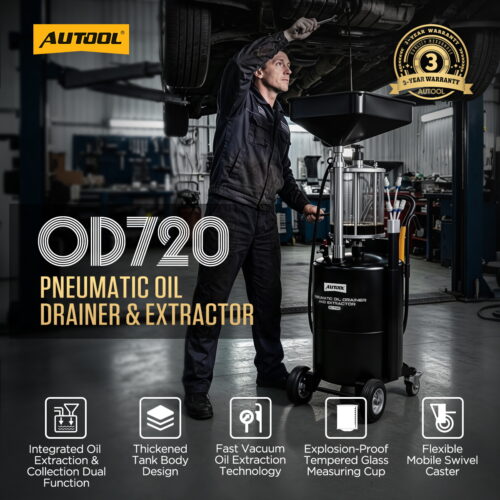
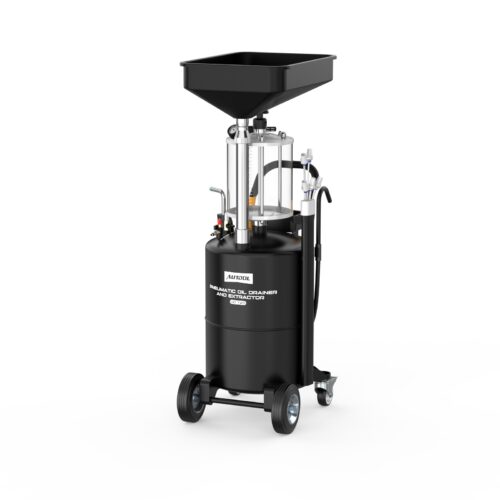
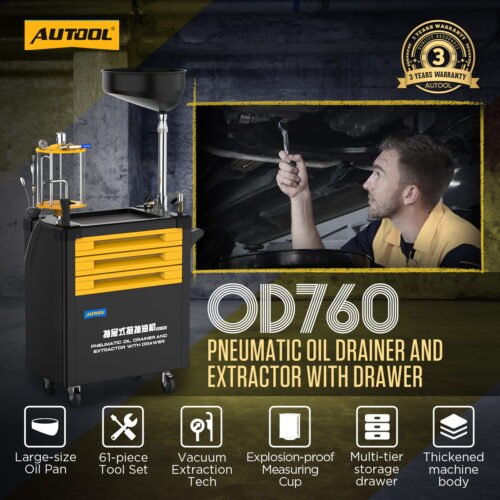
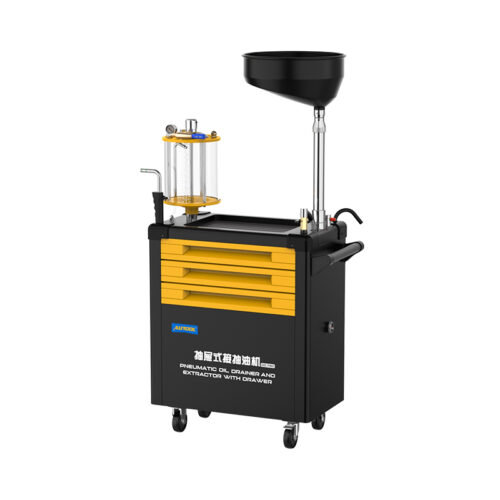
Javítóműhelyek számára az olajleszívó berendezés nemcsak a sebességről szól, hanem az általános munkafolyamatot is javítja.
Csökkenti az olaj száradási várakozási idejét, és segíti a technikusokat a gyorsabb szervizelésben.
Az extrakciós folyamat zártabb, minimalizálva a kiömléseket.
A tárolótartály lehetővé teszi a hulladékolaj központosított gyűjtését.
Különösen alkalmas gyors szervizközpontok és forgalmas javítóműhelyek számára.
A legtöbb benzin- és dízelüzemű járműben olajcsere esetén használható olajleeresztő, de ez a motor felépítésétől függ. Egyes járműveknél továbbra is ajánlott az olajat a leeresztő csavaron keresztül leereszteni.
Igen. A pneumatikus olajleszívókat légkompresszorhoz kell csatlakoztatni, és jellemzően 6-8 bar légnyomást igényelnek.
Általában 40-80°C közötti olajhőmérséklet ajánlott, mivel ez javítja az olaj folyékonyságát és az extrakció hatékonyságát.
A kisebb kapacitású modellek, például a 30 literesek, személyes garázsokhoz vagy barkácsoláshoz is alkalmasak.
Pneumatikus olajlehúzó használatával a műhelyek csökkenthetik a várakozási időt, javíthatják a javítás hatékonyságát, és szervezettebbé tehetik a fáradtolaj gyűjtését. A javítóműhelyek számára ez egy olyan berendezés, amely jelentősen növelheti a munkafolyamatok hatékonyságát.
A AUTOOL Az olajleeresztő és -kivonó sorozat többféle kapacitási lehetőséget kínál 30 litertől 100 literig, így különböző méretű műhelyek számára alkalmas.
Forduljon az AUTOOL csapatához termékinformációért és a megfelelő kapacitás kiválasztásához szükséges segítségért. Az AUTOOL termékeiről az autoolstore.com oldalon is tájékozódhat.
Kapcsolódó termékek