Sin categoría
¿Cómo elegir un manómetro diferencial digital?

septiembre 1, 2025
Compartir:
 autoolstore.com
La medición precisa de la presión diferencial es un componente crítico en el control de procesos industriales, calefacción, ventilación y aire acondicionado (HVAC), investigación de laboratorio, equipos médicos y muchas otras áreas. Los manómetros digitales de presión diferencial están sustituyendo gradualmente a los manómetros mecánicos tradicionales de presión diferencial porque ofrecen alta precisión, fácil lectura y funciones inteligentes.
Sin embargo, con la amplia gama de productos disponibles en el mercado, elegir el manómetro diferencial digital adecuado para su aplicación requiere más que solo fijarse en la pantalla o el precio. Esta guía organiza los pasos y consideraciones clave para la selección, de modo que pueda tomar una decisión informada.
Comprender los parámetros clave
Antes de seleccionar un manómetro, conviene comprender algunos términos básicos. Estos parámetros determinan si el instrumento puede medir con precisión y seguridad en la aplicación prevista.
La presión diferencial es la diferencia de presión entre dos puertos de presión: el extremo de alta presión y el extremo de baja presión. Es el parámetro principal que mide el manómetro de presión diferencial.
El rango es la diferencia máxima de presión que el manómetro puede medir, como 0-500 Pa o 0-100 kPa. No permita que la presión real de trabajo supere el 150% del rango, ya que podría producirse un daño permanente en el sensor.
La precisión indica la desviación entre el valor medido y el valor real. Normalmente se expresa como porcentaje de la escala completa, como +/-0.5% FS. Una mayor precisión suele aumentar el coste del producto.
La resolución es el cambio de presión más pequeño que puede mostrarse en la pantalla. Los instrumentos digitales suelen ofrecer alta resolución para facilitar la lectura de pequeños cambios.
Defina los requisitos de su aplicación
El manómetro digital de presión diferencial adecuado depende de lo que se mida, de la magnitud de la diferencia de presión esperada, de la precisión necesaria y de las condiciones ambientales que el instrumento deba soportar.
Confirme si el medio es gas o líquido, ya que esto afecta directamente a la compatibilidad del material del sensor. Si el medio es corrosivo, como gases, vapores o líquidos corrosivos, pueden ser necesarios materiales resistentes a la corrosión, como acero inoxidable 316L o Hastelloy, para las conexiones de presión y los diafragmas.
Si el medio contiene polvo, aceite o partículas, considere una membrana de aislamiento o un filtro para proteger el sensor.
Calcule la presión diferencial máxima que necesita medir. Una regla práctica es seleccionar un manómetro con un rango aproximadamente 1.5 veces superior al valor máximo esperado. Por ejemplo, si la presión diferencial máxima es de 200 Pa, puede ser adecuado un rango de 0-300 Pa o 0-500 Pa.
Esto ayuda a mantener la precisión de la medición y ofrece cierta protección contra sobrepresión frente a daños accidentales por impacto en el sensor.
La calibración de laboratorio o el control de procesos de precisión pueden requerir un instrumento de alta precisión de +/-0.1% FS. Para la supervisión general de la presión de filtros o de sistemas de ventilación, +/-1% FS o +/-2% FS puede ser suficiente.
No es necesario pagar más por una precisión excesiva si la aplicación no la requiere.
Compruebe el rango de temperatura de funcionamiento. Las temperaturas extremadamente altas o bajas pueden afectar a la electrónica y a la vida útil de la batería. Si hay gases inflamables o explosivos, como en entornos petroleros o químicos, seleccione un modelo con certificación antiexplosiva, como ATEX o IECEx.
Si el entorno tiene polvo o humedad, preste atención al nivel de protección IP. Por ejemplo, IP65 indica protección contra el polvo y el agua para un funcionamiento más fiable.
Céntrese en las funciones y características clave
Compruebe si la pantalla es clara, fácil de leer y retroiluminada para entornos con poca luz. Confirme también si el manómetro admite varias unidades de presión, como Pa, kPa, bar, psi, mmH2O e inH2O, y si esas unidades pueden cambiarse libremente.
Si el manómetro necesita conectarse a un PLC, DCS o sistema de adquisición de datos, compruebe si admite salida analógica como 4-20mA o 0-10V. Si se necesita supervisión remota o registro de datos, busque interfaces digitales como RS485, Modbus, USB o Bluetooth.
Los modelos alimentados por batería son portátiles y adecuados para pruebas in situ y mediciones temporales, pero debe tenerse en cuenta la duración de la batería. Los modelos alimentados por DC o AC son más adecuados para instalación fija y supervisión continua a largo plazo.
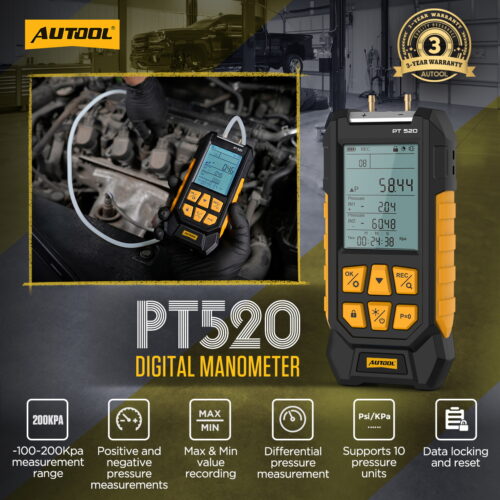
La puesta a cero o tara es útil para ignorar la presión estática y medir solo la presión diferencial. El registro de valores máximos y mínimos ayuda a analizar los valores pico durante la medición. Los modelos avanzados pueden incluir registro de datos, memoria integrada y exportación mediante software.
Confirme si el tamaño y el tipo de conexión de presión, como conectores rápidos o racores roscados, son compatibles con su tubería. Considere también si el instrumento debe montarse en pared, en panel o utilizarse como equipo portátil, y si el tamaño y el peso del cuerpo afectan a la portabilidad.
Recomendación de producto
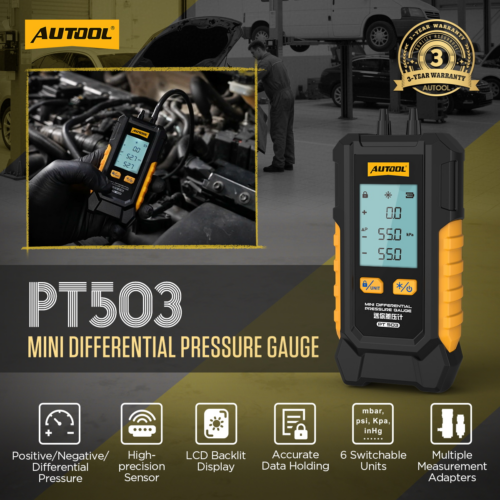
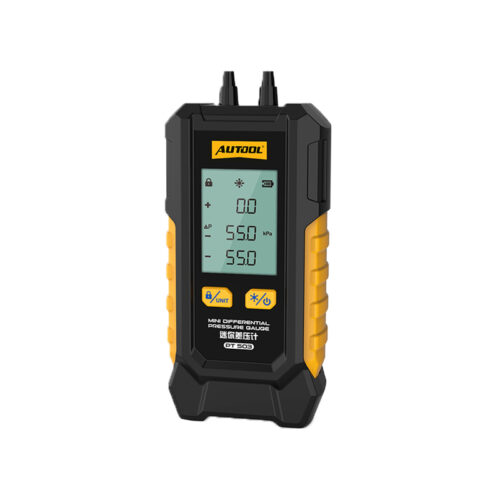
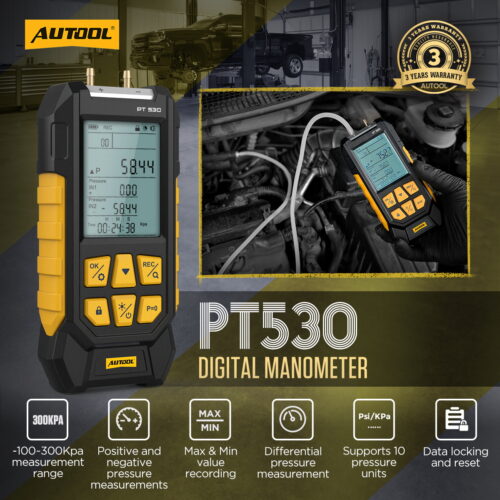
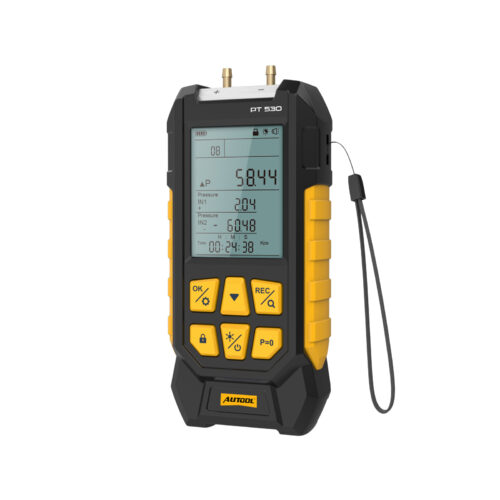
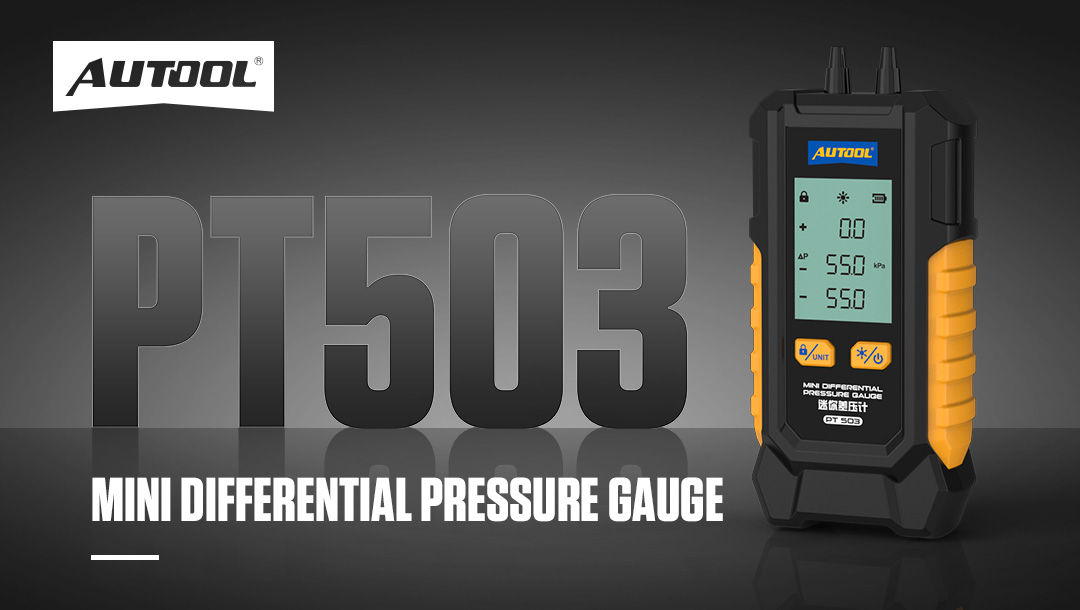
Sensor de presión de alta precisión: El tiempo de respuesta rápido, con una precisión de hasta +/-0.5% FS, ayuda a captar con precisión cambios sutiles de presión. El rango de medición es -101Kpa a 200Kpa, la precisión de medición es +/-0.5% FS, y la resolución de medición es 0.1Kpa.
Pantalla LCD retroiluminada: La pantalla facilita la lectura de presión positiva, presión negativa y presión diferencial, incluso en entornos con mucha o poca luz.
Función de bloqueo de datos: El bloqueo con un solo botón mantiene la lectura estable y ayuda a evitar que toques accidentales o interferencias ambientales afecten los datos mostrados.
Cambio entre 6 unidades: El instrumento permite cambiar fácilmente entre psi, inHg, Kpa, mbar, bar y mmHg, reduciendo la necesidad de conversión manual.
Diseño portátil: Su diseño mini y compacto facilita el uso y es adecuado para pruebas in situ y uso móvil.
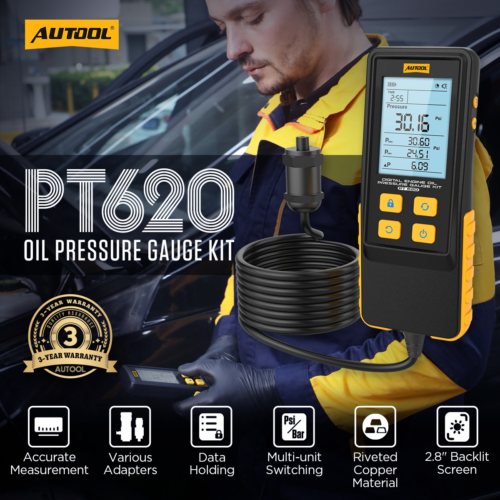
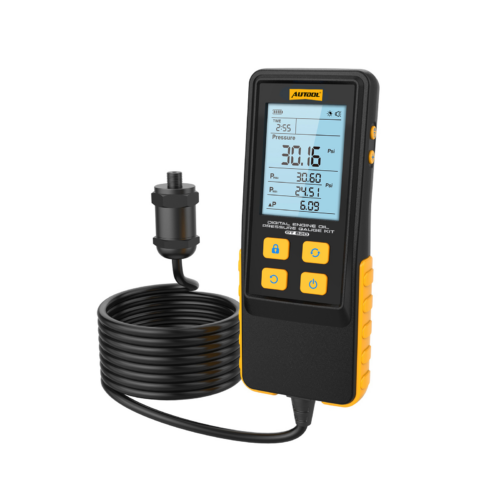
Aplicaciones versátiles: Equipado con varios conectores de medición, puede cubrir pruebas de presión en sistemas clave como admisión, frenos, escape y cigüeñal, satisfaciendo las necesidades de reparación y diagnóstico automotriz.
Para más detalles del producto y descuentos, contáctenos:
WhatsApp: +86 18926477404
Email: [email protected]
Productos relacionados
Renderizado mediante el shortcode de producto de WooCommerce para que las tarjetas hereden la estructura global de product-card y los estilos de Blocksy/WooCommerce.