Tips och handledningar
Förstå funktionerna och försiktighetsåtgärderna för frostskyddsmedel

juli 29, 2021
Dela:
 autoolstore.com
Det fullständiga namnet på frostskyddsmedel är antifreeze coolant, vilket betyder kylvätska med frostskyddsfunktion. Det förhindrar att kylvätskan fryser och spricker i kylaren, och det hjälper också till att förhindra frysskador på motorns cylinderblock eller lock under kall vinterparkering.
Många tror att frostskyddsmedel bara används på vintern, men frostskyddsmedel bör användas året runt. Det bidrar till frysskydd, kokskydd, korrosionsskydd, kalkkontroll och normal motortemperaturhantering.
Kemisk sammansättning och typer
Mer än 95 % av vattenbaserade frostskyddsmedel i hemlandet och utomlands använder etylenglykol. Jämfört med kranvatten är etylenglykols viktigaste egenskap frostskyddsförmåga, medan vatten inte kan förhindra frysning.
Etylenglykol har också hög kokpunkt, låg flyktighet, måttlig viskositet, liten temperaturförändring och god termisk stabilitet. Av dessa skäl är glykolliknande frostskyddsmedel ett idealiskt kylmedel.
Det finns många typer av frostskyddsmedel. Exempel inkluderar kalciumklorid (CaCl2) i oorganiska ämnen, metanol (CH3OH), etanol (C2H5OH, allmänt känd som alkohol), etylenglykol (C2H4(OH)2, allmänt känd som söt alkohol), propantriol (C3H5(OH)3, allmänt känt som glycerin), smörjolja, socker och honung.
Dessa ämnen är vanliga i vardagen och kan användas som modervätska i frostskyddsmedel. Efter tillsats av en lämplig mängd rent mjukt vatten, såsom destillerat vatten, oförorenat regnvatten eller snövatten, kan frostskyddsmedel i allmän bemärkelse bildas. Vattnet bör inte ha några eller endast en liten mängd kalcium- och magnesiumjoner, med en total hårdhetskoncentration mellan 0-30 ppm.
Eftersom metanol och etanol är mer flyktiga är de inte lämpliga att använda i fordon i norr.
Funktioner av frostskyddsmedel
Förutom frostskyddsmedel har frostskyddsmedel flera viktiga fördelar. Det ger korrosionsskydd för motor och kylsystem, hjälper till att förhindra rost, stöder kokskyddsprestanda och hjälper till att kontrollera kalkavlagringar.
Motorn och kylsystemet är tillverkade av metaller som koppar, järn, aluminium, stål och lödtenn. När dessa metaller kommer i kontakt med vatten vid höga temperaturer korroderar och rostar de med tiden. Frostskyddsmedel orsakar inte korrosion i motorns kylsystem och bidrar även till korrosionsförebyggande och rostborttagning.
Frostskyddsmedel kan användas i bilar, förbränningslokomotiv, traktorer, fartyg, motorer, vattentankar, mekanisk utrustning, dieselmotorer, bensinmotorer och andra kylsystem. Det har funktioner som frostskydd, kokskydd, korrosionsskydd och kalkskydd.
Kokpunkten för vatten är 100 ℃, medan kokpunkten för högkvalitativt frostskyddsmedel vanligtvis är över 110 ℃. Det betyder att frostskyddsmedel är svårare att koka upp på sommaren än vatten.
Förare som använder vatten som kylvätska stöter ofta på problem med kalkavlagringar. Kalkavlagringar fastnar på metallytan på vattentanken och vattenmanteln, vilket försämrar kyleffekten och blir svåra att ta bort. Högkvalitativt frostskyddsmedel tillverkas med destillerat vatten och kalkavlagringstillsatser, så det producerar inte kalk och kan även ha en avkalkningsfunktion.
Om vattentankens beläggning är mycket tjock är det bäst att använda en tankrengörare för att rengöra noggrant innan frostskyddsmedel tillsätts. Precis som vatten har frostskyddsmedel fördelarna med hög specifik värme, hög latent värme genom avdunstning och enkel påfyllning.
När omgivningstemperaturen är under noll kan vatten i kylsystemet förvandlas till is. Kylsystemets komponenter riskerar då att expandera och spricka. Frostskyddsmedel hjälper till att säkerställa att motorn fungerar normalt vid låga temperaturer.
Moderna bilmotorer arbetar vid högre temperaturer än äldre motorer. Den normala övre gränsen för arbetstemperaturen är generellt mer än 100 ℃. Till exempel är den normala arbetstemperaturen för en Shanghai Santana-motor 90 ℃-105 ℃, FAW Jetta är 85 ℃-115 ℃ och Fu Kang är 90 ℃-118 ℃.
Om bara vatten tillsätts kokar vattnet när motortemperaturen når 100°C. Vatten är också frätande och producerar beläggningar som påverkar kyleffekten. Därför behövs ett speciellt kylmedel, frostskyddsmedel.
Vissa tror att frostskyddsmedel bara är för fordon i kalla områden, men det är ett missförstånd. Huvudkomponenten i de flesta frostskyddsmedel på marknaden är etylenglykol, som har en hög kokpunkt och en låg fryspunkt. Frostskyddsmedel innehåller också tillsatser för att förhindra glykoloxidation, förhindra korrosion och förhindra skumbildning.
Motorfrostskyddsmedel måste ha egenskaper som frostskyddsmedel, kokskyddsmedel, korrosionsskydd, kalkavlagringar, skumskydd och stabil användning över årstider och regioner. Bland dessa egenskaper är fryspunkt och kokpunkt de grundläggande indikatorerna för frostskyddsmedel.
Val och korrekt användning
Kvaliteten på frostskyddsmedlet spelar roll. Om frostskyddsmedlet är av dålig kvalitet eller är förfalskat kan det inte spela rätt roll. Kylvätska framställs genom att blanda frostskyddsmedel med vatten i ett visst förhållande. Biltillverkare anger vanligtvis frostskyddsmedelsblandningsförhållanden för olika lågtemperaturkvaliteter i användarmanualen, och de anger också vilken typ av frostskyddsmedel som inte bör blandas.
Generellt sett, när förhållandet frostskyddsmedel till vatten är 40:60, är kylvätskans kokpunkt 106 ℃ och fryspunkten är -26 ℃. När förhållandet är 50:50, är kylvätskans kokpunkt 108 ℃ och fryspunkten är -38 ℃.
Det allmänna kravet är att kylvätskan ska förberedas enligt den lokala lägsta temperaturen med en marginal på cirka fem ℃. Frostskyddsvätskan har en effektiv användningstid på mer än två år. Om den går ut eller om kylvätskan är smutsig bör den bytas ut. När du byter ut gammal kylvätska, tillsätt rent vatten, starta motorn, låt den gå på tomgång i cirka tio minuter för att rengöra cirkulationen, stanna motorn och töm sedan ut det rena vattnet.
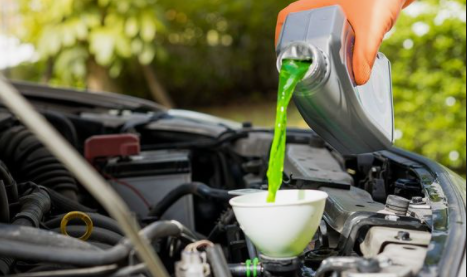
När du fyller på ny kylvätska, gör det medan maskinen är kall. Fyll på kylvätskan till den högsta markeringen på behållaren, märkt "MAXT", skruva sedan på locket, starta motorn, gå på tomgång tills normal motortemperatur uppnåtts och stäng av motorn. När karosseritemperaturen sjunker, kontrollera vätskenivån i behållaren och håll den i "MAXT"-läget. Om det inte räcker, fyll på tills det är tillräckligt.
Enligt undersökningen i den ursprungliga artikeln beror mer än 50 % av alla globala bilmotorhaverier på kylsystemet. Detta visar vikten av rimlig frostskyddsmedelsmatchning. De flesta frostskyddsmedel som säljs på marknaden använder etylenglykol som huvudråvara och tillsätter sedan rätt mängd organiska eller oorganiska salter för att förhindra korrosion och rost.
När vädret blir kallare är vattentanken benägen att frysa och spricka, så det är viktigt att välja frostskyddsmedel för bilens motors hälsa. Kylvätska med frostskyddsmedel har en frostskyddsfunktion på vintern och en kokhämmande funktion på sommaren. Den skyddar motorns kylsystem, förbättrar värmeavledningen och ökar motorns effektivitet.
Ju lägre fryspunkt, desto starkare är frostskyddsmedlets prestanda. Vanligtvis bör den valda fryspunkten vara mer än 10 ℃ under den lokala lägsta temperaturen för att förbereda sig för plötsliga väderförändringar. Till exempel har Great Wall Lubricant multieffekt-frostskyddsmedel ett fryspunktsområde från -25 ℃ till -50 ℃, vilket kan möta efterfrågan på fordonsfrostskyddsmedel i de flesta norra regionerna i Kina.
När man väljer specifikationer som -15℃, -25℃, -30℃ eller -40℃ frostskyddsmedel är det generellt lämpligt att välja ett som är mer än 10℃ lägre än minimitemperaturen i regionen. I Peking väljs vanligtvis -30℃ frostskyddsmedel.
Var också uppmärksam på korrosionsskyddsfunktionen. Många frostskyddsmedel säljs på marknaden och kvaliteten kan variera. Vissa små fabriker kanske bara mäter fryspunkten innan de släpper ut frostskyddsmedel på marknaden.
Frostskyddsmedel är inte renare, desto bättre. Spruta inte in frostskyddsmedlets moderlut direkt. Direktinsprutning kan orsaka försämring av frostskyddsmedlet, ökad viskositet vid låga temperaturer och onormal motortemperatur, vilket påverkar fordonets livslängd.
Motorns kylsystem måste rengöras innan frostskyddsmedel fylls på. Frostskyddsmedel kan avkalka. Om det tillsätts direkt i ett smutsigt system kan kalkavlagringar blockera vattenledningar och orsaka dålig värmeavledning.
Slutligen bör kranvatten inte användas för att späda ut frostskyddsmedel. Kalk och föroreningar i kranvatten kan reagera med frostskyddstillsatser och skapa utfällning.
Byte, inspektion och påfyllning
För fordon som körs länge, såsom hytter, byts kylarvätska av hög kvalitet vanligtvis ut en gång om året. Fordon med kortare körtid kan vanligtvis bytas ut vartannat år eller var 30 000 km.
För att förhindra överdriven skumbildning och minska dålig värmeväxling mellan kylvätska och motordelar, kontrollera att produkten är inom sin giltighetstid när du tillsätter frostskyddsmedel. Långtidsverkande frostskyddsmedel kan ha en giltighetstid på upp till tre år. Om suspenderat material, sediment, försämring eller missfärgning upptäcks, byt ut frostskyddsmedlet och rengör systemet i tid.
Innan du byter ut frostskyddsvätskan helt, utför en noggrann inspektion. Kontrollera varje rör för tecken på läckage och sprickor, med fokus på femvägsröret. Det kallas ett femvägsrör eftersom det har fem gränssnitt som förbinder olika delar av röret.
Frostskyddsvätskan fördelas till olika delar av bilen efter att ha flödat genom femvägsröret. Om frostskyddsvätskan läcker i denna del, byt ut vattenröret eller reparera gränssnittet beroende på situationen.
Töm ut den gamla frostskyddsvätskan och rengör vätskekanalerna med rent vatten. Fyll på färskt vatten i frostskyddsmedelstanken och fortsätt fylla på med färskvatten så att det rinner genom motorns kylsystem. Låt sedan bilen gå på tomgång i 3 till 5 minuter för att låta vattnet cirkulera.
Till en början kan vattnet från tanken vara ljusrosa. Fortsätt tillsätta vatten tills vattnet som rinner ut är rent. Glöm inte att ta bort värmeslangen för att tömma vattnet från värmetanken.
Efter att ha tömt vattnet i cirka 1 timme, tillsätt nytt frostskyddsmedel från vattentanken eller kylarslangen. Detta hjälper frostskyddsmedlet att komma in i tanken snabbt.
Tillsätt sedan ytterligare en hink med frostskyddsmedel i frostskyddstanken tills tanken är nästan full. Kör bilen i cirka 10 minuter. Vid denna tidpunkt kan kylsystemets nivå sjunka eftersom en del luft har avlägsnats. Tillsätt frostskyddsmedel igen och fyll tanken till den högsta markeringen, "MAXT".
Frostskyddsvätska skyddar motorns kylsystem från frysning, kokning, korrosion, rost, beläggningar och skum. Eftersom moderna motorer ofta arbetar nära eller över 100 ℃ påverkar valet av kylvätska både vinterstartsäkerheten och sommarvärmekontrollen.
Välj frostskyddsmedel baserat på kvalitet, fryspunkt, kokpunkt, tillverkarens specifikationer, blandningsförhållande och lokal minimitemperatur. Kontrollera läckor, spola systemet, undvik utspädning med kranvatten och fyll på till rätt "MAX"-nivå efter att luften har avlägsnats.
Relaterade produkter
Renderas via WooCommerce-produktens kortkod så att korten ärver produktkortsstrukturen som används av referensinläggets stil.