AUTOOL Blog, Product Presentation
Carbon Deposit Cleaning: Why Your Vehicle Needs It Before It’s Too Late

August 21, 2025
Share:
 autoolstore.com
As a vehicle ages, you may notice idle vibrations or ignition failures even when the visible components seem to be in good condition. These symptoms can seriously affect daily driving and may point to excessive carbon deposits inside the engine.
Carbon deposit cleaning is not only about restoring performance. It also helps prevent higher fuel consumption, difficult starting, unstable idling and costly repairs caused by deposits that build up over time.
This guide explains what carbon deposits are, how they form, where they collect, which cleaning methods are available, and how to reduce future buildup.
What is carbon deposit, and how does it form?
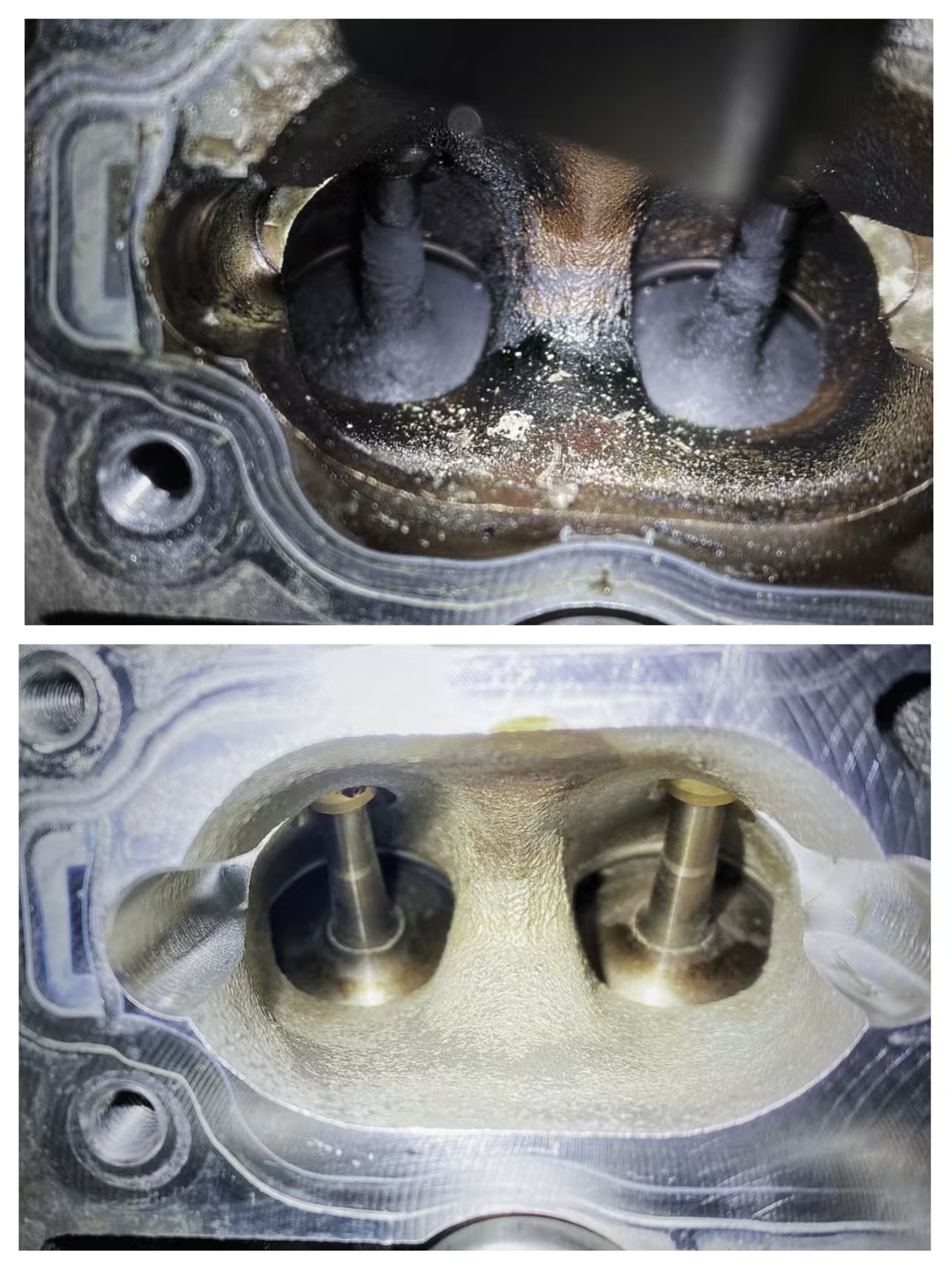
Carbon deposit is a substance formed when fuel in the engine fails to burn completely. Under high temperature and the catalytic effect of oxygen, it can generate hydrochloric acid and resin-like substances that adhere to engine component surfaces.
Over time, these deposits can concentrate into more complex mixtures such as asphalt and oil coke. Once the buildup becomes heavy, the engine can suffer from poor combustion, unstable idle and reduced performance.
Where does carbon deposit form in a vehicle?
Carbon deposits can form in nearly every part of the engine, but the most common areas are concentrated in the intake system, combustion chamber and exhaust system.
| System Area | Common Deposit Locations |
|---|---|
| Intake System | Throttle Body, Intake Manifold, Back of the Valve |
| Combustion Chamber | Piston Top, Spark Plug, Fuel Injector |
| Exhaust System | Three-Way Catalytic Converter, Oxygen Sensors |
Why does your vehicle need carbon deposit cleaning?
If carbon deposits are left unchecked for a long time, the vehicle may begin to show several warning signs.
Carbon deposits reduce combustion efficiency, leading to a loss of power.
Incomplete combustion increases fuel consumption and is often accompanied by black smoke from the exhaust during rapid acceleration.
Severe carbon buildup can cause hard starts or unstable idling.
Carbon deposits can cause vibration or a shaky feeling in the steering wheel.
When these symptoms appear, the vehicle may be warning you that carbon deposit cleaning is necessary.
What are the methods for carbon deposit cleaning?
This method physically scrapes or brushes off carbon deposits. It is direct, but labor cost is high and efficiency is low.
Chemical solvents soak and dissolve carbon deposits before manual removal. This method can potentially damage vehicle components such as rubber seals and is not environmentally friendly.
This method generates a hydrogen-oxygen mixed gas through water electrolysis and uses its combustion properties to clean carbon deposits. It does not require engine disassembly, helping avoid seal damage.
However, it is less effective at removing wet carbon, has high equipment cost and requires operator skill. It is most commonly used in dealerships.
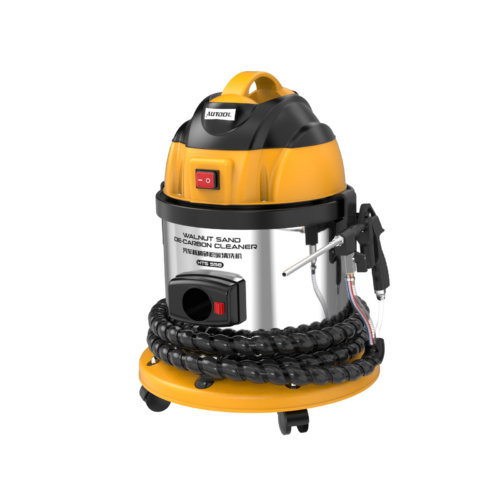
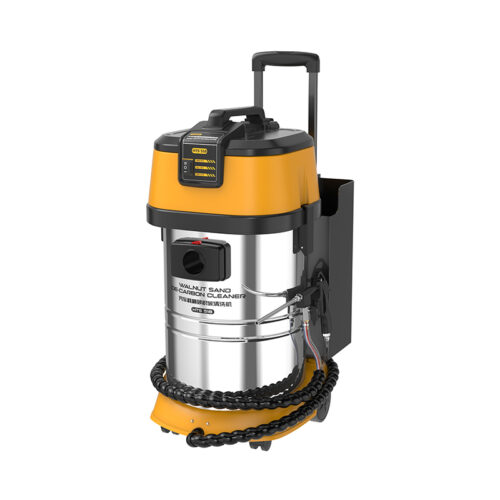
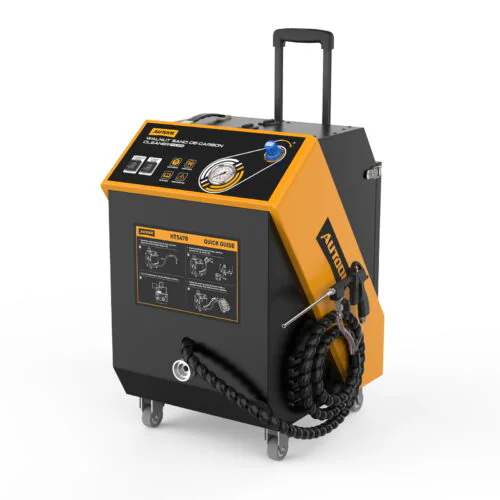
This method uses high-pressure airflow to drive walnut shell abrasives into carbon deposit areas. Physical friction removes stubborn deposits, and waste material is recovered through negative pressure.
Walnut shell abrasives can be recycled, making the process cost-effective and environmentally friendly. It requires specialized equipment, but newer walnut blasting machines are suitable for personal vehicle owners, auto repair shops and dealerships.
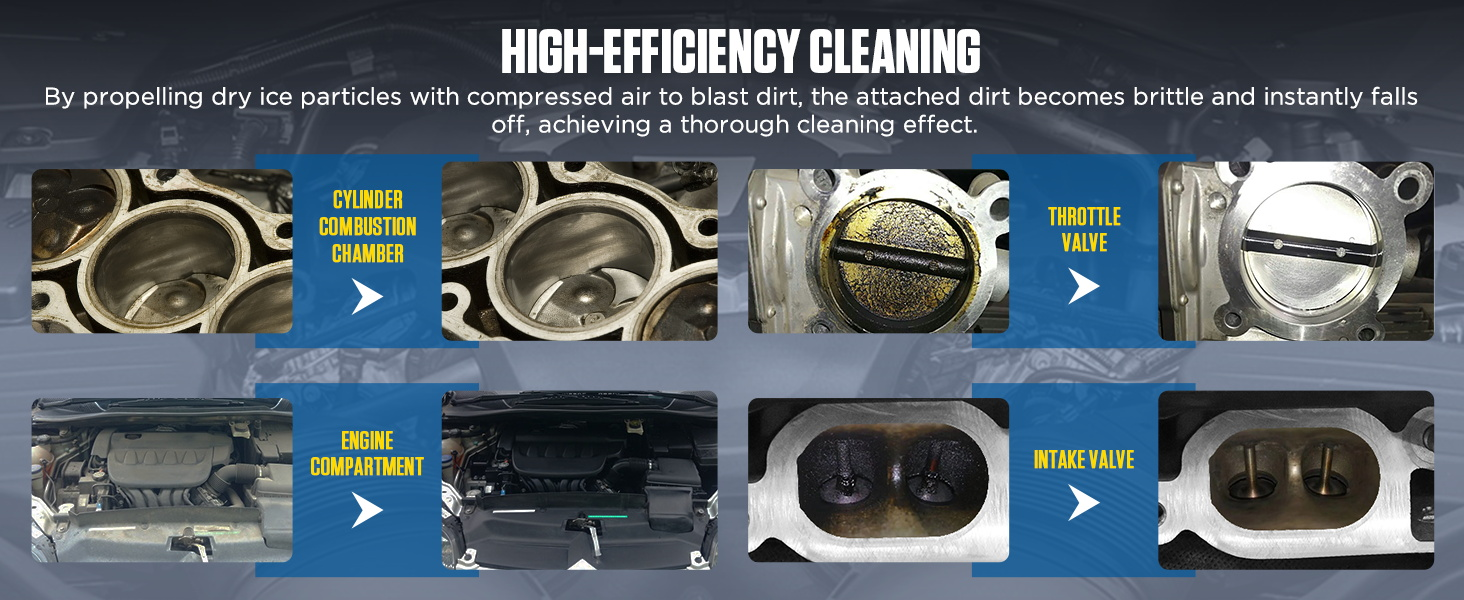
This method uses high-speed airflow to accelerate dry ice particles, rapidly removing carbon deposits from the engine. Dry ice sublimates quickly, leaving no residue or pollution while helping avoid damage to the vehicle.
Dry ice blasting offers broad cleaning capability, but it requires specialized equipment and dry ice is usually more expensive than other methods. It is suitable for personal vehicle owners, auto repair shops and dealerships.
This method combines specialized cleaning fluid, ultrasonic waves and an automatic heating system to improve cleaning efficiency. It is designed for thorough cleaning of fuel injectors and is suitable for personal vehicle owners, auto repair shops and dealerships.
How to prevent the formation of carbon deposits
Carbon deposit formation is unavoidable during vehicle operation, but reducing it is important for maintaining engine performance and avoiding costly repairs.
Carbon deposit cleaning is an important part of vehicle maintenance. It helps improve performance, supports a smoother driving experience and can reduce the risk of expensive repairs later.
Carbon deposit cleaning can be done at home with suitable equipment or by professional technicians. If you are interested in a walnut blasting machine or dry ice blasting equipment, contact Hanna and ask about the current 10% discount.
Contact AUTOOL for walnut blasting, dry ice blasting and fuel injector cleaning equipment recommendations.
Related Products
Rendered through WooCommerce product shortcode so the cards inherit the same product-card structure used by the reference post layout.