Repair Information

Car pulling is a common driving problem caused by issues such as incorrect wheel alignment, uneven tire pressure, suspension geometry variation, worn chassis components, or unbalanced wheels. When a vehicle starts drifting left or right, the problem may look minor at low speed, but the risk increases quickly as vehicle speed rises.

Pulling is also difficult to diagnose because several systems can produce very similar symptoms. A car may drift because the front toe is out of specification, because one tire is underinflated, because a suspension joint has too much play, or because a balancing weight has fallen off. The correct repair depends on identifying the real cause rather than guessing from the steering feel alone.

This guide reviews the main causes behind vehicle pulling: driving-pull behavior, wheel alignment errors, suspension system variation or looseness, tire pressure imbalance, and wheel balancing problems. It also explains what symptoms to watch for and what checks should be performed before replacing parts.

If you need the basic definition of car pulling first, you can also read the previous guide: Car Pulling to One Side? It Might Not Be the Tires.

Diagnosis 01

Start with the symptom pattern

Three Common Types of Vehicle Pulling Issues

Before checking alignment numbers or replacing chassis parts, it is important to identify when the vehicle pulls. A car that drifts during steady-speed cruising is not always the same problem as a car that pulls only under acceleration or only while braking.

01

Driving Pull

Under steady-speed driving on a straight road, the vehicle requires continuous steering input to maintain a straight path. If the steering wheel can stay stable but the vehicle still does not travel straight, it will pull to the left or right.

02

Acceleration Pull

This type of pulling becomes noticeable mainly when accelerating. At constant speed it may be less obvious, and the amount of pull usually changes with how aggressively the vehicle accelerates.

03

Braking Pull

Similar to acceleration pull, braking pull appears mainly when the brakes are applied. The direction and severity can change with braking force, road surface and brake system condition.

Classifying the symptom first prevents unnecessary repairs. For example, a steady driving pull often points toward alignment, tire pressure or tire conicity, while a pull that appears only during braking may require brake and suspension checks as well.

Diagnosis 02

Most common cause

Wheel Alignment Errors: The Most Common Culprit Behind Vehicle Pulling

Wheel alignment involves several key parameters, including toe, camber, caster angle, kingpin inclination, thrust angle, setback and wheel offset. A deviation in any of these angles can change how the tires contact the road and make the vehicle pull while driving.

The problem is not always that one single angle is far outside the allowed range. Sometimes both sides appear close to specification, but the left-right difference is large enough to produce a force imbalance. For that reason, alignment diagnosis should compare both absolute values and side-to-side differences.

1. Impact of Camber Angle Deviation

Camber angle describes how much the top of the wheel leans inward or outward from vertical. When the top of the wheel leans outward, the tire tends to roll like a cone and generate lateral force. Even if both front wheels are technically within the specified range, an unbalanced camber difference can still make the vehicle drift.

The larger the camber difference, the stronger the side force. A vehicle usually tends to pull toward the side with the larger positive camber, although tire condition, road crown and suspension load can also affect the final direction.

Symptoms of abnormal camber angle include:

  • Uneven tire wear on the inner or outer edge.
  • The vehicle aggressively pulls to one side after the driver releases the steering wheel.
  • The steering direction is difficult to correct and requires constant driver input.
  • The body rolls more severely during cornering, reducing grip and making the car feel unstable.
  • The driver must hold the steering wheel at an angle to keep the vehicle moving straight.

2. Impact of Toe Angle on the Vehicle

Toe angle refers to the difference between the distance of the front edges and rear edges of the wheels when viewed from above. It affects straight-line stability, steering response, tire wear, fuel consumption and ride comfort. A wheel alignment check is recommended after tire replacement, suspension repair, chassis impact or any repair that changes steering linkage position.

  • Positive toe, or toe-in: the front edges of the tires are closer together than the rear edges.
  • Negative toe, or toe-out: the front edges of the tires are farther apart than the rear edges.

Main Effects of Toe Angle on the Vehicle

  • Tire wear: excessive toe-in usually accelerates wear on the outer edges of the front tires, while excessive toe-out usually accelerates wear on the inner edges. Too much toe can also create sawtooth wear, shorten tire life, increase noise and raise fuel consumption.
  • Straight-line stability: proper toe-in helps the two front wheels counterbalance each other and improves stability. If the left and right toe angles differ greatly, the vehicle may pull toward the side with the more extreme toe angle.
  • Steering feel and cornering response: toe-out can make steering feel lighter and more responsive, but it may reduce high-speed stability. Toe-in usually feels steadier during daily driving, which is why passenger cars often use slight toe-in for straight-line stability.

This explains why racing setups may use a slight toe-out for faster turn-in, while ordinary passenger vehicles usually prioritize stability. If the tires wear evenly but the car pulls to one side, feels loose in steering, or behaves strangely during cornering, the toe angle should be measured with a wheel alignment machine. Even a small angle difference can cause a visible driving problem.

3. Impact of Setback Angle and Thrust Geometry

Setback, also called axle setback, describes the difference in the front-to-rear position of the left and right wheels on the same axle. It is different from off-road approach and departure angles, but it still affects how the vehicle tracks on uneven or crowned roads.

When setback reaches a noticeable degree, the vehicle may pull or drift during driving. The pulling tendency is often toward the side with the shorter effective wheelbase. Setback can appear after a collision, hard curb impact, incorrect subframe position, damaged control arm or structural deformation.

Because setback is related to the chassis and suspension reference points, it should be checked with alignment equipment and visual chassis inspection rather than judged by steering feel alone.

4. Caster Angle and Its Impact on Car Pulling

When the driver turns the steering wheel, the front wheels pivot around an imaginary steering axis, also called the kingpin axis. Caster angle is the angle between this steering axis and the vertical line, measured from the side of the vehicle.

Although the caster angle is not directly visible, it strongly affects steering stability, steering return and straight-line tracking. A larger positive caster angle generally increases the self-centering force of the steering wheel and helps the vehicle resist wandering.

Caster angle provides a natural steering return force. When the steering wheel is released, the front wheels tend to straighten again, improving comfort and reducing driver fatigue. If caster angle is insufficient or differs too much between the left and right sides, steering may feel vague, the vehicle may wander, and the steering wheel may not return promptly after a turn.

In many vehicles, caster angle is determined by suspension geometry and cannot be adjusted independently. If a caster deviation is detected, it may indicate chassis damage or deformation caused by impact, such as a bent steering knuckle, shifted strut mount, damaged control arm or subframe movement. The correct response is to inspect and correct suspension geometry or replace damaged components.

5. Impact of Steering Axis Inclination and Kingpin Inclination

Steering Axis Inclination, also called Kingpin Inclination in many service contexts, describes how the kingpin axis tilts inward from vertical when viewed from the front of the car. In a MacPherson strut setup, it can be imagined as the line through the upper strut mount and lower ball joint.

If the left and right KPI or SAI angles are not the same, the vehicle may pull toward the side with the smaller angle, even when toe appears correct. This condition is commonly seen in accident-damaged vehicles or after suspension component replacement without proper alignment correction.

Important notes: KPI and SAI usually cannot be corrected through conventional toe or camber adjustments. A deviation often indicates underlying chassis or suspension structural issues. Professional diagnostic tools such as a four-wheel alignment machine, chassis measurement system or frame straightening equipment may be required, and damaged structural components may need correction or replacement depending on severity.

In summary, kingpin inclination is a crucial parameter for judging whether the vehicle’s chassis geometry is intact and whether it has suffered impact damage.

Diagnosis 03

Chassis and connection errors

Suspension System Manufacturing Variations and Joint or Connection Errors

The suspension system connects the car body to the wheels and absorbs road impact. If there are manufacturing variations, assembly errors, worn joints or damaged components, the car’s driving direction can change and the vehicle may pull or drift.

The suspension includes springs, shock absorbers, control arms, guiding mechanisms, bushings and joints between the car body and the tires. Its main job is to support the body, maintain tire contact with the road and make the ride smoother. Different suspension designs produce different driving characteristics, but all of them depend on accurate geometry and secure connections.

Components of the Suspension System

The suspension system consists of elastic elements, guiding mechanisms and shock absorbers. Elastic elements include leaf springs, air springs, coil springs and torsion bars. Modern passenger cars mostly use coil springs, while some high-end models use air springs.

Common Symptoms of Suspension Problems

  • Severe shaking when passing over speed bumps or uneven roads, with a loss of cushioning effect that makes the vehicle feel unstable.
  • Clunking or knocking noises when pressing down on the vehicle or driving over rough roads.
  • Vehicle pulling to one side and uneven tire wear.
  • Increased front-end nodding during braking and more obvious body roll during cornering.
  • A loose, wandering or delayed steering feel after chassis parts have worn or shifted.

What to Do When Suspension Problems Are Detected

  1. Stop aggressive driving immediately. Avoid hard braking, sharp turns, abrupt cornering or driving over curbs so the issue does not worsen or create an accident risk.
  2. Have the chassis inspected at a reputable repair shop. Choose a shop equipped with four-wheel alignment machines, suspension gap measuring tools and experienced technicians.
  3. Perform targeted repairs based on inspection results. Do not replace parts randomly; confirm whether the issue is a bushing, ball joint, shock absorber, spring, control arm, steering component or chassis reference point.
  4. Conduct four-wheel alignment calibration after repairs. Toe, camber, caster and related geometry must be checked after suspension work to restore vehicle stability.
  5. Check related components. Suspension issues often affect tires, steering and brakes. Uneven wear, bulges, tight steering, abnormal noises or excessive brake dive should be checked together.

A complete suspension inspection should include visual checks for leaks, deformation, looseness and cracks; control arm and ball joint play testing; spring and shock absorber rebound checks; and four-wheel alignment measurement. Maintaining a properly functioning suspension system is vital for vehicle safety, comfort and handling.
Diagnosis 04

Simple check, real effect

Impact of Tire Pressure on Car Pulling

If the left and right tires have different pressures, they touch the road differently. The underinflated tire creates more rolling resistance and can make the vehicle drift toward that side. In mild cases the steering only feels slightly biased; in severe cases the vehicle may pull strongly enough to require constant correction.

  • A front tire pressure difference greater than 0.2 bar can cause noticeable steering deviation.
  • Rear tire pressure differences may not directly pull the steering wheel as strongly, but they can still reduce overall vehicle stability.
  • Tire pressure should be checked when tires are cold and compared with the pressure specification on the vehicle placard.
  • If the vehicle still pulls after pressure is corrected, tire wear, tire construction, wheel alignment and suspension geometry should be inspected next.

Tire pressure is one of the fastest checks, but it should not be the only check. A vehicle can have correct pressure and still pull because of tire conicity, camber difference, toe error or worn suspension parts.

Diagnosis 05

Vibration and hidden drift

Impact of Wheel Balancing Weights on Vehicle Performance

Wheel balancing weights, also called balance weights, lead weights or balance clips, are small metal pieces attached to the wheel rim. They compensate for uneven mass distribution after the tire and wheel assembly is completed, helping the wheel rotate smoothly at high speed.

  • Without proper wheel balancing, a vehicle may experience high-speed wobble or steering wheel shake, especially at 80-120 km/h. Correct balancing improves steering stability, comfort and driver confidence.
  • Tire imbalance creates periodic vibration that travels through the suspension system, steering components and even the vehicle body. Over time this can accelerate wear, loosen parts or damage components.
  • Imbalanced tires may develop irregular wear patterns such as sawtooth wear, wave-like tread wear, localized bulges, uneven wear, high-speed jumping or slipping.
  • Well-balanced tires rotate more smoothly, which can reduce interior noise and support better fuel economy.
  • If balancing weights fall off or are installed in the wrong position, sudden vibration may appear even if the wheel looked normal before.
  • When vehicle pulling or abnormal noise has no obvious cause, lost or ineffective balancing weights should be included in the inspection list.

Wheel balance problems are often felt as vibration first, but vibration can make the driver perceive the vehicle as unstable or drifting. For a complete diagnosis, wheel balancing should be checked together with tire condition, alignment data and suspension looseness.

Workflow

Avoid guessing

Recommended Diagnostic Order for a Pulling Vehicle

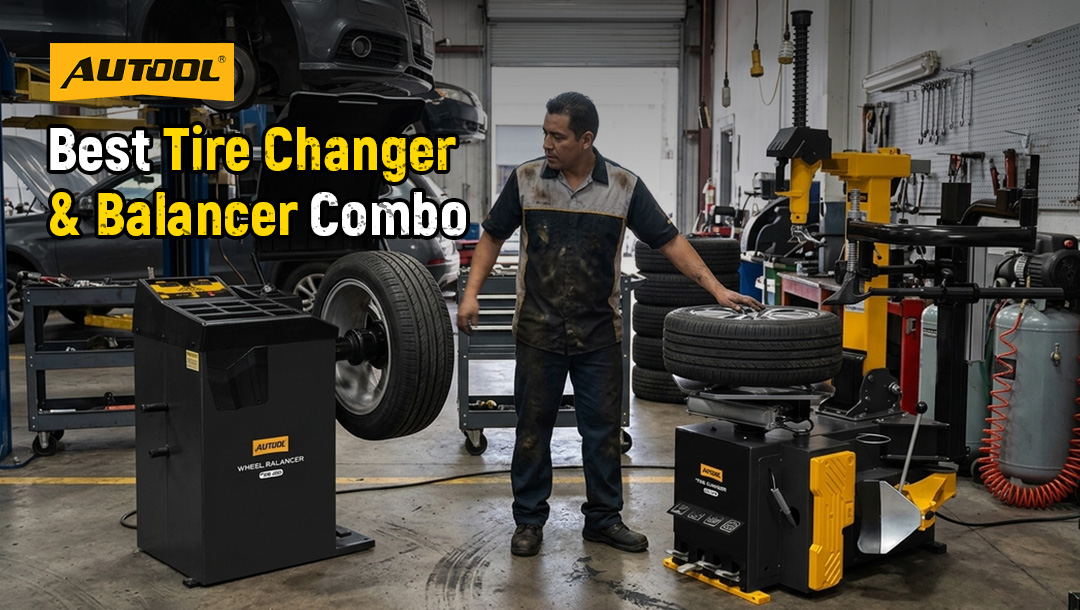
Because several causes can overlap, a practical inspection sequence is more reliable than replacing parts based on the first symptom. Start with the simplest external checks, then move toward alignment and chassis measurement.

01

Check Tires First

Confirm tire pressure, tire size, tread depth, uneven wear, bulges and visible damage. If possible, swap left and right tires to see whether the pulling direction changes.

02

Inspect Wheel Balance

Look for missing balancing weights, rim damage and vibration symptoms. Rebalance the wheel assembly when high-speed steering shake is present.

03

Measure Alignment

Use a four-wheel alignment machine to check toe, camber, caster, setback, thrust angle and side-to-side differences instead of relying only on visual inspection.

04

Inspect Suspension and Chassis

Check control arms, ball joints, bushings, strut mounts, steering linkage, shock absorbers and chassis reference points, especially after impact or suspension repair.

FAQ

FAQ About Car Pulling

Can a car pull even if alignment numbers are within specification?

Yes. A vehicle can still pull if the left-right difference is large, if the tires are worn unevenly, if tire pressure is unbalanced, or if a suspension component is loose or damaged. The full diagnosis should compare alignment data with tire and chassis condition.

Does every pulling problem require wheel alignment?

No. Wheel alignment is a common cause, but tire pressure, tire condition, wheel balance, brake behavior and suspension looseness should also be inspected. Alignment should be part of the process, not the only step.

Why does the car pull more at higher speed?

At higher speed, small force differences from toe, camber, tire pressure or wheel imbalance become more obvious. The driver also has less time to correct direction changes, so the same problem feels more dangerous.

When should suspension damage be suspected?

Suspension damage should be suspected after a collision, curb impact, severe pothole hit, repeated abnormal tire wear, clunking noise, unstable braking, body roll, or alignment data that cannot be adjusted back to specification.

Summary

Summary

Vehicle pulling may look like a slight steering drift, but it often hides a coordinated imbalance among the wheels, tires, chassis and suspension geometry. Toe, camber, caster, kingpin inclination, setback, suspension wear, tire pressure and wheel balance can all contribute to the same driver complaint.

Do not rely on small steering corrections to “make do” while driving. Use professional diagnostic methods such as four-wheel alignment, chassis inspection, tire pressure checks and wheel balancing tests to identify the real root cause.

Recommendations:

  • Always perform four-wheel alignment after replacing suspension parts, replacing tires or experiencing a minor collision.
  • Regularly check tire pressure, tread wear and visible tire damage.
  • If steering drift, vehicle instability or abnormal vibration appears, arrange a professional inspection as soon as possible.
  • After suspension repair, confirm alignment calibration before returning the vehicle to normal use.

Need Help With Alignment or Chassis Diagnosis?

For more information about car alignment, wheel service or workshop diagnostic tools, contact AUTOOL support.

Related Products

Rendered through WooCommerce product shortcode so the cards inherit the same product-card structure used by the reference post layout.

Komentiraj

Vaša adresa e-pošte neće biti objavljena. Obavezna polja su označena sa * (obavezno)