Informations sur la réparation
Ne laissez pas les injecteurs de carburant « voler » votre puissance !

juillet 14, 2025
Partager:
 autoolstore.com
Dans la conception moderne des moteurs à combustion interne, l'amélioration du rendement est une préoccupation constante. Les injecteurs de carburant constituent un élément essentiel à cet égard, car ils fonctionnent comme des soupapes de précision, délivrant le carburant sous pression dans la chambre de combustion avec un dosage et un timing précis.
Lorsque le système d'injection (pulvérisation, calage et commande électrique) fonctionne correctement, la combustion est plus propre et plus efficace. En cas d'usure, d'encrassement ou de panne électrique perturbant ce processus, le véhicule peut perdre de la puissance, consommer davantage de carburant, présenter des ratés d'allumage et émettre plus de polluants.
Ce guide explique ce qu'est un injecteur de carburant, comment il fonctionne, pourquoi les injecteurs s'encrassent, comment l'état des injecteurs affecte les performances du véhicule et quand le nettoyage ou le remplacement est la meilleure solution de réparation.
Qu'est-ce qu'un injecteur de carburant dans une automobile ?
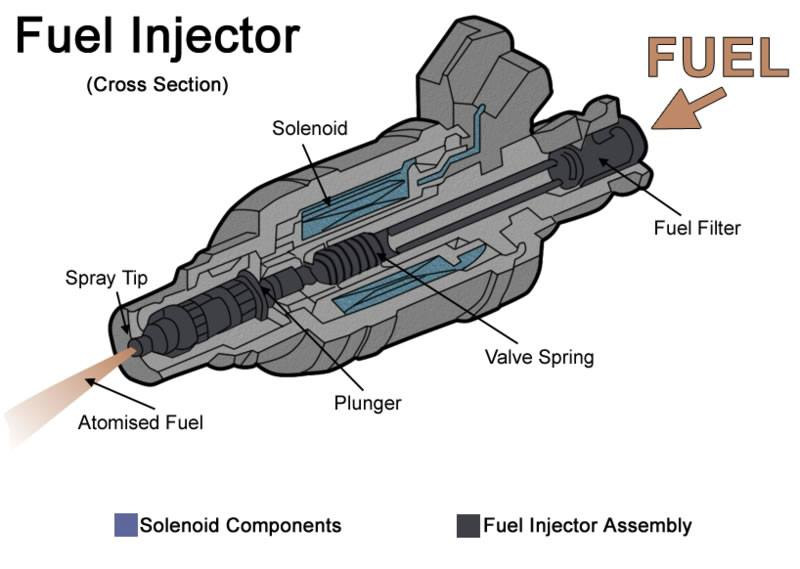
Un injecteur de carburant est une valve à commande électronique qui reçoit le carburant sous pression de la pompe à carburant du véhicule. Il pulvérise ce carburant en un fin brouillard, le mélange à l'air et injecte le mélange dans le système de combustion afin que le moteur puisse produire de l'énergie.
Lors de la phase de compression du piston, le mélange air-carburant est chauffé jusqu'à son point d'inflammation. La qualité de ce mélange influe directement sur l'efficacité avec laquelle le moteur transforme le carburant en énergie.
Dans la plupart des moteurs à essence, les injecteurs de carburant sont montés sur le collecteur d'admission, près de chaque culasse. Sur les moteurs diesel, les injecteurs sont généralement placés directement dans la culasse. Chaque configuration est conçue pour optimiser le mélange air-carburant et la combustion pour ce type de moteur.
Comment l'injecteur contrôle l'alimentation en carburant
Avant de diagnostiquer des injecteurs défectueux, il est utile de comprendre les trois étapes fondamentales du fonctionnement d'un injecteur : l'alimentation en carburant, le contrôle du calage et l'atomisation.
L'injecteur est un dispositif de précision qui délivre des gouttelettes de carburant dosées dans la chambre de combustion à intervalles programmés.
Le calculateur moteur, ou ECU, calcule le moment et la durée de l'injection en fonction du régime moteur, de la charge et des conditions de fonctionnement.
Une bonne atomisation fragmente le carburant en fines gouttelettes, ce qui permet une combustion plus complète du mélange air-carburant pour une puissance et une efficacité accrues.
Toute perturbation de ce processus, qu'elle soit due à l'usure, à l'encrassement ou à des défauts électriques, peut créer une réaction en chaîne qui compromet les performances du moteur, la consommation de carburant et les émissions.
Pourquoi la précision des injecteurs est importante
Les injecteurs de carburant sont au cœur du processus de combustion du moteur. Leur fonction principale est d'injecter avec précision le carburant dans la chambre de combustion, au bon moment et sous la forme adéquate.
L'une des caractéristiques essentielles des injecteurs de carburant modernes est leur capacité à pulvériser le carburant en gouttelettes microscopiques. Ces gouttelettes, plus petites, présentent une surface de contact plus importante et se mélangent donc plus efficacement à l'air. Ce mélange air-carburant amélioré favorise une combustion plus complète, une puissance accrue et des émissions réduites.
Les injecteurs modernes sont conçus pour un dosage précis et un calage optimal. La quantité exacte de carburant doit être injectée au moment précis où le cycle de combustion l'exige. Une injection prématurée ou retardée peut réduire considérablement les performances du moteur et augmenter les émissions polluantes.
Comment des injecteurs propres préservent la puissance
Comprendre le fonctionnement naturel des injecteurs permet de tirer pleinement parti des performances qu'ils peuvent offrir lorsque le schéma de pulvérisation et le signal de commande sont corrects.
Des injecteurs en bon état de fonctionnement favorisent une combustion efficace et une puissance accrue à chaque cycle. Après l'entretien ou la mise à niveau des injecteurs, les mécaniciens peuvent constater un gain de puissance d'environ 3 à 5 % sur les moteurs modernes lorsque la pulvérisation est optimale.
La combustion complète extrait davantage d'énergie de chaque gouttelette de carburant. Les systèmes d'injection directe modernes peuvent afficher des gains de rendement énergétique de 10 à 15 % par rapport à l'injection indirecte, démontrant ainsi l'intérêt d'un meilleur contrôle du carburant.
Une atomisation précise réduit les hydrocarbures imbrûlés grâce à une combustion plus complète. Des injecteurs de pointe correctement entretenus peuvent réduire les émissions de particules jusqu'à 50 % sur les moteurs GDI et aider les véhicules à respecter des normes telles que Euro 6 et EPA Tier 3.
Pourquoi les injecteurs de carburant s'encrassent-ils ?
La principale cause d'encrassement des injecteurs provient du carburant lui-même. L'essence contient des composés cireux qui peuvent laisser des dépôts semblables à du vernis sur l'aiguille de l'injecteur après évaporation du carburant.
Ces dépôts se forment souvent après l'arrêt du moteur. La chaleur du moteur provoque l'évaporation du carburant résiduel dans l'injecteur, laissant derrière elle des contaminants concentrés. Avec le temps, cette accumulation restreint le débit de carburant et perturbe la pulvérisation.
Lorsque le débit et la qualité de la pulvérisation sont altérés, le moteur peut présenter une mauvaise atomisation, une combustion incomplète et une baisse de performance. C'est pourquoi un nettoyage régulier des injecteurs est important pour les véhicules présentant des signes d'encrassement.
L'importance du nettoyage régulier des injecteurs de carburant
Les injecteurs de carburant jouent un rôle essentiel dans l'acheminement précis du carburant vers la chambre de combustion. Au fil du temps, des additifs, des impuretés et autres contaminants peuvent s'accumuler sur leurs composants.
Lorsque des dépôts obstruent le flux de carburant, la combustion devient moins efficace et les performances du moteur peuvent se dégrader. Le nettoyage est surtout utile lorsque le problème est lié à des dépôts plutôt qu'à une panne mécanique ou électrique.
Concernant un sujet connexe de nettoyage sans démontage, gardez à l'esprit la question de l'entretien : Comment nettoyer les injecteurs de carburant sans les démonterLa méthode appropriée dépend de l'état des injecteurs, du type de moteur et de l'importance des dépôts.
Un injecteur défectueux perturbe le mélange air-carburant dans son cylindre, provoquant des ratés d'allumage et une perte de puissance du moteur. Dans les cas les plus graves, le carburant imbrûlé peut endommager le catalyseur.
Conduire avec un injecteur défectueux est possible temporairement, mais risqué. Une utilisation prolongée peut entraîner des dommages en cascade au moteur et des réparations plus coûteuses par la suite.
Les injecteurs de carburant diesel fonctionnent à une pression bien supérieure à celle des injecteurs d'essence. Un signe courant de défaillance est la production d'une épaisse fumée noire, indiquant une combustion incomplète due à une atomisation insuffisante à haute pression.
Les injecteurs diesel modernes nécessitent souvent une reprogrammation du calculateur après leur remplacement afin de garantir un calibrage moteur optimal. Leurs tolérances de fabrication sont extrêmement précises, certaines pièces étant mesurées en microns.
L'entretien des injecteurs diesel peut également s'avérer plus coûteux, notamment pour les systèmes à rampe commune où le prix d'un seul injecteur peut dépasser 3 000 yens. Un diesel contaminé ou de mauvaise qualité peut accélérer l'usure et réduire considérablement la durée de vie des composants.
L'efficacité du nettoyage dépend de l'état de l'injecteur. Pour les dépôts de carbone mineurs affectant la pulvérisation, l'utilisation d'additifs de carburant de qualité pendant trois pleins consécutifs peut s'avérer utile. Un encrassement plus important, non mécanique, peut nécessiter un nettoyage par ultrasons professionnel.
Le nettoyage ne peut réparer les dommages physiques tels que les défaillances des électrovannes, l'usure importante des pointeaux de soupape ou les fuites. Dans ces cas, le remplacement de l'injecteur est nécessaire. Après un nettoyage par ultrasons, il est important de contrôler le débit ; si l'écart entre les cylindres dépasse 10 %, l'injecteur est peut-être trop endommagé pour assurer un fonctionnement fiable.
Les injecteurs de carburant influent directement sur la puissance, la consommation, les émissions et la régularité du fonctionnement du moteur. Leur rôle est simple à décrire, mais complexe à mettre en œuvre : fournir la quantité exacte de carburant, au bon moment, selon un jet permettant une combustion complète.
Si les injecteurs sont encrassés, un nettoyage peut rétablir la qualité de la pulvérisation et l'efficacité de la combustion. S'ils sont usés, présentent des fuites ou une défaillance électrique, leur remplacement et un étalonnage approprié constituent généralement la solution la plus sûre.
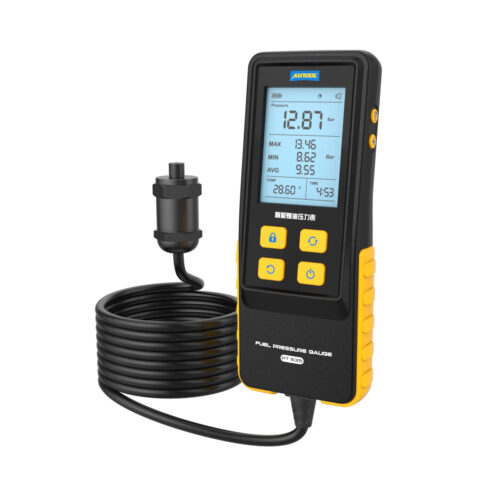
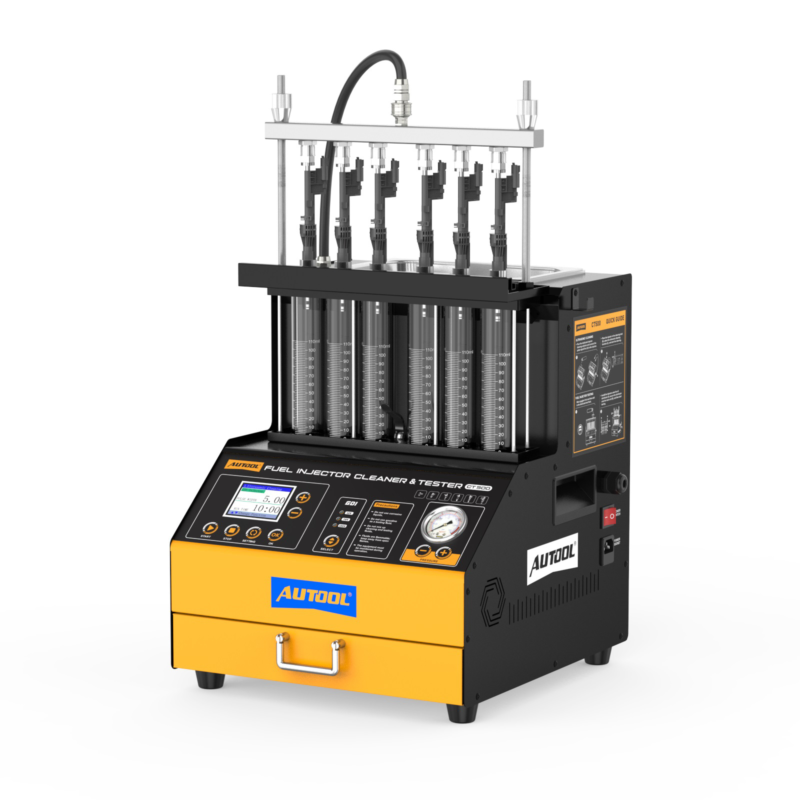
Contact AUTOOL Comparer les manomètres de pression de carburant, les outils de test d'injecteurs et les équipements de diagnostic associés pour une utilisation en atelier.
Produits associés
Rendu via le shortcode produit WooCommerce afin que les cartes héritent de la même structure de carte produit que celle utilisée par la mise en page de l'article de référence.